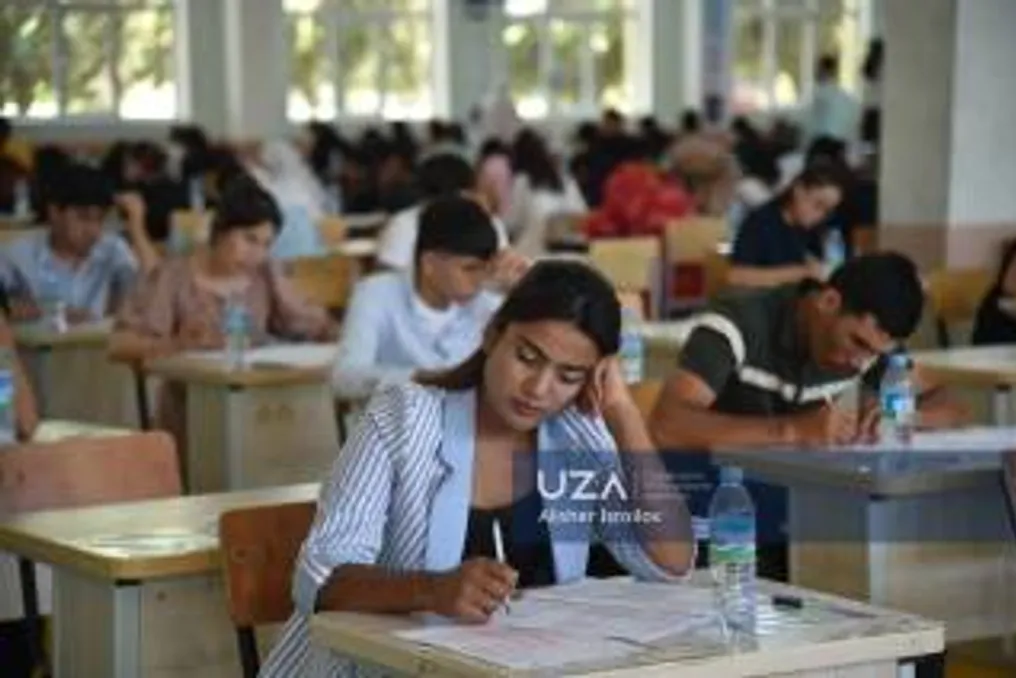
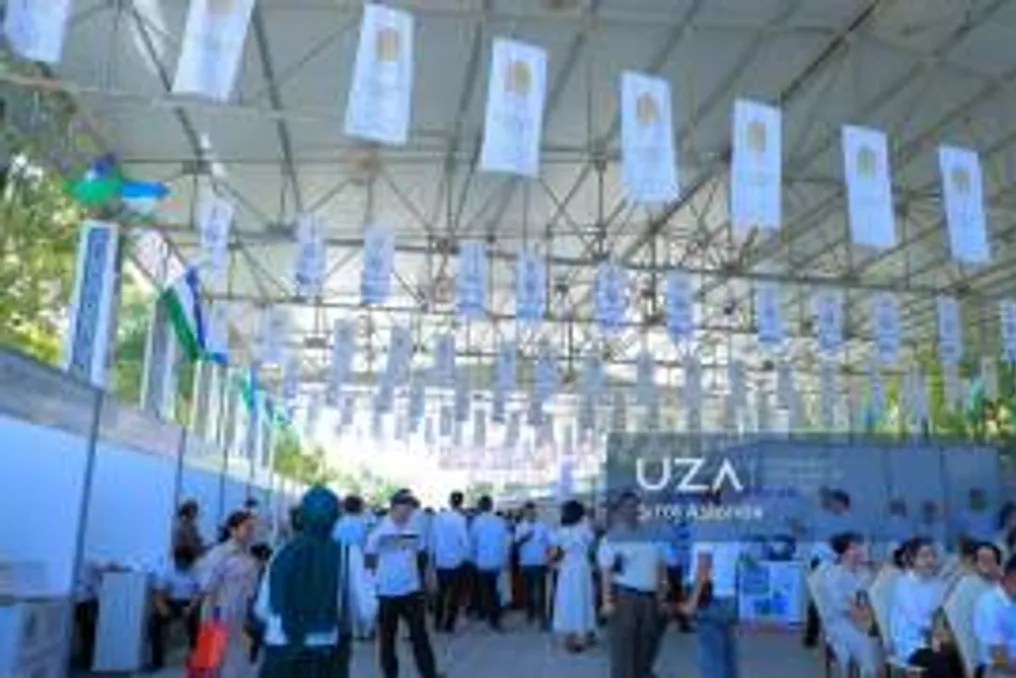
The career fair 'TalabaExpo – 2026' took place in the city of Navoi at the Alisher Navoi recreation park. The event was organized with the participation of the Ministry of Higher Education, Science and Innovation of the Republic of Uzbekistan, JSC 'Uzmilliibank', the Chamber of Commerce and Industry, the Navoi Region Administration, and the Youth Affairs Agency as part of the 'Step into the Future' program.
State Policy for Youth Support
Ensuring decent employment for young people in the country, supporting entrepreneurial initiatives, and increasing the economic activity of young individuals are among the key directions of state policy. An important legal basis is the Decree of the President of the Republic of Uzbekistan dated February 14, 2025, on 'Additional Measures to Facilitate Employment of Higher Education Graduates.'
Goals and Scale of the Event
In accordance with this decree, special attention is paid to ensuring graduate employment, supporting their business ideas, and expanding opportunities for using preferential financial resources. Systematic work is also being carried out in the Navoi region under this resolution. The event, organized to ensure graduate employment, their placement, direction to internships and traineeships, and support for startup ideas, gathered over 100 companies and organizations.
Regional Education Statistics
Currently, more than 8 thousand students are completing their studies in four higher education institutions in the Navoi region during the 2025-2026 academic year. Additionally, 4676 graduates from other regions are under constant monitoring. According to available information, Navoi State University graduates 4876 students in the 2025/2026 academic year. Of these, 1942 people found permanent employment, 83 became individual entrepreneurs, 663 self-employed, 737 are in childcare, 24 have disabilities, and 1427 are awaiting employment.
Success Stories and Partnership
Bahora Abdukodirova, a native of the Narpay district of Samarkand region, shared her experience: 'I graduated from the Faculty of Economics at Navoi State University. At this fair, I met vacancies presented by organizations and companies. Company representatives provided me with detailed information about open positions. I got a job at one of the state organizations. I am very happy about this.' The 'Step into the Future' program provides students with the opportunity to choose a suitable place of work, and the program itself is one of the initiatives that helps youth find jobs, direct them according to labor market needs, and create a direct link with employers.
Financial Support for Projects
Mirjon Qahhorov, Director of the 'Step into the Future' Center at the Navoi Regional Hospital of JSC 'Uzmilliibank', reported that JSC 'Uzmilliibank' has concluded cooperation agreements with four higher education institutions in the Navoi region through the Navoi Regional Administration. Regional branches of the 'Step into the Future' centers have also been established at Navoi State University and Navoi State University of Finishing and Technology. Through these centers, students' business ideas are refined into full-fledged projects, promising initiatives are financed, and graduate employment is ensured in cooperation with employers. In the 2024-2025 academic year, preferential loans totaling 8 billion 809 million soms were allocated to 168 projects presented by graduates. As a result, 185 young people found employment. Of these, 154 self-employed projects received a loan of 1 billion 540 million soms, and 14 legal entities received 7 billion 269 million soms, which provided permanent employment for another 41 young people.
Prospects for 2026
Similar events continue in 2026. Since the beginning of the year, credit funds totaling 25 billion 717 million soms have been directed to support graduates and young entrepreneurs for 150 projects. Consequently, employment was secured for 171 young people. 133 projects were financed with preferential loans under the 'Step into the Future' and 'Future Entrepreneur' programs amounting to 13 billion 97 million soms. The remaining 17 projects received commercial loans totaling 12 billion 620 million soms.