Automakers and importers have issued warnings about the real risk of mechanical problems in imported and older vehicles due to the change in gasoline composition to E32 (32% ethanol), determined by the National Energy Policy Council (CNPE).
Automotive Sector Reaction
Both Anfavea, the manufacturers' association, and Abeifa, the importers' association, strongly criticized the government decision released on Tuesday (14). Both entities questioned the absence of 'specific and conclusive technical studies' on durability, pointing to a concrete danger of mechanical damage to the national fleet.
According to these associations, the tests conducted by the government to approve E32 focused only on short-term metrics, such as performance, emissions, and drivability, neglecting crucial factors like material degradation and component longevity.
Forecasts and Adaptation Efforts
Marcelo de Godoy, president of Abeifa, expressed concern, stating that 'we run the risk of seeing broken cars on the streets because of this increase.' Importing companies are urgently working with their international headquarters to adjust and adapt engines to the new Brazilian reality, which contains almost a third of alcohol in the gasoline.
The federal government tries to justify the measure by claiming that validation tests conducted in 2025 (when the blend reached 30%) already had a tolerance margin of two percentage points upwards, which would allow for 32%. However, this acceleration of the change has strong political and economic motivations, aiming to reduce dependence on fossil fuels and protect the economy from fluctuations in the price of a barrel of oil, in addition to meeting the goals of the Future Fuel program, which establishes up to 35% ethanol in gasoline by 2030.
Impacts for Different Types of Vehicles
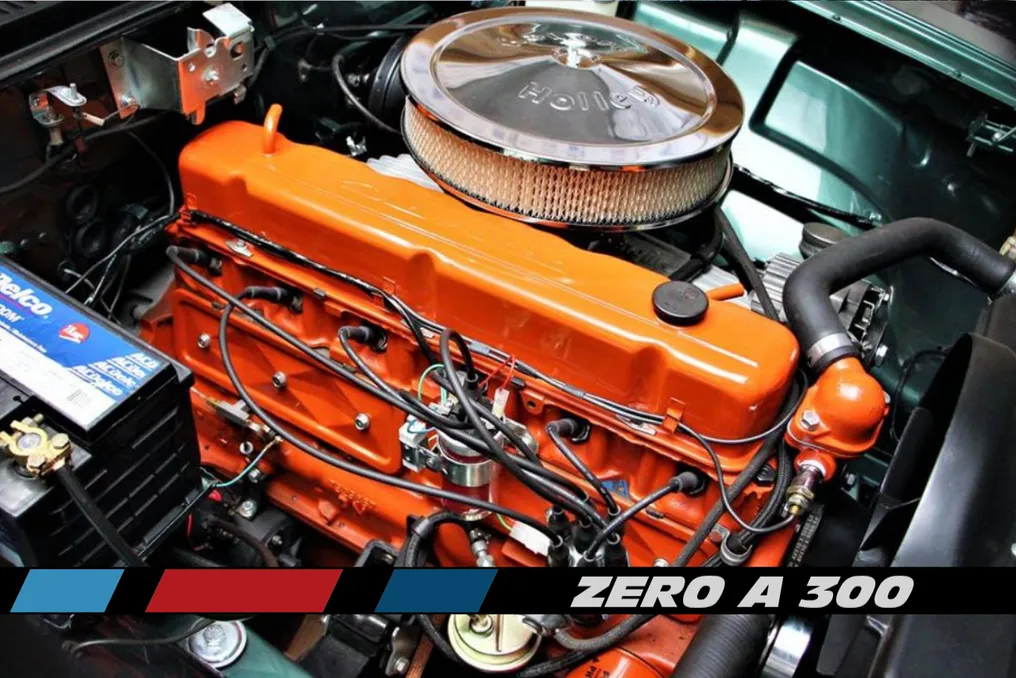
For owners of flex-fuel cars, the immediate impact is financial, as the higher proportion of ethanol decreases the fuel's calorific power, resulting in lower autonomy. However, the scenario is critical for owners of imported vehicles without flex calibration or classics with old fuel systems, such as carburetors and diaphragm mechanical pumps. The corrosive nature of ethanol and its high affinity for atmospheric water can accelerate the wear of hoses, gaskets, seals, and metal parts.
News in Automotive and Entertainment
In other news, the new season of The Grand Tour, successor to Top Gear, is scheduled to premiere on September 4th. The show, created by Jeremy Clarkson, James May, and Richard Hammond and known for its sharp humor on the BBC, will return with Thomas Holland and James Engelsman, from the Throttle House channel, and Francis Bourgeois. The new cycle was announced with the motto 'Same show, new knobs,' indicating the intention to replicate the relaxed atmosphere of previous seasons.
Alfa Romeo also revealed a teaser of its new SUV, which will be built on the STLA Medium platform, similar to the one used by the Jeep Compass and Peugeot 3008. Although its exact positioning in the line is not defined, there are speculations that it could be a successor to the Tonale or situated between the Tonale and the future Stelvio, which will use the STLA Large platform in 2028. The automaker informed that the new SUV will feature hybrid powertrain options (mild and full) and an all-electric version.
Updates in Japanese Vehicles and Motorcycles
In the car segment, the Honda Fit RS Mugen, which was discontinued in Brazil in 2021, received updates in its fourth generation launched in Japan in 2020. The RS Mugen version gained a more aggressive front bumper, exclusive 17-inch wheels, and a new rear diffuser. Furthermore, Mugen developed a shock absorber kit in partnership with Yamaha, designed to reduce chassis vibrations when driving at the limit, promising greater smoothness and solidity, despite the vehicle maintaining a 1.5 hybrid engine of 123 hp.
In the motorcycle sector, Abraciclo reported the Chinese manufacturer Shineray to the Ministry of Justice at the end of 2025. The complaint alleged that Shineray motorcycles were exceeding legal limits for air and noise pollution, being sold without equipment such as catalysts and canisters. Independent tests conducted by Marelli confirmed the initial reports, showing that models like the SHI 150 emit 18 times more carbon monoxide than permitted.