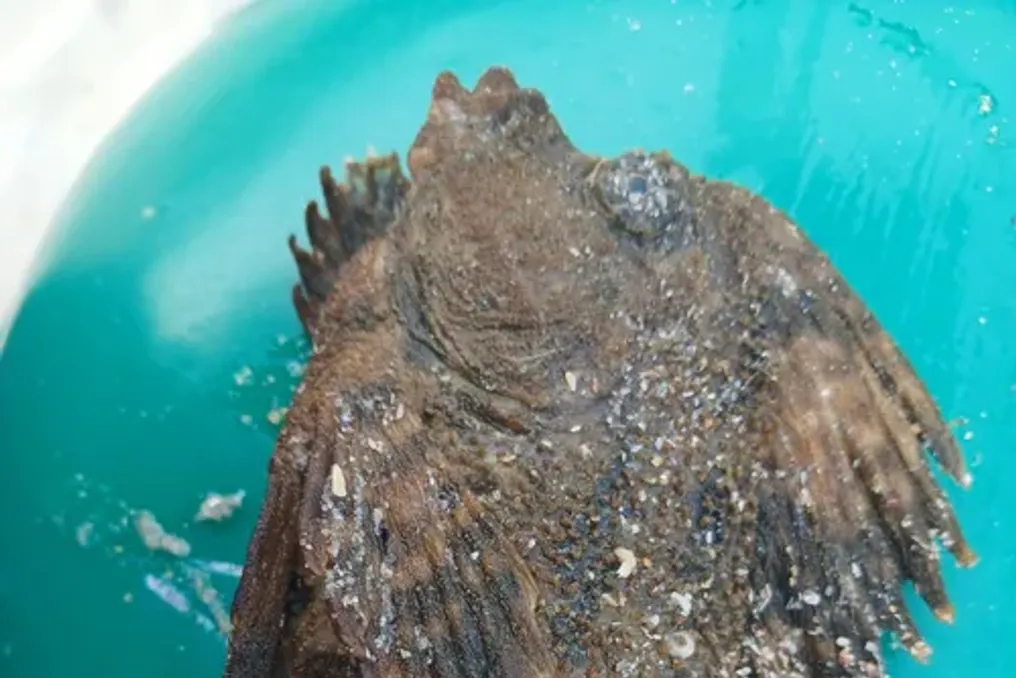
A scorpionfish, more specifically a stonefish mimic also known as the devil scorpionfish (Scorpaenopsis diabolus), was found on Llandudno beach. The discovery of this unusual marine creature generated significant interest after photos of the strangely-looking sea animal were posted on social media, leading many vacationers to question its nature.
Fish Characteristics and Camouflage
Marine biology experts note that despite its peculiar appearance, this fish is an outstanding master of camouflage. It can almost perfectly blend in with the sandy bottom and rocky reefs. This natural ability allows it to ambush prey unnoticed and protect itself from predators.
Danger and Warnings
Although the fish may appear dead when washed ashore, the public is strongly advised not to touch it. According to Two Oceans Aquarium, stonefish mimics are close relatives of the infamous true stonefish, which is considered one of the most venomous fish in the world. Although often confused, stonefish mimics differ by having a more pronounced hump behind the head, a wider mouth, and a more fish-like body shape.
Mechanism of Action and Habitat
Like all scorpionfish, the stonefish mimic is equipped with sharp spines on its dorsal fin capable of injecting venom. A bite causes immediate and severe pain, significant swelling, and, in some cases, complications requiring urgent medical intervention. Although bites are rarely fatal, they should always be treated as a medical emergency.
It is worth noting that the discovery of a scorpionfish along the South African coast is not uncommon. This species naturally occurs in the warm tropical and subtropical waters of the Indo-Pacific region, with its range extending as far south as South Africa. They typically inhabit coral reefs and rocky areas, spending most of their time motionless, relying on camouflage rather than speed for survival. According to the aquarium, due to their exceptional ability to blend into their surroundings, they often go unnoticed by divers and snorkelers.
Lifestyle and Recommendations
Scorpionfish are ambush predators, feeding mainly on small fish, crustaceans, and other marine invertebrates. Instead of pursuing prey, they freeze and then quickly suck the victim into their large mouths. Vacationers on beaches, fishermen, and dog owners are advised to avoid contact with unfamiliar marine animals, even if they appear dead, as the venomous spines can remain dangerous even after the fish has reached the shore.