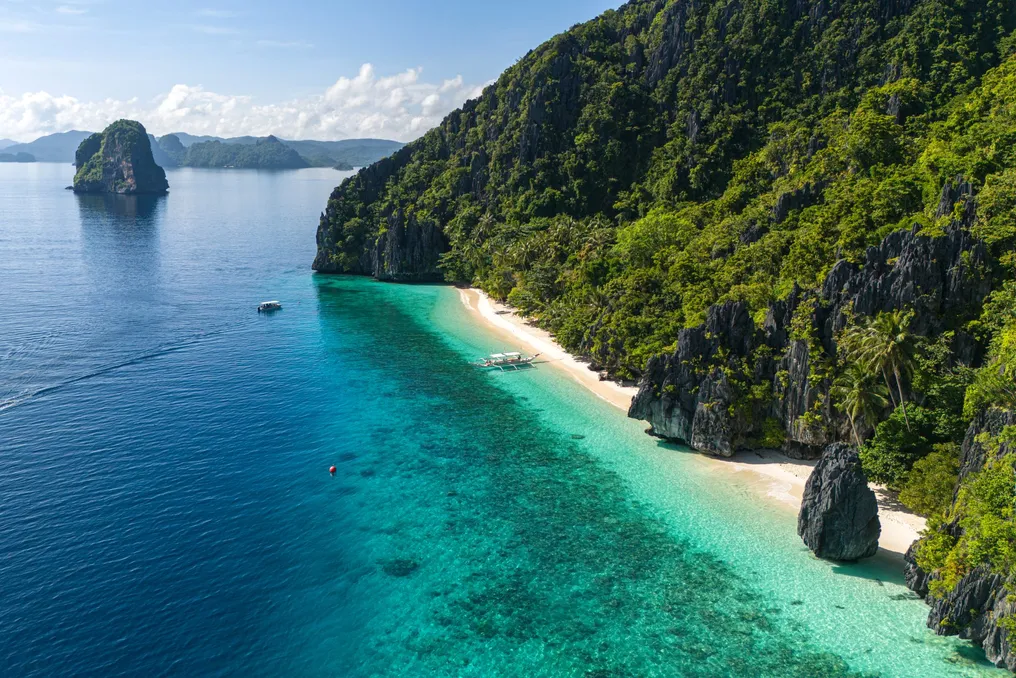
The international ranking The World’s 50 Best Beaches 2026 presented a list of 50 of the world's best beaches, including hidden coves, remote islands, and almost untouched sandy areas. Among these places were noted the limestone cliffs in the Philippines, a secluded cove in Greece, a remote dolphin spot in Australia, and a sandbank in Madagascar that disappears with the tide.
Evaluation Criteria and Brazil's Participation
The list was compiled based on assessments from over a thousand specialists from the tourism industry across various countries. Factors considered during the evaluation included landscape uniqueness, presence of wildlife, degree of preservation, tranquility, and accessibility to the sea. This year, Brazil secured two spots in the ranking: Baía do Sancho, located in Fernando de Noronha (Pernambuco state), ranked 33rd, and Pontal do Atalaia, situated in Arraial do Cabo (Rio de Janeiro state), ranked 44th.
Top 5 Beaches
First place was awarded to Entalula Beach in the El Nido region of the Philippines. This beach impresses with a spectacular view formed by limestone walls, white and soft sand, crystal-clear water, and a small number of visitors, as it can only be reached by boat.
Second place went to Fteri Beach on the Greek island of Kefalonia, part of the Ionian Islands archipelago. This cove, surrounded by white cliffs, is accessible either by boat or via a steep hiking trail. The beautiful turquoise color of the sea and the preserved setting enhance the feeling of a lost paradise.
Third place is held by Wharton Beach in Western Australia. The beach is known for its transparent water and picturesque coastal views, and it is one of the main surfing spots in the region, attracting dolphin watchers. However, a lack of management and visitor control is noted, as the sand can be reached by car.
Beaches with Unique Features
Fourth place went to Nosy Iranja in Madagascar—a place consisting of two islands connected by a sandbank about 2 kilometers long. This sandy area appears at low tide and disappears under the turquoise water when the tide rises, attracting divers. The beach is also home to sea turtles and surrounded by palm trees.
Fifth place was Mamanuca Beach on Vomo Island in Fiji. This corner, surrounded by tropical vegetation, is described as one of the few places where the feeling of an unspoiled beach is maintained. Due to the low occupancy of the surroundings, the strip of sand often remains empty for long periods. The ranking also highlights the Vomo Island Resort, which offers luxurious accommodation amidst the white sand and crystal-clear waters of the Mamanuca Islands.
Details on Brazilian Beaches
Baía do Sancho, ranked 33rd, was noted for the combination of preserved landscape and crystal-clear waters. The beach is protected by the Fernando de Noronha Marine National Park and is surrounded by cliffs. Access is available either by boat or via a steep staircase built into the rock, which helps maintain distance from crowds. The ranking also emphasized the absence of commercial facilities nearby. Schools of fish can often be seen in the water, especially while snorkeling. The period when the beach is calm and wave-free is August-September.
Pontal do Atalaia, which received 44th place, earned the nickname 'Brazilian Caribbean' and was highly rated for its white fine sand, clear sea, and tranquility. Access to the beach is possible by boat or after a tiring walk of about 1 hour and 30 minutes. According to the organizers, the difficulty of access contributes to the location remaining less crowded.