Beijiao, a town located in the Shunde district of Guangdong province in southern China, possesses an exceptionally developed manufacturing ecosystem despite its modest size. The area, covering only 92 square kilometers, is dotted with vast factory complexes, and trucks constantly circulate between production sites.
Robotics Manufacturing Center
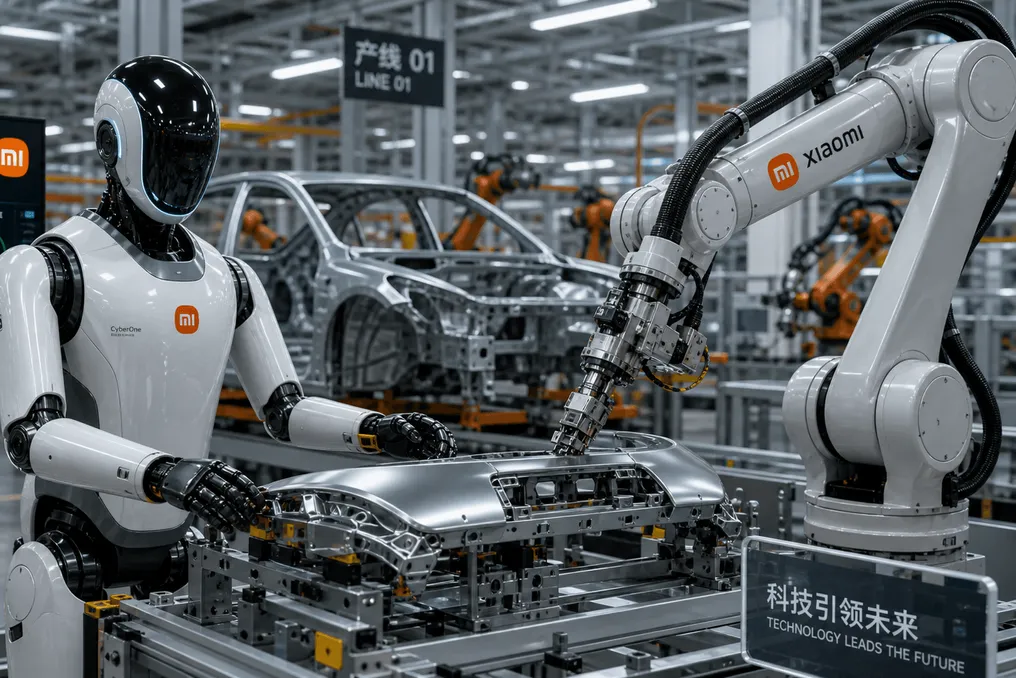
Today, one in every twenty industrial robots produced in China is made here, making Beijiao the country's largest center for industrial robot production. A collaborative robot was tested at the HiTrom Han's Robotics Production Intelligent City, which is a major smart manufacturing base in Beijiao. Its bright orange robotic arm performed operations with an accuracy of less than 0.02 millimeters.
Zhou Zhang'o, Deputy General Manager of HiTrom Han's Industrial Co., Ltd., noted that over twenty companies operate in one building. Among them are manufacturers of reducers, servo motors, robot casings, or complete robotic systems. He explained that components manufactured on the upper floors can be immediately delivered downstairs for assembly.
Integration and Efficiency
Tao Yuanming, Secretary-General of the Shunde Robotics Association, added that engineers can complete development on the first floor in the morning, receive components from the second floor in the afternoon, and test the prototype the same day. In Beijiao, the practice of 'develop in the morning, check in the afternoon' has become routine.
Huang Jinshuo, general manager of a local robotics company, reported that for one robot, over 90% of the supply chain can be sourced locally in Beijiao, and all necessary components are assembled within half an hour. Yuan Xuehua, deputy general manager of another robotics company, emphasized that such rapid response and close cooperation have significantly shortened the entire process—from design and prototyping to testing—creating a highly efficient industrial ecosystem with closely integrated local supply chains.
Development and Business Support
Zhou also mentioned that the manufacturing base now includes over 200 enterprises in robotics and related industries. Once fully realized, the park is expected to generate an annual output of 10 billion yuan (US$1.47 billion). Hu Bin, Deputy Mayor of Beijiao, stated that the development of robotics in Beijiao became an inevitable consequence of market pressure.
Previously, Beijiao was known as one of China's leading home appliance manufacturing centers, home to well-known companies like the appliance manufacturer Midea. Thanks to China's reforms and openness, entrepreneurs in Shunde built a thriving home appliance industry. However, local enterprises realized that the growth of this industry would eventually reach a limit.
Around 2010, when the home appliance market slowed down and labor costs continued to rise, automation became a necessity. Tao recalled that without automated production, factories simply could not meet demand for orders. Market pressure became the primary force pushing Beijiao toward robotics.
Foundation for Transition
Confidence in such a transition was ensured by Beijiao's solid manufacturing base. By then, the town had already developed over 900 manufacturing enterprises engaged in sheet metal processing, plastic molding, motor production, and surface treatment. Many key technologies required for industrial robots were already available locally.
Welling Motor, a subsidiary of Midea, is a leader in the production of servo motors—one of the most critical components of industrial robots. Precision gears needed for reducers can be manufactured by neighboring mold makers. Furthermore, years of automation modernization carried out by major manufacturers in Beijiao and its surroundings have formed a large pool of engineers experienced in production processes, equipment, and industrial control systems. Many of them later founded their own businesses, becoming the first entrepreneurs in Beijiao's robotics industry.
Attracting Global Players
After the German manufacturer of industrial robots and factory automation systems, KUKA, opened its plant in Beijiao, a group of leading global robotics enterprises flocked to the town. Suppliers at both the upper and lower levels began gathering in the vicinity of this industry leader, gradually forming a complete, self-sufficient industrial chain.
The Maturist ecosystem is not just about attracting companies; it is about helping them take root and grow. The story of Huayan Robotics is a prime example of local success in the HiTrom Han's Robotics Production Intelligent City. In 2018, officials from the China-German Industrial Park in Foshan coincidentally met the Huayan Robotics team at the Hannover Messe exhibition in Germany. Although the company possessed advanced collaborative robot technology, its growth was limited by restricted space and high operating costs.
Over the next two years, local investment promotion officials visited the company repeatedly, presenting the manufacturing advantages of Shunde and the industrial ecosystem of Beijiao. Their persistence ultimately convinced the company to relocate to Beijiao. Beijiao provided exactly what was needed: the HiTrom Han's Robotics Production Intelligent City offered modern manufacturing facilities. The industrial park positioned Huayan as a leading enterprise in the local chain, fostering coordinated innovation with supply chain partners. At the same time, the local government provided support throughout the entire lifecycle, offering services ranging from credit guarantees to intellectual property protection.
Robotics Development Strategy
In March 2025, Huayan Robotics officially moved its headquarters to Beijiao. With sufficient industrial space, comprehensive auxiliary services, strong talent retention, and diverse financial channels, Beijiao has developed a full systematic project for the robotics industry, allowing enterprises to establish themselves immediately upon arrival.
Today, AI-embedded robots have become a global hot topic. Instead of competing with major metropolises in training infrastructure or AI talent, Beijiao chose a differentiated path. It continues to focus on industrial robot casings, core components, and manufacturing. Lavichip, a company specializing in robot controllers, relocated to the industrial park and has since reduced operating costs by 30% while its output grows year over year. The park also hosts manufacturers of various specialized robots, including machines for cleaning solar panels, swimming pools, automated cooking, and cleaning glass facades of high-rise buildings.
The transformation of Beijiao demonstrates how a traditional manufacturing town can nurture new industries and organically develop a complete industrial cluster. The experience of Beijiao's robotics industry shows that developing new high-quality productive forces requires an applied approach, a solid manufacturing base, and close collaboration between industrial chains. By building upon existing strengths and continuously improving them, traditional manufacturing can generate powerful new drivers for high-quality development.