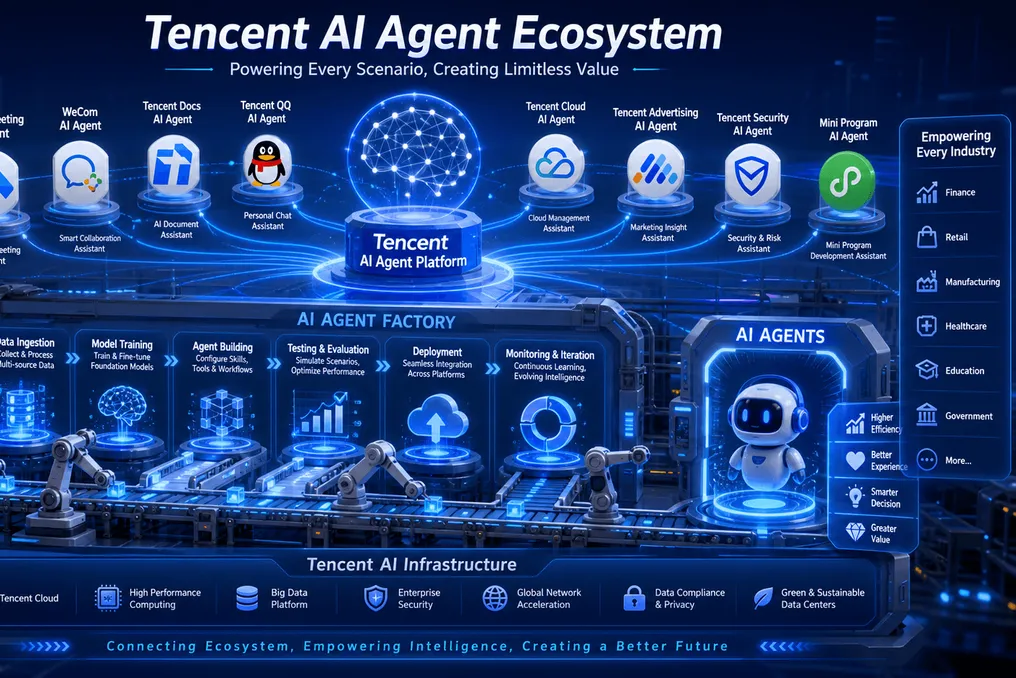
By 2026, Tencent is showing signs of transforming into a powerful agent production hub. The company launched WorkBuddy, which attracted 8.85 million monthly visitors, and introduced a range of new products into its ecosystem, including Zaohua Gongfang, Ardot, Miora, WorkRally, DataBuddy, and LearnBuddy.
Strategic Shift in AI Development
Tencent, which was perceived as lagging in AI product implementation over the past two years, has adjusted its strategy. Instead of focusing on creating a single super-app with AI input, the company has begun the process of 'agentification' across its entire product ecosystem. This has led to the formation of an extensive portfolio of agentic products covering areas from desktop productivity and design to data processing and education, making Tencent one of the most active developers of AI agents in China.
Product Functionality and Integration
WorkBuddy integrates virtually all capabilities of the Tencent ecosystem as skills, including WeChat, Tencent Docs, Tencent Meeting, and enterprise services, weaving over two decades of product networking experience into a grid accessible by the agent. Currently, this product leads in the category of desktop agents in China based on daily active users and total user count.
New Directions in the Ecosystem
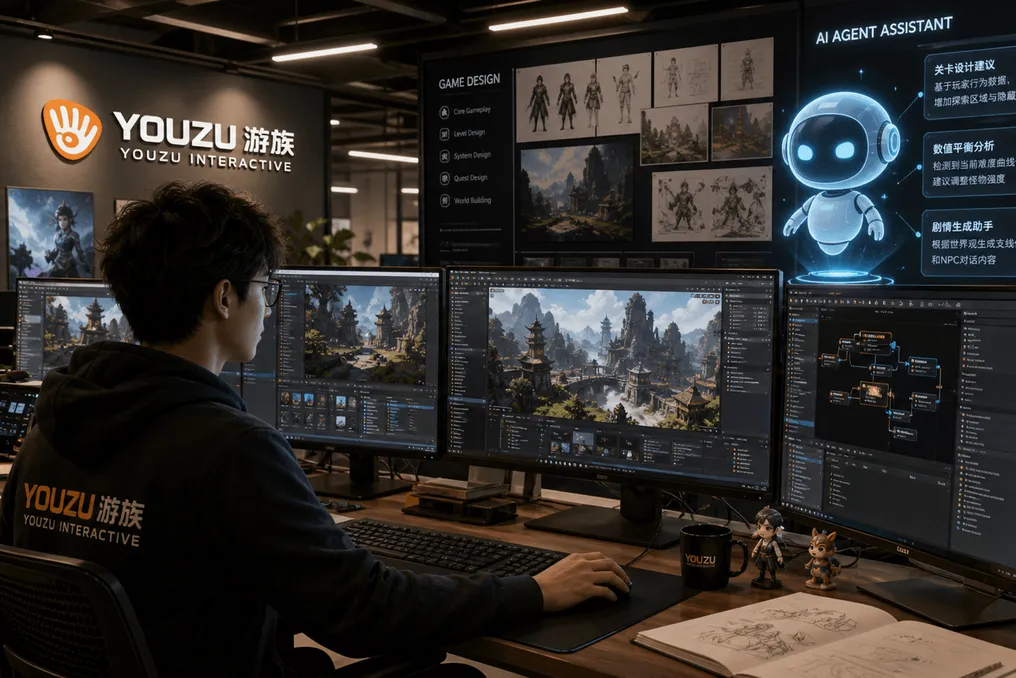
In addition to WorkBuddy, Tencent has released a wave of new agentic products. Zaohua Gongfang is a platform for collaborative character and story creation. Ardot functions as an AI equivalent of Figma for intelligent design, while Miora is a creative design agent. WorkRally is an AI-based comic creation platform. TDream focuses on creating interactive films and game resources using AI. DataBuddy provides AI-based data engineering and analysis services, and LearnBuddy offers expert-guided self-learning.
Difference in Approach from Competitors
Tencent's method differs from competitors' approaches because the agents are embedded within existing product ecosystems rather than requiring users to switch to a new application. For example, the AI assistant Dayuan was integrated into Enterprise WeChat, Tencent Docs evolved towards real-time collaborative text writing with AI, and Tencent Drive now supports petabyte-level asset management using AI. Tencent Lexiang acts as the DNA of corporate knowledge. These improvements transform users' familiar workflows into an agent-oriented experience without requiring behavioral changes.
Structural Prerequisites for the Strategy
The main structural factor underlying Tencent's strategy is that the company already owns some of the densest digital entry points in China: WeChat, Enterprise WeChat, QQ, Tencent Docs, Tencent Meeting, and numerous gaming platforms. Instead of creating a new super-app to compete with ByteDance Doubao or Baidu ERNIE Bot, Tencent can allow agents to evolve directly within these existing scenarios.
The Main Challenge Facing the Company
The biggest problem is not creating individual agent products, but ensuring their functionality across Tencent's organizational boundaries. The question arises: will an agent be able to cross departmental, product line, and isolated data storage boundaries? Will it be able to call capabilities from various Tencent systems on behalf of a single user? If successful, the Agent will become a new operational layer across the entire Tencent ecosystem. Otherwise, each Agent will remain just another tool in an increasingly overloaded product portfolio. According to Pony Ma, the company's path resembled a 'leaking ship' last year, then managed to stay afloat, and now is undergoing an urgent acceleration. The 'agent factory' strategy reflects Tencent's attempt to make speed its competitive advantage.