China's electric propulsion industry in aviation has achieved significant success in 2026 through the delivery of the AEE25 engine, full certification of EHang, and breakthroughs by Wolong Electric, paving the way for a low-altitude flight economy.
Achievements in Manufacturing and Certification
Wuxi received the first serial unit of the AEE25 aviation electric motor on June 5th, marking a tangible step toward mass production of critical power components for China's electric aircraft and eVTOL industry. This success coincided with EHang receiving all four certification documents for commercial operation of the EH216-S, making it the world's first eVTOL with full type certification for passenger transport.
Technical Challenges of Propulsion Systems
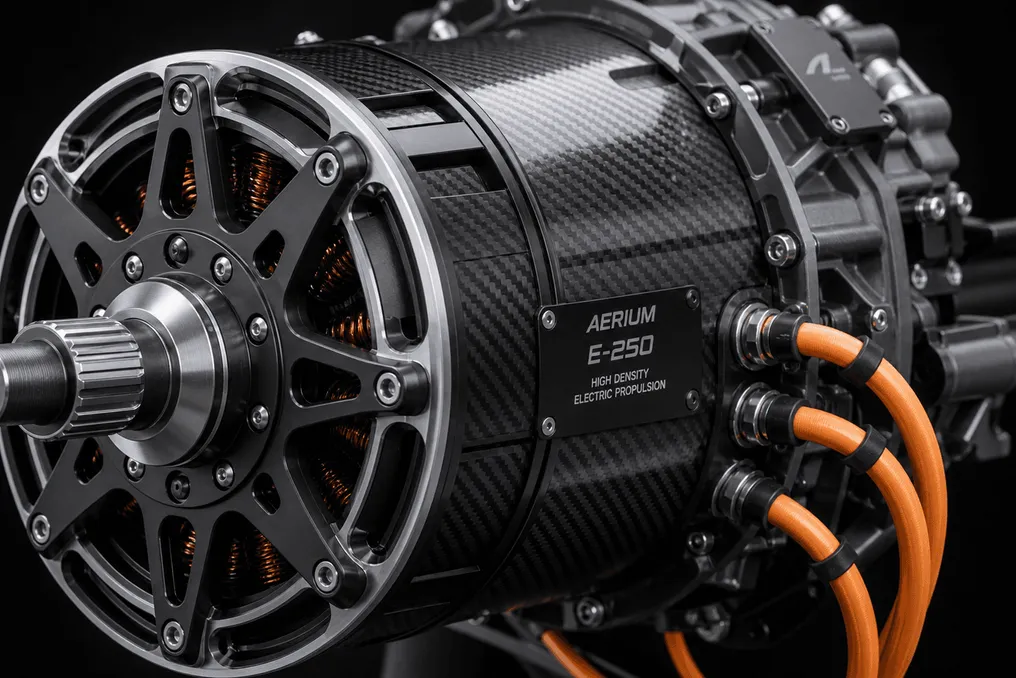
The task in propulsion systems is extremely complex. Aviation electric motors must provide high power density, reliability under extreme temperatures and vibrations, low weight, and safety compliant with certification standards, demanding much more than automotive or industrial electric motors. Chinese manufacturers, including Wolong Electric Group, have developed high-power density aviation motors equipped with redundant windings, high-temperature insulation, integrated liquid cooling, and SiC-based power electronics, which helps reduce the overall system volume. Wolong's experience demonstrates the dual complexity of simultaneously achieving technical specifications and obtaining airworthiness certification.
eVTOL Market Development and Regulation
Several Chinese eVTOL manufacturers have moved beyond the prototype stage. EHang holds full type certification for the EH216-S model, while AutoFlight AE200 and other crewed eVTOL models are undergoing certification processes alongside the certification of their supporting electric propulsion systems. In February 2026, the Civil Aviation Administration of China issued Airworthiness Standards for High-Power Aircraft, establishing a regulatory framework for electric aircraft certification. This move occurred later than EASA's 2018 guidelines in Europe but earlier than formal adoption of FAA rules.
Barriers to Further Development
Industry experts from Bihana University and Wolong Electric have identified three main obstacles. Firstly, airworthiness certification cycles remain lengthy due to incomplete standards, increasing development costs. Secondly, vertiport infrastructure and low-altitude airspace management systems are still under development, reducing confidence in commercial implementation. Thirdly, the yield rate of aerospace-grade components remains low, resulting in a significantly higher unit cost compared to similar industrial or automotive components.
Battery Technology and the Future
Limitations related to battery technology have proven less severe than previously anticipated. Modern lithium-ion cells allow for flight ranges of 250–300 km for winged eVTOL configurations with optimized aerodynamics, which is sufficient for most planned urban mobility missions. Future improvements in cell technology could increase range by 50% or more. Hybrid electric solutions offer potential for longer-range missions, but they add technical complexity and certification burden that may not be justified without real demand for long-haul flights.
Prospects for Global Competition
China's eVTOL industry is roughly synchronized with global leaders in terms of certification progress, reflecting the advantage of a fast follower approach in the new regulatory sphere. The critical next step is transitioning from certification to production scale, with AEE25 deliveries and investments in Wolong's production line indicating that Chinese manufacturers are preparing for mass production capable of shifting the competitive balance in the emerging global eVTOL supply chain.