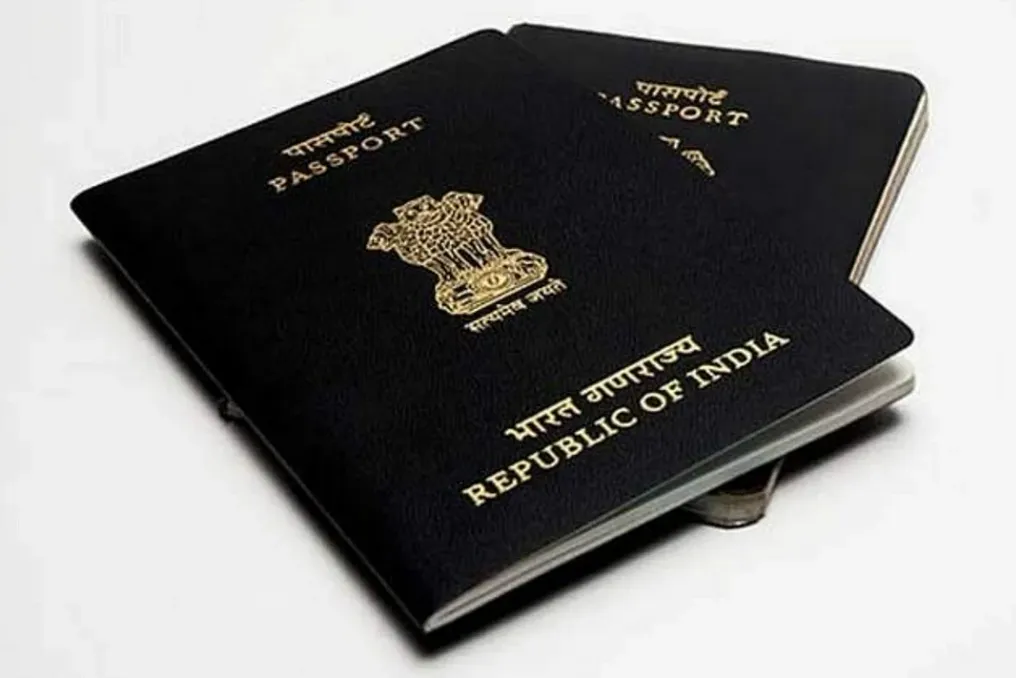
According to the July edition of the Henley Passport Index, the Indian passport has dropped to 80th place in the world ranking. Despite this decline, passport holders can still visit 56 destinations without needing to obtain a visa in advance.
According to the July edition of the Henley Passport Index, the Indian passport has dropped to 80th place in the world ranking. Despite this decline, passport holders can still visit 56 destinations without needing to obtain a visa in advance.
This drop occurred after a period of improvement when India had previously risen to 75th place in the Henley Passport Index 2026, improving its position from 85th in 2025. This recent shift demonstrates how passport rankings can fluctuate, even if travel opportunities remain largely unchanged.
For millions of Indian citizens residing and working in the UAE, this ranking serves as a reminder of the opportunities and limitations associated with the Indian passport when planning international trips.
The Henley Passport Index uses data from the International Air Transport Association (IATA) to assess the freedom of movement provided by 199 passports. India's current mobility score of 56 means that holders of Indian passports can visit 56 locations through a combination of visa-free entry, arrival permits, tourist visas, or electronic travel authorizations (ETAs).
Many of these destinations are located in Asia, Africa, and the Caribbean. However, for several popular places such as the United States, the United Kingdom, and most Schengen Area countries, travelers still require a prior visa.
Experts note that passport rankings are relative, not absolute. A country's position can change even if the number of available destinations remains the same. This happens when other nations faster conclude new visa waiver agreements or expand mutual travel conditions. The strength of a passport is also influenced by factors such as diplomatic relations, border security standards, international cooperation, and trust in travel documents. Thus, a passport ranking is determined not only by the economic size or global influence of a country.
The latest ranking comes amid increased public attention on the Indian passport. Last month, the Ministry of External Affairs (MEA), during Passport Seva Divas, reiterated that the passport is primarily a travel document and should not be considered definitive proof of citizenship. This clarification sparked discussions in political and social circles.
Although passports are issued only after verification by authorities and are widely recognized as reliable proof of nationality, the government insists that citizenship is established through underlying legal records and documentation, not the passport itself. This discussion coincides with the recent review of passport fees—the first increase in 14 years—which has once again drawn attention to the value, cost, and international mobility benefits of the document.
Holders of Indian passports can travel to a number of places without obtaining a visa beforehand, while others offer the option of visa-on-arrival (VOA) or an electronic travel authorization (ETA).
For Indians residing in the UAE, travel options may be broader than those available solely through the passport. Many countries offer simplified entry procedures, visa-free access, or visa-on-arrival for Indian citizens holding valid UAE residency visas. Popular tourist destinations often chosen by UAE residents include Mauritius, Seychelles, Thailand, Malaysia, Indonesia, Nepal, and Bhutan.
Countries such as the Maldives, Sri Lanka, Jordan, Georgia, Azerbaijan, Kenya, and Madagascar also provide relatively simple entry procedures for many Indian travelers based in the UAE, provided they comply with current immigration rules. Tourism experts advise passengers to check entry requirements directly with airlines, embassies, or immigration services before booking trips, as visa regulations can change rapidly.
The Consulate General of India in Dubai has clarified that applications from individuals arriving without a prior appointment will not be accepted for consular services.
In a statement published on Tuesday, the consulate emphasized that all visits for consular services must be strictly scheduled through the official online booking system.
Visitors were advised to book desired time slots using the special link: book.passportindiauae.com.
The provision of Indian consular services in the United Arab Emirates has faced delays due to a legal dispute concerning a contract, leaving many expatriates in an uncertain situation.
The conflict arose between two companies that failed to pass the tender process and the decision by the Government of India to award the contract for providing consular services in the UAE, Saudi Arabia, Kuwait, and Australia. This dispute is currently being reviewed by the Supreme Court of India.
Consequently, as of Thursday, temporary service for passport renewals and other types of services in the UAE is being provided by the Consulate General of India (CGI) in Dubai and the Embassy of India in Abu Dhabi.
Earlier this year, the Embassy of India in Abu Dhabi announced the replacement of BLS, which had been handling passport, visa, and consular services for over ten years. The new contract was awarded to Alhind Tours & Travels following a competitive bidding process in November 2025. Alhind was chosen because it offered the lowest financial bid among the four companies that passed the preliminary selection.
However, the transition, originally scheduled for July 1st, was postponed by the Indian mission in the UAE citing 'administrative reasons.' In a social media post, the mission stated that it would begin providing consular services 'on a limited basis' starting July 2nd.
The two companies that failed to win the tender jointly challenged the bidding process and the decision itself in court, claiming they were disqualified 'without any stated reason.' These companies questioned the reason for exclusion during the technical evaluation stage, despite their proposals meeting all requirements. One company scored 67.5 percent in the technical evaluation, just below the threshold of 70 percent, but the company argues that the evaluation was 'arbitrary.'
In documents submitted to the court, the company provides examples of what it calls an 'explicitly arbitrary' assessment. For instance, under a criterion related to application processing times, the company was assigned zero points. Yet, the company explicitly promised to complete application processing within 30 minutes—the exact benchmark required by the tender. According to the evaluation rules, zero points should only be given if the participant proposed a processing time exceeding 30 minutes.
Similarly, the companies were given 'disproportionately low scores' on other criteria, including application assistance services, complaint resolution mechanisms, and the company's market reputation. The company asserts that it submitted 'detailed proposals' for each of these areas, but the evaluation committee 'provided no justification' for the low scores. The participant claims that the 'constant refusal to disclose reasons' renders the decision 'unfounded, non-transparent, and violating the principles of fairness and transparency.'
The case was previously heard in the High Court of Delhi, India. On June 5th, the High Court adjourned the hearing until July 13th without halting the transition. This allowed the new provider to begin taking over operations even while the legal challenge remained unresolved.
The unsuccessful participants have now approached the Supreme Court, arguing that allowing the transfer of cases before the court reviews the evaluation records will lead to 'irreversible' consequences. The company warns that once the handover is complete and application processing begins, 'contractual rights will crystallize,' and 'third-party rights will arise,' making it difficult to overturn the decision even if the court later finds the tender process flawed. Simply put, the legal challenge will become 'substantially meaningless.'
The Supreme Court had previously directed the government to provide the losing party with a breakdown of the scores received. However, the company states that the 'main reasons for disqualification remain confidential,' which violates the 'principles of transparency that should govern public procurement.'
The Supreme Court is expected to review this case soon. Depending on the outcome, the implementation of consular services may continue as planned, be further delayed, or even be subject to re-evaluation.
Currently, the Indian mission in the UAE has announced limited acceptance of citizens at the point of application starting July 2nd, offering passport, visa, and legalization services based on a 'first come, first served' principle from 9:00 AM to 12:30 PM. Nevertheless, for many expatriates awaiting passport renewals, visa applications, or certificates for children's college admissions, the uncertainty is far from over.