According to a Bloomberg report, OpenAI's first physical device is in the development phase. This appliance will be a smart speaker without a screen, capable of moving and being fully integrated with ChatGPT's artificial intelligence.
According to a Bloomberg report, OpenAI's first physical device is in the development phase. This appliance will be a smart speaker without a screen, capable of moving and being fully integrated with ChatGPT's artificial intelligence.
Anonymous sources familiar with the company's plans indicated that the hardware will be designed as a 'humanized AI companion that lives in the home.' This device would have a defined personality and would be programmed to learn about the user over time, providing a highly personalized service. The functional scope includes access to the user's digital life, even encompassing their emails.
Bloomberg detailed that the device will incorporate 'mechanical elements that move on their own' and was designed to be a physical representation of OpenAI's ChatGPT, functioning as a companion. The decision not to include a screen distinguishes this product from traditional smart speakers already on the market. In the development of this project, there was collaboration from former Apple engineers, professionals who were crucial in creating products like the iPhone and the Mac.
Previously, OpenAI had signaled its intention to launch a hardware product, leading to speculation about its own smartphone, which would put the company in direct competition with Apple.
This advancement in the field of hardware occurs amid a lawsuit filed by Apple last week. Apple accused OpenAI of trade secret misappropriation, alleging that the accusations presented are only 'the tip of the iceberg,' suggesting that more irregularities will be exposed during the legal discovery phase. For its part, OpenAI vehemently refuted any wrongdoing.
Sources consulted by Bloomberg report that OpenAI assesses that its new product 'significantly distances itself from anything Apple currently has on the market' and considers it 'unlikely to violate' the competitor's trade secrets.
In parallel, Hark, an AI laboratory founded by Brett Adcock, raised $700 million (equivalent to R$ 3.6 billion) in a Series A round, surpassing the initial demand in May and reaching a valuation of $6 billion (R$ 30.5 billion). Hark's stated purpose is to develop what they call 'personal intelligence,' using proprietary AI models combined with custom hardware, described as a 'universal interface between humans and machines.' To date, Hark has not disclosed the physical format of its device.
The Nuclear Power Corporation of India Limited (NPCIL) stated on Wednesday that the alleged data leak related to the Kudankulam project pertains exclusively to conventional Balance of Plant (BoP) auxiliary equipment, not to nuclear safety or protection systems.
This statement followed a report by the news agency Reuters that the hacker group World Leaks had posted over 19,000 confidential files concerning the Kudankulam Nuclear Power Plant in Tamil Nadu on the dark web.
NPCIL clarified that the contract for the Engineering, Procurement, and Construction (EPC) of the general services package – auxiliary equipment (BoP) – was awarded to Reliance Infrastructure Ltd. in 2018 through a public tender. The company emphasized that during this tender, NPCIL provided potential participants with preliminary drawings and technical specifications.
Based on this data and project requirements, the EPC contractor, Reliance Infrastructure Ltd., developed detailed engineering drawings after consulting with the respective Original Equipment Manufacturers (OEMs). These designs, which complied with the technical requirements, were approved by NPCIL after verification.
According to NPCIL, the scope of the EPC contract covers the design, procurement, supply, construction, and commissioning of general service facilities. It was added that these facilities are ordinary in nature, similar to those used in thermal power plants and other processing industries, and are not connected to nuclear safety or protection systems.
In its statement, NPCIL reiterated that the information allegedly available publicly relates only to conventional auxiliary Balance of Plant (BoP) facilities and has no connection to any systems or information related to nuclear safety or protection.
The documents analyzed by Reuters include engineering plans for ventilation and cooling systems, layouts of general control rooms, equipment inspection reports, supplier lists, vendor proposals, meeting minutes, and insurance policies. Reuters examined these documents, dated from 2016 to mid-2025, but could not confirm their authenticity.
These documents primarily relate to Blocks 3 and 4 of the Kudankulam plant, which are currently under construction and are expected to begin operation by 2027. They apparently lack design solutions for the main nuclear reactor systems supplied by the state Russian company Rosatom.
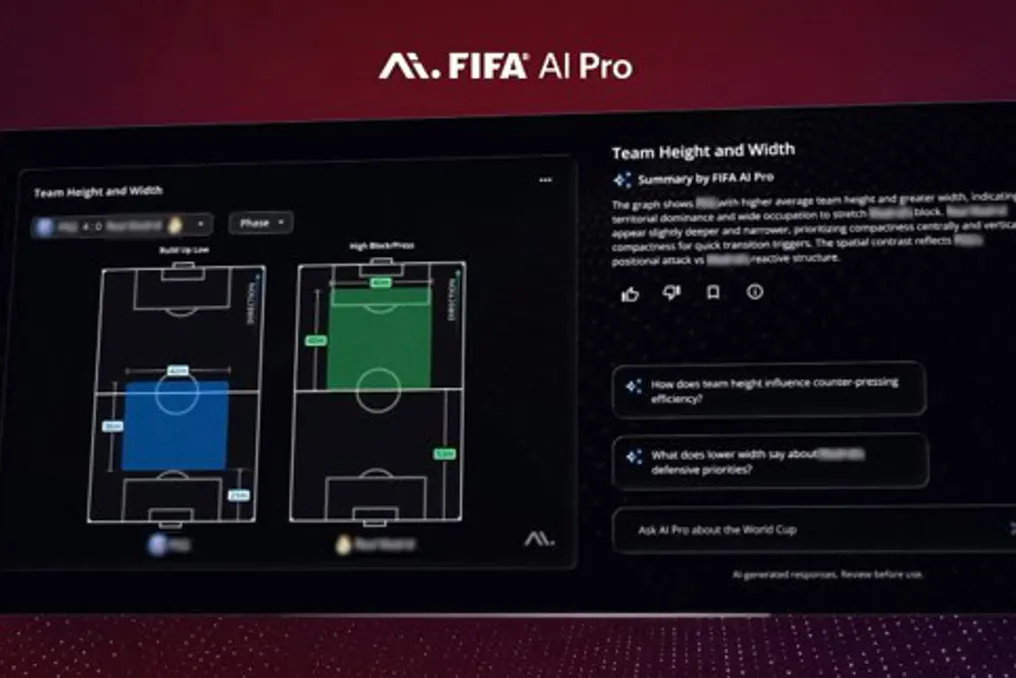
The 2026 World Cup is being characterized not only by the large number of participating teams but also by a transformation in how teams prepare for matches. For the first time, all 48 teams that competed in the tournament accessed FIFA AI Pro, an artificial intelligence (AI) tool created by Lenovo in collaboration with FIFA to provide advanced tactical analyses to all delegates.
According to reports from the involved organizations, this system collects and processes millions of data points and over two thousand metrics, generating reports, graphs, animations, and other useful resources for coaches and technical committees in preparing for confrontations. Lenovo explains that FIFA AI Pro was designed to expand access to high-level analyses, something that was previously limited, especially to federations with greater financial power.
Developed on Lenovo's xIQ agent platform and utilizing the Lenovo AI Factory infrastructure, the system is classified by the company as a Knowledge Super Agent. It orchestrates several AI agents capable of examining vast amounts of information, analyzing over two thousand indicators, and generating insights in minutes. The purpose, according to Lenovo, is to ensure that new teams or those with smaller budgets have access to the same level of tactical preparation as the major powers of global football.
The implementation of FIFA AI Pro occurred in a World Cup edition marked by unexpected outcomes. Among them, Cape Verde concluded its participation without suffering defeats in regular time. The team drew with Spain in the opening match and was eliminated only in extra time against Argentina in the round of 16. Another newcomer, Curaçao, drew with Ecuador. The Democratic Republic of Congo recorded draws against Colombia and Portugal, while Ghana managed to draw with England. In contrast, Germany, the four-time champion, was eliminated after losing to Paraguay.
Lenovo emphasizes that, despite these results being the result of multiple factors, all teams had access to the same analysis platform during the championship.
For Arsène Wenger, FIFA's Director of Global Football Development, the incorporation of FIFA AI Pro signals a change in the routine work of analysts and coaches before matches. He stated that the success of FIFA AI Pro at the 2026 World Cup inaugurates a new phase in game analysis and preparation. By automating the search, organization, and interpretation of huge volumes of data and video content, football experts can dedicate less time to manual research or video editing, focusing on the essential: obtaining performance insights, defining tactical decisions, and supporting teams in achieving a competitive advantage.
Lenovo informed that the platform was built in partnership with football analysts and employs FIFA's Football Language, a specific model created to understand the terms, concepts, and relationships inherent to the sport. The company assures that the system can interpret synonyms, answer queries in different languages, and handle hierarchical concepts related to football. In addition to answering questions, the AI performs real-time calculations, interprets multiple metrics simultaneously, and uses contextual reasoning to deliver more detailed analyses, adjusting between fast and in-depth processing modes as needed.
According to Lenovo, FIFA AI Pro goes beyond simple text generation. The platform provides contextual analyses complemented by visual resources, such as graphs, specific football widgets, clips from official World Cup broadcasts, and three-dimensional reconstructions of plays. These materials allow for the visualization of every play from different angles and positions on the field, adding more elements to the technical evaluation.
Ken Wong, Executive Vice President and President of Lenovo's Solutions & Services Group (SSG), highlighted that FIFA AI Pro materializes the company's strategy to increase access to AI. He stated:
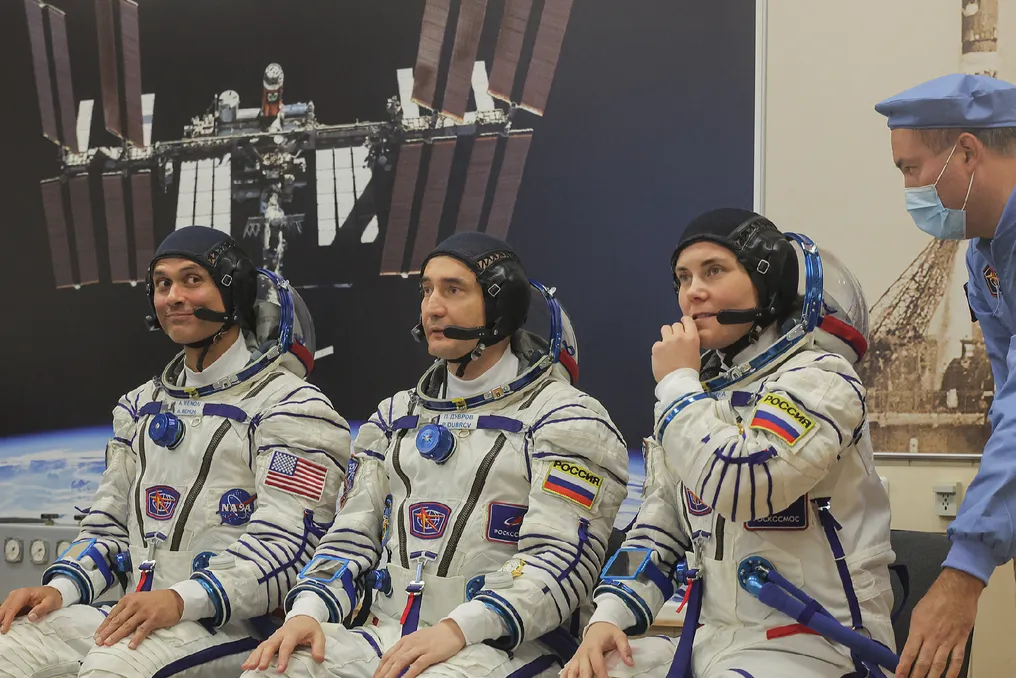
The Soyuz MS-29 spacecraft successfully launched from the Baikonur Cosmodrome in Kazakhstan on July 14, 2026. The launch was carried out using the Soyuz-2.1a launch vehicle at 17:48 Moscow time (14:48 GMT).
The spacecraft carried two Russian cosmonauts—Pyotr Dubrov and Anna Kikina—and one US astronaut—Anil Menon. This mission marks the beginning of Expedition 75 to the orbital laboratory. After the arrival of the new crew, part of Expedition 74's crew will return to Earth.
According to the mission plan, the three crew members will spend about 261 days on the International Space Station (ISS). During this time, they will conduct scientific research, demonstrate technologies, and perform scheduled station maintenance. The Russian state corporation Roscosmos reported that the two Russian cosmonauts plan to conduct 38 scientific experiments and make two spacewalks from the Russian segment of the ISS to support technical maintenance.
The launch attracted the attention of individuals such as Denis Manturov, First Deputy Chairman of the Government of Russia, Dmitry Bakanov, CEO of Roscosmos, and NASA Administrator Jared Isaacman. The presence of the NASA Administrator at the Baikonur Cosmodrome was the first in eight years.
In July 2022, Roscosmos and NASA signed an exchange agreement that allows Russian cosmonauts to fly on American spacecraft, and NASA astronauts to participate in Soyuz missions. This agreement is aimed at ensuring the continuous presence of both Russian and American crew members on their respective segments of the ISS and supporting the safe and uninterrupted operation of the station. The Soyuz MS-29 mission continues this foundation of cooperation, highlighting the role of the ISS as one of the few areas of sustainable international interaction in manned space flights.