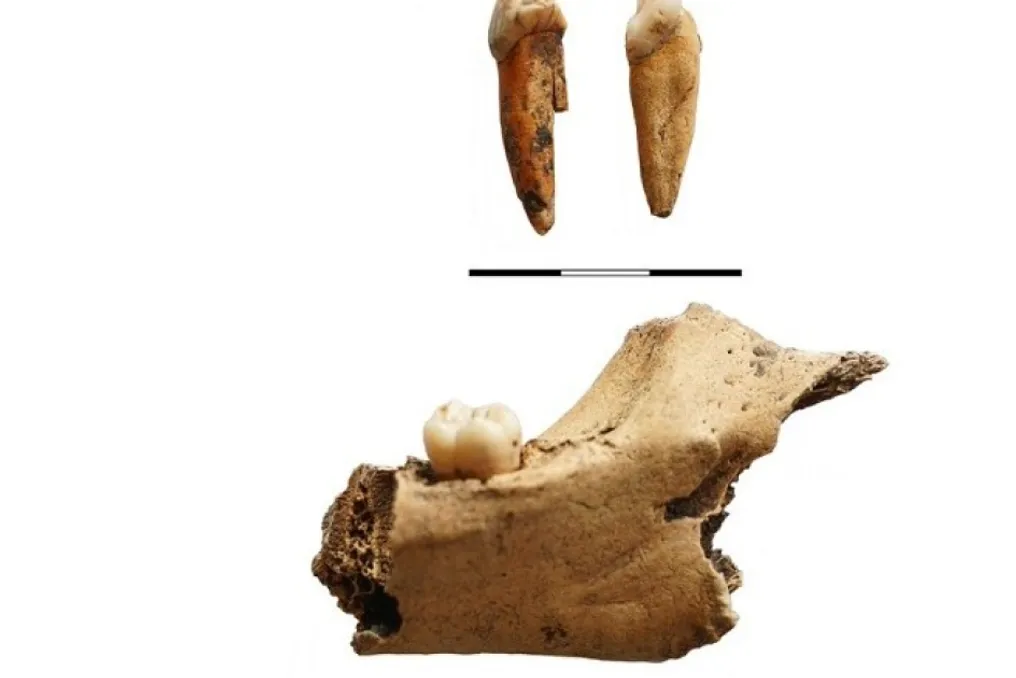
Russian scientists from the Institute of History, Archaeology and Ethnography of Peoples of the Far East of the Russian Academy of Sciences have allegedly found the oldest human remains in Primorye. A fragment of a lower jaw with two teeth was discovered in the entrance area of the Khankayskaya-1 cave, located near the village of Prokhori, in the Spassky district of Primorsky Krai.
Dating and Analysis of Finds
According to preliminary estimates by specialists, these remains are about 12 thousand years old, which was confirmed by radiocarbon dating results. Currently, paleogeneticists, according to information from the Russian Academy of Sciences website, are sequencing and analyzing the DNA of this ancient human.
Archaeological Artifacts
In addition to skeletal remains, researchers also extracted a number of archaeological materials. Among them are small obsidian flakes used to create composite tools. The cave dwellers used green volcanic glass as raw material, the nearest deposits of which are approximately 250 kilometers from the settlement site.
Comparison with Other Finds
Despite the significance of the ancient remains, such finds are extremely rare in Primorsky Krai due to the specific nature of the local soils. Previously, the earliest finds were considered to be the bones of seven hunter-gatherers from the Chertovy Vrata cave, who lived about 7,700 years ago and, according to DNA data, belonged to the population of ancient northeastern Asians.
Study of Burial in Treugolnaya
Furthermore, researchers analyzed an ancient skeleton found in 2021 in the Treugolnaya cave in Primorye. This skeleton belonged to an elderly woman of Mongoloid appearance with a artificially deformed skull, who died approximately three thousand years ago. DNA analysis showed that this woman is genetically related both to ancient northeastern Asians from the Chertovy Vrata cave, who lived almost eight thousand years ago, and to modern Uljans. This information was published in the journal Archaeology, Ethnography and Anthropology of Eurasia.