A devastating report released by the United Nations Independent International Commission of Inquiry on the Occupied Palestinian Territory, including East Jerusalem, and Israel accuses Israeli authorities and security forces of deliberately targeting Palestinian children. The Commission concludes that these actions constitute genocide, crimes against humanity, and war crimes within the Gaza Strip, as well as war crimes in the occupied West Bank.
Основные выводы доклада
The Commission asserts that the killing, maiming, starvation, detention, and psychological destruction of Palestinian children cannot be attributed to mere collateral damage. Instead, the report posits that children have become intentional targets of Israeli military policy. This finding raises profound questions regarding the future integrity of international law.
The report is based on extensive documentation, including witness testimonies, forensic evidence, satellite imagery, military analyses, medical records, and years of collected data, rather than being solely an emotional plea.
Масштабы трагедии
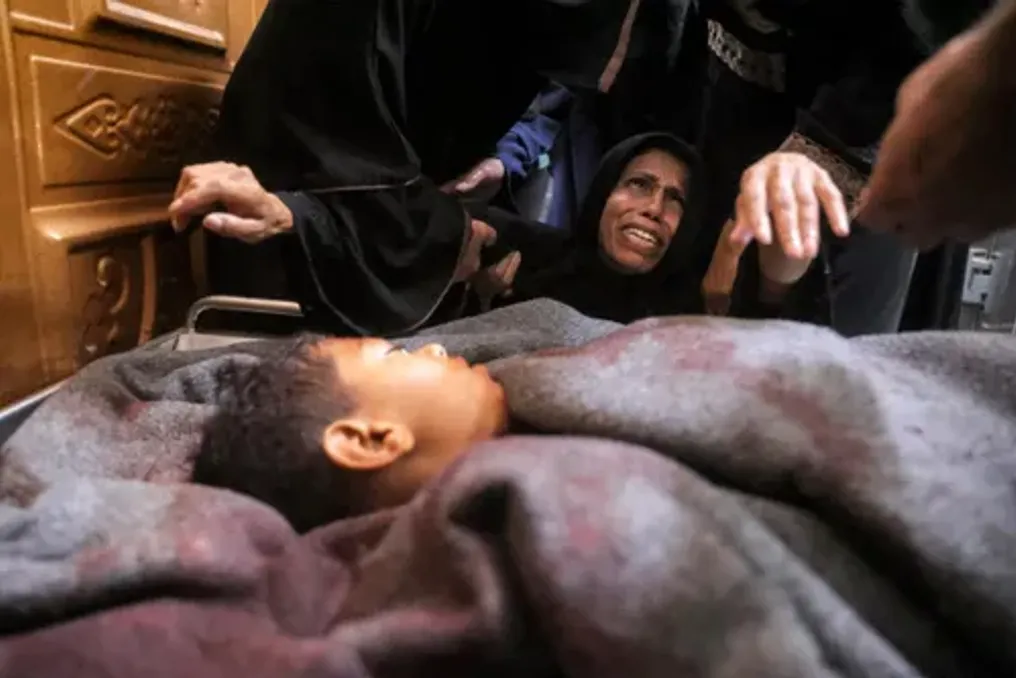
Since October 2023, the Commission estimates that at least 20,179 Palestinian children have been killed, and over 44,000 have been injured. Children account for approximately thirty percent of all Palestinians killed, placing the Gaza conflict among the deadliest for children in contemporary history. The document meticulously records instances where children were subjected to sniper fire, drone attacks, or killed while searching for necessities, despite posing no military threat.
Furthermore, the report details attacks on critical civilian infrastructure, such as maternity hospitals, neonatal wards, schools, orphanages, and shelters. It also scrutinizes the blockade of essential supplies like food, water, and medicine, framing starvation and the breakdown of medical services as instruments of war against the civilian populace, particularly the most vulnerable young members.
Практики задержания и системное насилие
The investigation into Israeli detention practices involving Palestinian minors reveals accounts of torture, sexual violence, degrading treatment, and disappearances within detention facilities, with no information provided to families. The Commission concludes that these abuses are part of a wider pattern of collective punishment aimed at Palestinian society across generations.
These findings align with prior warnings from organizations such as Save the Children (in its February 2024 report) and UNICEF (dating back to February 2013). Additionally, Palestinian journalist Wesam Afifa documents the severe violence within Israeli concentration camps established for Palestinians in his book, Survivors of the Darkness.
Разрушение самой сути детства
A particularly alarming conclusion drawn by the UN report is that the devastation transcends physical death; childhood itself has transformed into a battleground. Psychological trauma, displacement, hunger, interrupted education, and permanent disability collectively represent what the Commission terms the destruction of 'the essence of childhood.'
Документация и международное право
The Commission's conclusions are not sudden; Palestinian journalists have documented harrowing scenes for nearly two years, including children pulled from rubble, infants dying due to lack of electricity, and families destroyed by airstrikes. Irene Khan, the UN Special Rapporteur on freedom of opinion and expression, noted that Gaza has become the 'deadliest conflict ever for journalists'.
International bodies like Save the Children, Defence for Children International–Palestine, Human Rights Watch, and Amnesty International had previously issued similar warnings regarding the dangers faced by children, the necessity of military action, and violations of international humanitarian law principles of distinction and proportionality. The new UN report synthesizes this extensive body of evidence into a singular legal assessment.
In January 2024, the International Court of Justice deemed South Africa's claim of genocide by Israel plausible and mandated provisional measures requiring Israel to prevent prohibited acts under the Genocide Convention, preserve evidence, and allow humanitarian aid. Subsequent court orders reinforced these demands as conditions worsened in Gaza, recognizing the grave risk to the Palestinian population.
Реакция Израиля и требование подотчетности
Israel's response to the evidence has been characterized by dismissal; Israeli officials have labeled the report as politically biased and motivated. They have rejected its conclusions entirely without providing substantial counterarguments to the specific incidents, witness testimonies, or forensic data presented by the investigators.
The article questions why thousands of children have perished under circumstances repeatedly documented by various parties if they were not deliberately targeted. It challenges the Israeli authorities to explain the repeated strikes on hospitals, schools, and shelters, the attacks on humanitarian convoys, and the lack of accountability in military investigations.
The author stresses that merely asserting institutional bias does not suffice; the refusal to engage with evidence is itself a troubling aspect of the conflict, undermining the principle of state accountability under international humanitarian law.
Значение судебной независимости
The UN Commission's findings underscore the vital role of judges who view law as a defense against arbitrary power. Justice S. Muralidhar, who chaired the committee, is highlighted as a respected constitutional jurist from India known for upholding civil liberties and protecting vulnerable groups.
His commitment to constitutional duty was demonstrated during the communal violence in northeast Delhi in February 2020, where he convened an emergency hearing to ensure injured victims reached hospitals and questioned the Delhi Police's failure to register cases against political leaders. Despite this, his subsequent transfer generated concern among legal professionals regarding judicial independence.
This principle—that courts must examine evidence impartially, especially for the least powerful—is mirrored in the work of the UN Commission. Serious evidence requires serious engagement, which is the primary obligation of any state claiming adherence to the rule of law.
Вызов международному порядку
Ultimately, the UN Commission's report poses a question to the international legal order established after World War II: whether it retains the moral capacity to protect children from organized violence. If over 20,000 children can be killed while international diplomatic institutions operate normally, the promises of the Genocide Convention, the Geneva Conventions, and the Convention on the Rights of the Child are severely diminished. While the report cannot halt the war or restore lost lives, it creates an indelible historical record.