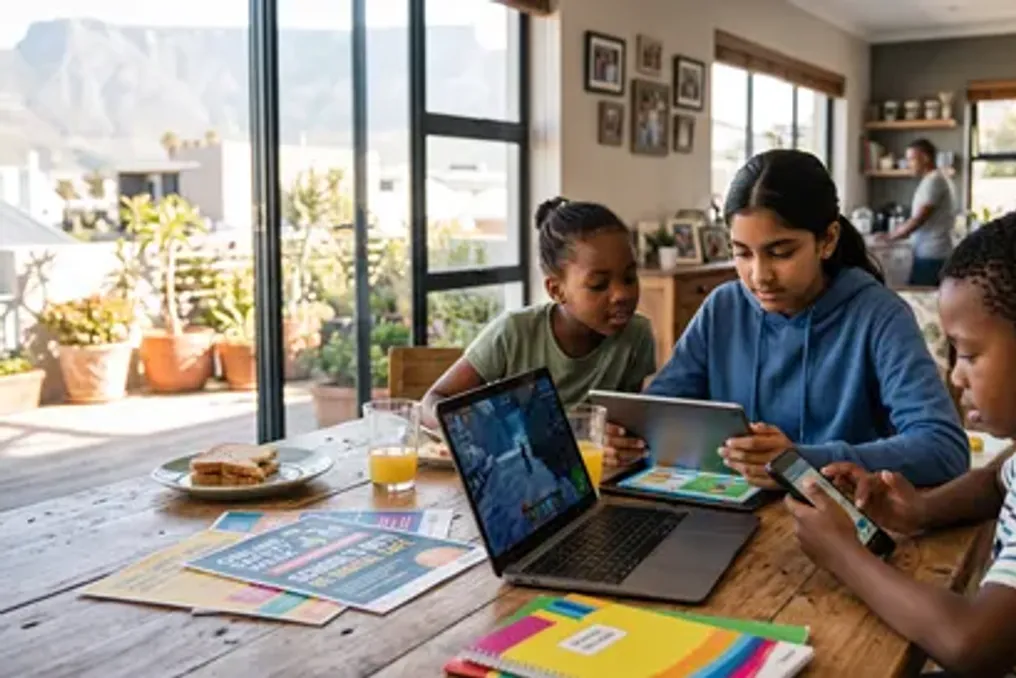
With the start of school holidays, parents in South Africa face a familiar task: how to ensure children have safe and interesting time at home. However, today this problem extends beyond physical safety to include cybersecurity issues.
With the start of school holidays, parents in South Africa face a familiar task: how to ensure children have safe and interesting time at home. However, today this problem extends beyond physical safety to include cybersecurity issues.
UNICEF research shows that over 95% of children in South Africa have regular internet access, but only 41% have received any information about online safety. More concerning is the fact that over half of these young people admit to adding strangers to their online networks, which can open the door to dangerous scams and exploitation.
School holidays often lead to increased screen time, reduced routine, and a higher probability of children browsing websites independently. While internet use itself does not carry inherent risks, it creates more opportunities for mistakes, especially when it comes to financial matters.
The number of digital banking fraud cases has sharply increased in South Africa in recent years, with annual losses reaching billions of rand. Most of this damage is caused not by technical hacking of computers, but by social engineering methods—clever tactics aimed at manipulating individuals into revealing personal information, approving transactions, or clicking malicious links. Young people are particularly vulnerable because they possess high self-confidence online but do not always pause to question what they see.
To protect yourself and your family online during the holidays, several basic rules should be followed. Firstly, always pause before clicking on links, especially those offering prizes, discounts, or requiring urgent action. When making purchases or downloads, only use verified platforms, and also check websites for a padlock icon and the 'https' inscription in the address bar. It is also wise to pay attention to small spelling errors in website names used by scammers for deception.
Never share personal or financial information online unless absolutely necessary. Protect your secrets by never giving out a PIN, card security code, or one-time password to anyone, as legitimate companies never request such data. For purchases, it is much safer to use secure payment methods, such as a virtual credit card, instead of direct bank transfers or cryptocurrency, and parents are advised to set up instant transaction alerts to monitor any activity.
Safety is also linked to open communication at home. For younger children aged six to ten, the focus should be on understanding that digital money is real and that not everything online can be trusted. Teenagers aged eleven to thirteen should concentrate on protecting personal information and learning ways to recognize common scam schemes. For adolescents approaching adulthood, this is an appropriate time to learn how credit works, what digital contracts mean, and why financial agreements should not be made lightly.
Of course, children learn just as much by observing adult behavior. When parents demonstrate good habits, such as budgeting, timely bill payments, and checking online stores, they teach lessons that will stay with the child for a lifetime.
Finally, it is crucial to know what steps to take if something goes wrong. If you suspect fraud, you must act quickly and immediately report it to your bank or the South African Fraud Prevention Service to stop the fraudsters. The digital world is meant to be enjoyed, but the main goal of these holidays is to ensure you have the skills to navigate it safely.
Parents, guardians, educators, and community members are urged to openly discuss safety issues with children, monitor their well-being, and immediately report any suspicions of abuse or exploitation to the nearest police station.
Holidays bring more freedom for children, but this inevitably introduces additional risks. While parents aim to give children space to explore without constant supervision, ensuring their protection remains the primary task.
During school breaks, children spend significantly more time indoors, turning homes into high-traffic areas. Fortunately, making a few simple changes can easily prevent common accidents and ensure the home remains a completely safe space:
School holidays provide an ideal opportunity for children to enjoy the surroundings, whether cycling or meeting friends in the park. While developing independence is vital, establishing clear community rules ensures that children remain safe until they return home at dusk.
Before leaving the house, a child must inform someone who they are going with and where they are headed. It is also necessary to teach children to look out for each other and ensure they stay together. It is recommended to maintain contact with neighbors or use trusted community group chats for mutual child monitoring. It is crucial never to talk to strangers and to instruct children to approach trusted community members if they feel unsafe or get lost.
In June, the South African Police Service (SAPS) warned that criminals often target vulnerable children and may take advantage of situations where children are unsupervised.
SAPS appealed to all parents, guardians, and community members to work together to create a safe environment for children during the holidays. The police stated that vigilance, responsible supervision, and adherence to basic precautions can prevent many incidents.
SAPS strongly recommends that both children and adults never hand over their mobile phones to strangers, regardless of their explanations, but instead direct anyone needing help to mall security personnel, police officers, or other responsible authorities.