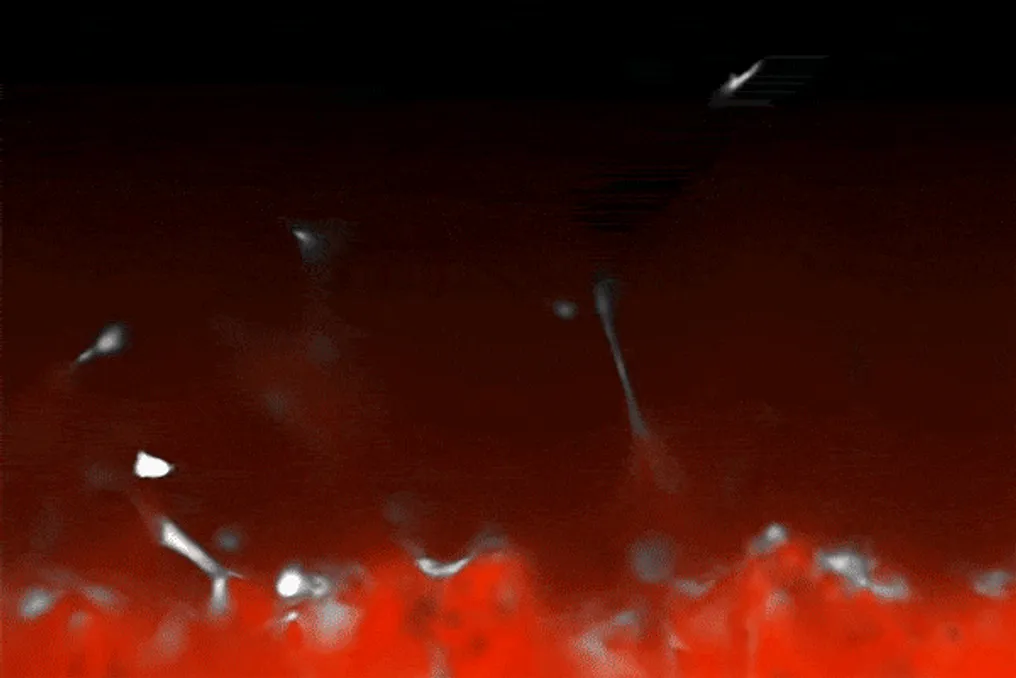
Researchers at the University of Minnesota announced a remarkable achievement in the field of synthetic biology: the creation of artificial cells named SpudCell. These synthetic structures were developed with the ability to perform vital functions, such as nourishing, proliferating, and replicating, although they are not considered life in the traditional sense.
Characteristics of SpudCells
SpudCells are systems designed to mimic fundamental processes of a real biological cell. Although they do not constitute complete organisms, they demonstrate notable characteristics, including growth, division, and competition for resources. The system is significantly simplified compared to natural cells; while the human genome has approximately 20 thousand genes and the bacterium Escherichia coli exceeds 4 thousand, SpudCells operate with only 36 genes.
The components used in this experiment include 36 genes responsible for primary functions, such as DNA copying, in addition to proteins and molecules that enable crucial chemical reactions. Lipid vesicles were also employed, acting as artificial membranes, and externally supplied ribosomes for protein synthesis.
Practical Development of the Project
Kate Adamala, a synthetic biologist at the University of Minnesota, led this project. Her team combined various chemical substances to form structures capable of executing typical living cell reactions. For this purpose, genes from viruses and the bacterium Escherichia coli were incorporated. In a controlled laboratory environment, the system began to self-organize.
A fundamental aspect of this work is that it is not a digital simulation, but rather a direct interaction between matter and matter. The cells emerge after mixing the ingredients and subsequently manage to separate thanks to proteins that promote the folding of their membranes.
Current Limitations and Scientific Implications
Despite the progress, the creators emphasize that SpudCells should not be classified as full living organisms. Kate Adamala stresses this caution by stating that 'life is not binary,' indicating that there is no strict boundary between what is alive and what is not.
The scientific community reacted positively to the finding. John Glass, from the J. Craig Venter Institute, expressed admiration for the integrated functionality of so many elements in a single system. Drew Endy, from Stanford University, characterized the experiment as something constructed, yet exhibiting cellular behavior.
Future Perspectives and Initiatives
The possibilities arising from this study are vast, potentially aiding in understanding the minimum requirements for the existence of life and paving the way for future applications, such as pharmaceutical production or carbon capture. Theoretically, future versions of these cells could synthesize complex compounds currently difficult to obtain in the laboratory.
To foster this advancement, the researchers established the Biotic initiative, which aims to unite scientists and facilitate access to the materials necessary for creating new SpudCells. However, there is a delicate consideration: more sophisticated systems may generate fears about their misuse, motivating the maintenance of development in an open and collaborative format. Drew Endy made an analogy with the first flight of the Wright brothers: a modest, but transformative beginning.
Currently, SpudCells still depend on external supplies and their survival is limited to a few generations, but the advance is already recognized as a significant milestone in synthetic biology.