In the 'Penny For Your Thoughts' column, readers raised several pressing issues, including participation in the FIFA World Cup, justice issues in South Africa, the phenomenon of global distractions, and current difficulties in the country.
In the 'Penny For Your Thoughts' column, readers raised several pressing issues, including participation in the FIFA World Cup, justice issues in South Africa, the phenomenon of global distractions, and current difficulties in the country.
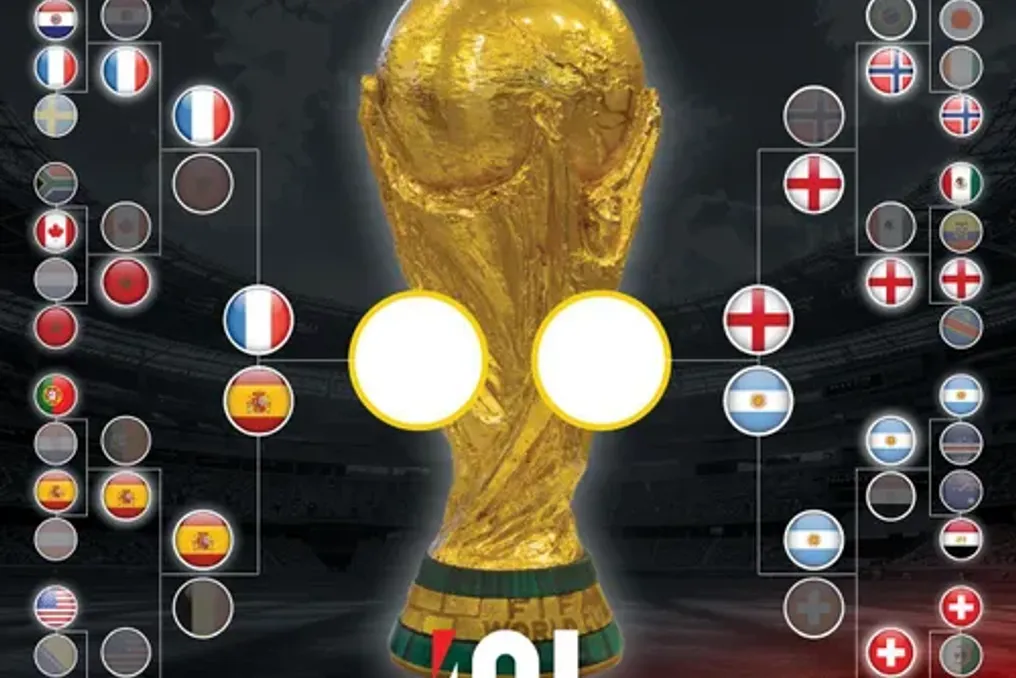
The 2026 FIFA World Cup, concluding on Sunday, attracted the attention of over 5 billion people worldwide. However, it was noted that two of the world's most populous nations—China and India—did not participate in the event, despite their combined population making up nearly a third of the world's population. China participated once, while India has never attended the World Cup.
Although FIFA predicts record attendance, ticket prices remain high. Many millions of people who could not afford to travel to America followed the tournament around the clock from various corners of the globe.
Serious remarks were made regarding the activities of the Minister of Justice. Specifically, the statements by Minister Mmamoloko Kubayi drew criticism because she allegedly stated that the death penalty 'is a return to barbarism,' while ignoring the tenets of the three Abrahamic religions—Judaism, Christianity, and Islam—which support this form of punishment.
The letter author asserts that South Africa is one of the most violent countries on the planet, recording over 2000 murders daily, as well as cases of child abuse and female rape. Critics point to the presence of former criminals among ministers and incompetent individuals in the justice sector, which, in their opinion, exacerbates the country's problems.
An idea was also put forward that the Madlanga Commission should become a permanent part of the government and media structure to investigate all actions taken by incompetent leaders.
The article examines the concept of 'distraction' as a new global weapon. The author describes it as a hidden and insidious strategy aimed at undermining planetary stability under the guise of harmless noise. In an era of information overload, the world is not lacking in truth, but it is overwhelmed by distortions, where spectacle overshadows substance, and trivial matters are amplified, drowning out urgent problems.
It is argued that power now thrives not only through force or coercion but also through confusion, through the deliberate scattering of attention, which renders societies passive and compliant. As a result of this 'organized haze,' accountability weakens, truth is buried, and collective consciousness sinks into apathy.
US Senator John Fetterman stated that he would leave the Democratic Party if it became anti-Israel and did not support Israel's right to self-defense. However, the article's author argues that the destruction of life-sustaining means in Gaza is not an act of self-defense. This includes the destruction of fields, gardens, greenhouses, water infrastructure, and housing in Gaza by Israel.
After the ceasefire began, Israel destroyed another 1500 buildings in Gaza. Furthermore, several UN agencies and humanitarian groups report that Israel restricted or completely blocked the supply of shelters, including tarps, wood, plywood, and sandbags into the Gaza Strip. Families are forced to live in tent cities infested with rats and parasites.
Israeli Finance Minister Bezalel Smotrich stated: 'We are leveling Gaza and leaving it a pile of rubble... And the world will not stop us.' The author emphasizes that supporting Israel should not mean downplaying or denying the atrocities committed by Israel.
In the context of local South African issues, the race for mayor in eThekwini between speaker Nyawose and incumbent mayor Xaba is discussed. Both officials are accused of failing in their duties to the residents, and crises in water, sewage, and electricity indicate the complete decline of the municipality. It is also mentioned that Xaba displayed racial prejudice by mocking an Asian leader during the immigration crisis in Durban.
Regarding unemployment in South Africa, according to Statistics South Africa data for the first quarter of 2026, 8.1 million citizens are officially unemployed, with youth unemployment reaching almost 46%. This generates a sense of hopelessness, especially among the youth. An urgent appeal was made to business leaders to participate in solving the problem through mentorship, skills development, apprenticeships, and job creation.
The 'Letters to the Editor' section presents various opinions regarding the political situation, social issues, and sporting events in Africa.
Mohamed Said Pietermaritzburg expresses gratitude to the South African Police Service (SAPS), all law enforcement agencies, private security companies, neighborhood watch groups, community volunteers, and the media for their work during the national protest march on June 30th. He emphasizes that thanks to the vigilance and experience of the security services, the rule of law was maintained, criminal activity was prevented, and public trust in the rule of law was strengthened.
Independent media also fulfilled its vital democratic function by informing the public. The author notes that amid rising global disinformation and censorship, independent journalism remains an indispensable pillar of constitutional democracy. The combined efforts of law enforcement agencies, private security, civil society organizations, citizens, and free media demonstrated the strengthening of the rule of law and the fight against corruption in South Africa.
Farouk Arai Benoni believes that the 2026 World Cup will be remembered not for sporting achievements, but for the bitter aftertaste of injustice, arrogance, and political manipulation. Instead of the expected global celebration of unity, the tournament has turned into a theater of humiliation and exclusion. Particular condemnation is reserved for the appeal against the Somali arbitrator's decision, which, in the author's opinion, is a stain on the conscience of world football.
The marginalization of Iranian participants also caused concern, as politics shamelessly interfered with sports, turning athletes into victims of a cynical geopolitical game. The use of visas as a control tool showed that the tournament lacked fairness, and access was determined not by merit, but by political convenience. The tournament, which should have inspired and united, instead alienated and divided.
Malawi President Peter Matarrika returned from a two-week trip to South Africa, where he discussed the immigration crisis threatening to worsen relations between African countries with President Cyril Ramaphosa. The author believes that this approach allows leaders to grasp the depth of the problem and find solutions before the situation escalates into a catastrophe.
Matarrika recalls that in the 1990s, during apartheid, many Malawians worked in South African mines, being well-integrated and peaceful people. However, after the transition to black rule, the situation changed drastically due to the influx of foreigners, leading to devastating crises. The author calls on all African leaders to act decisively rather than shifting blame.
Zimbabwean Presidents Emmerson Mnangagwa and Matarrika deserve praise for the warm reception of those returning from South Africa and the promise to work towards building a prosperous future. Pastor Shepherd Bushiri also supported the repatriation of Malawians from South Africa, promising to provide 10 buses.
The recent appointment of Dina Pollé as Minister of Social Development has once again raised questions about political responsibility and ethical leadership in South Africa. Pollé's history is well-documented: in 2013, then-President Jacob Zuma removed her from the position of Minister of Communications after corruption, nepotism, and mismanagement were discovered. The then-Public Protector, Thuli Madonsela, found that Pollé had acted improperly and illegally, misled investigators, and allowed unauthorized access to state resources.
Pollé's return to such a sensitive post as Social Development raises concerns, as this department is responsible for protecting the most vulnerable segments of the population. Placing someone with such a controversial management history in this role could undermine public trust in a system already suffering from service delivery failures. The change of minister, the departure of Sisisi Tsholase from this post, exacerbates the problem, raising questions about stability and whether changes are driven by performance or internal political calculations.
While supporters of the ruling party may argue that political rehabilitation is part of democracy, the lack of clear accountability and redress risks normalizing impunity. These concerns are amplified by the fact that previous findings included recommendations for rectifying the situation and recovering state funds, which have not been fully resolved publicly. This casts doubt on President Cyril Ramaphosa's claims of fighting corruption.