Namangan region and Russia are actively developing partnerships covering trade, education, labor migration, and joint production. Khokim of Namangan region, Shavkat Abdurazakov, elaborated on this in an interview with Sputnik Uzbekistan.
Namangan region and Russia are actively developing partnerships covering trade, education, labor migration, and joint production. Khokim of Namangan region, Shavkat Abdurazakov, elaborated on this in an interview with Sputnik Uzbekistan.
Shavkat Abdurazakov emphasized that Russia is one of the key partners and main sales markets for Namangan region. According to him, almost 60% of the region's exports go to companies and regions in Russia. Currently, 29 investment projects worth a total of $1.2 billion are being implemented.
The Khokim noted close ties with the leadership of Russian regions such as Ivanovo, Tula, Samara, Sverdlovsk, Moscow, and Leningrad. Within the framework of cooperation with Ivanovo, two joint textile enterprises have been established where thousands of people work, and all products from these enterprises are exported to Russia. Furthermore, projects for processing agricultural products involving Russian companies are being implemented in Namangan region.
Bilateral contacts have been established in the field of education. There is a joint educational program between Namangan State University and Ural University. Cooperation is also underway with the 'Synergy' corporation in the field of vocational education and training. The center, opened at the base of a college in the city of Namangan, has been operating for three years, and its graduates will complete their studies this year.
In the center, young people mainly study in information technology fields, and there are plans to expand short-term professional training programs in the future. The Khokim stated the need to pay more attention to vocational education to prepare youth for the competitive labor market.
Russian technologies are used in various sectors of Namangan region, including construction, stone processing, and pharmaceuticals. Since some complex building materials for constructing industrial facilities are not yet localized in Uzbekistan, they are imported in partnership with Russian companies. Joint projects for building materials and stone processing are also underway, and Russian technologies are being attracted to the Kosonsoy pharmaceutical economic zone.
A system has been introduced in Namangan region for sending citizens planning to work abroad, after preliminary preparation for their profession and language, based on contracts concluded with employers. During visits to Russia, Abdurazakov met with Namangans employed under contract to study their working and living conditions.
The Khokim stressed that they are working on actively promoting organized labor migration. Over the past five years, the number of young people going abroad through this system has been growing. Although labor migration destinations are not limited to Russia now, there are requests for workers in South Korea, Japan, Germany, and Eastern European countries. Therefore, work is also being done to prepare citizens for work in different countries by teaching English, Japanese, and Korean languages.
According to the publication 'Ukrayinska Pravda', in mid-June President Volodymyr Zelensky held a closed meeting with several high-ranking officials. Participants in the discussion included Devon head Kirill Budanov, his deputy Oleg Tatarov, head of the 'Khalq Khizmatkori' faction David Arakhamyev, Defense Minister Mykhailo Fedorov, and Secretary of the National Security and Defense Council Rustem Umerov.
According to sources, the possibility of holding presidential elections in the autumn of 2026 was discussed at this meeting. It was noted that Zelensky's rating stabilized after a closed public poll, even showing a slight increase.
According to the survey, in the first round of elections, 33% of voters are ready to vote for Zelensky, and 22% for Valeriy Zaluzhny. Kirill Budanov took third place with 14% support. In the second round, the situation changed slightly: Zelensky trails Zaluzhny, gaining 32% against the latter's 37%.
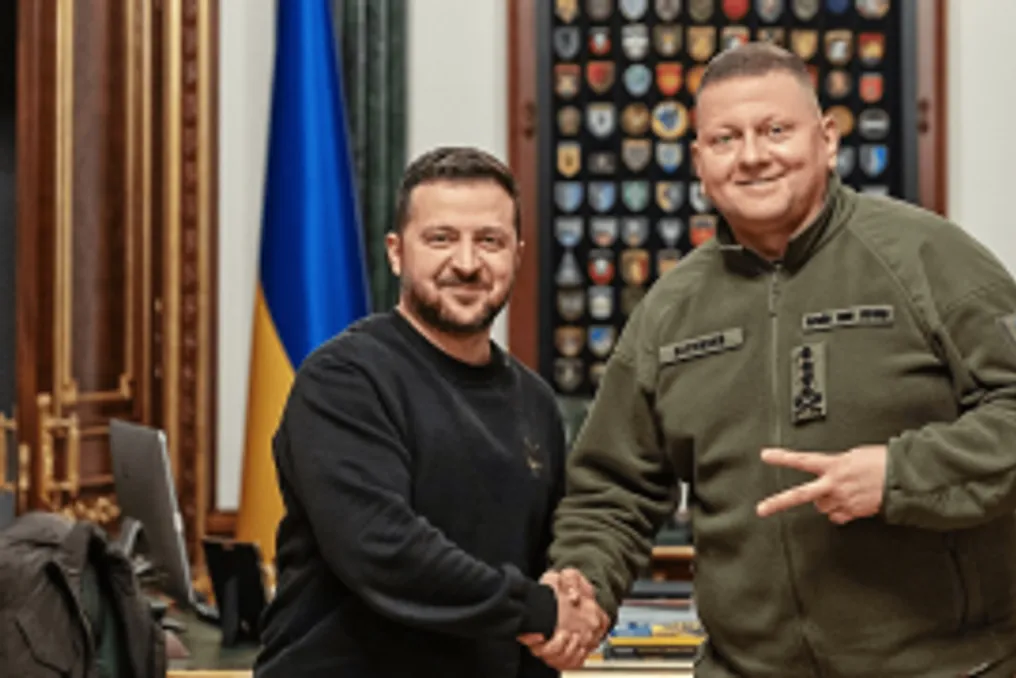
To clarify his intention to run, Zelensky invited Valeriy Zaluzhny, who is the Ambassador of Ukraine to Great Britain, to Kyiv. The publication 'Ukrayinska Pravda' reports that Zelensky asked Zaluzhny about his readiness to participate in the elections if they take place in the autumn. Zaluzhny replied affirmatively, stating: 'Yes, I am participating.'
Uzbekistan continues to analyze the work being carried out by ambassadors to enhance economic diplomacy through the activities of its embassies and consular centers in foreign countries within the scope of foreign diplomacy.
Uzbekistan's Extraordinary and Plenipotentiary Ambassador to Poland, Amirsaid Azamkhojaev, held a meeting with representatives of the company "LeasingTeam Group." During this discussion, issues such as strengthening cooperation in the field of labor migration, expanding opportunities for citizens, and developing mutual relations were discussed.
A meeting was held with Mishal Kano, Chairman of "Kanoo Group" in Bahrain. During the meeting, matters concerning the expansion of cooperation between Uzbekistan and "Kanoo Group," the implementation of investment projects, and the development of partnerships in new promising directions were reviewed.
A meeting took place in Tashkent between Akram Aliyev, Deputy Minister of Investment, Industry and Trade of the Republic of Uzbekistan, and Albrecht Frischenslager, Director of Investments of the British company "United Green Group." In this meeting, the project to establish a modern integrated livestock cluster was discussed.
The next meeting of the "Japan – Uzbekistan" association was held in Tokyo. Representatives from Japanese ministries and agencies, public organizations, scientific and business circles, mass media, as well as citizens residing in Japan participated in this event. At the meeting, joint initiatives aimed at promoting Uzbekistan's tourism and investment potential, developing cultural and humanitarian relations, and expanding economic cooperation were discussed.
According to the information, the "Japan – Uzbekistan" association, established in 1998, is currently one of the leading friendship organizations serving to develop public diplomacy in Japan, uniting nearly 300 representatives from politics, business, science, and culture.
At the proposal of the Ambassador of the Republic of Korea to Hungary, Chul Min Park, the Ambassador of Uzbekistan in Budapest, Oibek Shahavdinov, participated in a dinner together with the heads of the diplomatic missions of India, Indonesia, Philippines, Thailand, and Vietnam.
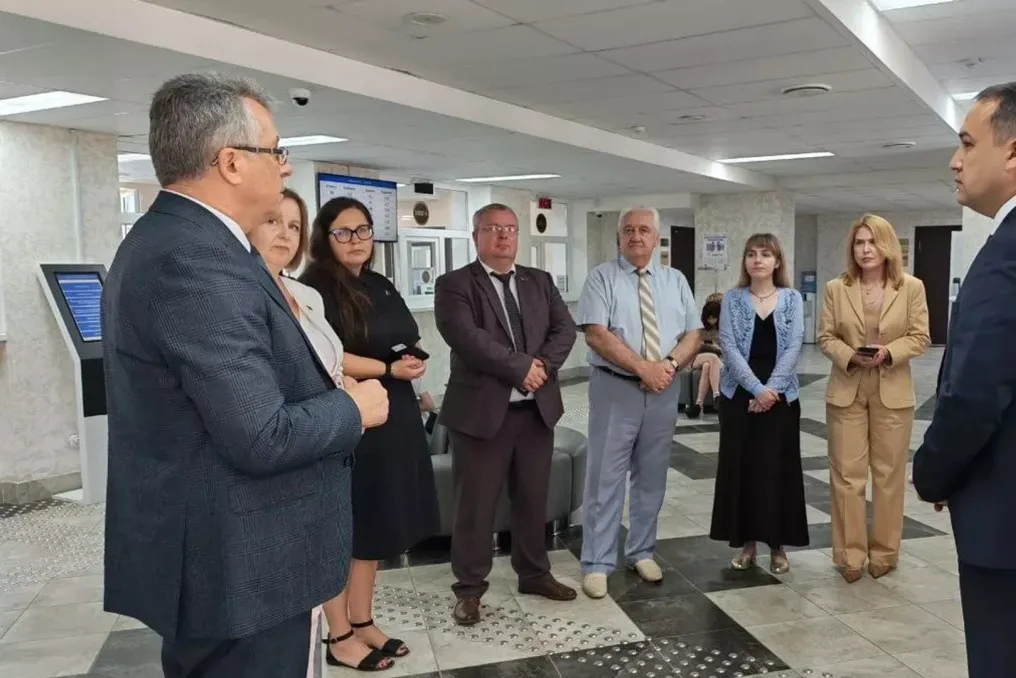
Delegations from the Ministries of Labor of Uzbekistan and Belarus discussed cooperation in the fields of employment, labor inspection, and wage payment.
A meeting took place on July 2nd in Tashkent and Minsk between delegations from the Ministry of Poverty Reduction and Employment of Uzbekistan and the Ministry of Labour and Social Protection of Belarus. This meeting was organized with the assistance of the Executive Committee of the CIS.
The delegation from Uzbekistan was headed by Marat Jouraev, First Deputy Minister of Poverty Reduction and Employment. The Belarusian side presented its experience regarding state regulation of labor relations, labor protection and inspection, labor market and population employment, personnel diagnostics, labor normalization, and wage payment.
Representatives of Uzbekistan familiarized themselves with the activities of the Ministry of Labour and Social Protection of Belarus, the State Labor Inspectorate Department, the Institute of Labour Research, and other institutions affiliated with the ministry.
The parties expressed their interest in continuing cooperation on issues of labor and population employment, as well as labor normalization. According to the visit, preliminary agreements were reached on developing the issue of concluding an interdepartmental agreement between the two sides.