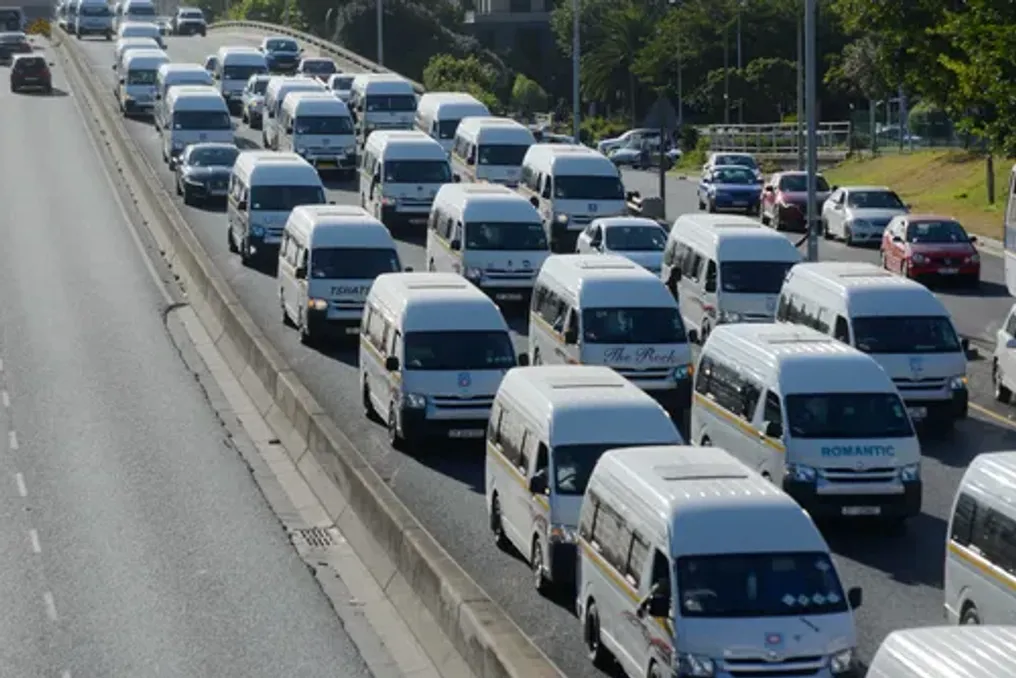
A new emissions study has found that diesel minivans contribute disproportionately to air pollution in Johannesburg, prompting experts to call for urgent policy intervention to protect public health.
Emissions Study Findings
Diesel minivan taxis have become a primary source of harmful vehicle emissions in Johannesburg. According to the new study, residents in central and southern areas of the city bear the greatest burden of health problems due to poor air quality.
Popular
These findings, published by The Real Urban Emissions Initiative, represent the first study of vehicular emissions on roads in real-world conditions in Africa and provide one of the clearest pictures of how different types of transport affect air pollution in Johannesburg.
Data Analysis and Transport Contribution
The study, supported by Breathe Cities, analyzed over 250,000 exhaust gas measurements collected at 11 points in Johannesburg between July and September 2025. It was found that although minivan taxis accounted for only 10% of the measured fleet in central and southern Johannesburg, they contributed from 21% to 40% of the total measured emissions in these areas, particularly concerning carbon monoxide and hydrocarbon emissions.
Furthermore, researchers discovered that diesel minivans emit pollutant particles up to 18 times higher and nitrogen oxides up to 44 times higher than their gasoline counterparts. The report warns that a rapid shift to diesel minivans could worsen air quality if measures are not taken. In 2025, diesel vehicles made up 98% of all new minivan taxi registrations, compared to 7% in 2001.
Impact of Older Vehicles
The study also highlighted the significant impact of aging transport on emission levels. Gasoline passenger cars registered before 2006 made up only 4% of the Johannesburg fleet but contributed from 12% to 24% of nitrogen oxide emissions, 21% of hydrocarbon emissions, 22% of carbon monoxide emissions, and 24% of particulate matter emissions.
Older gasoline minivans, registered before 2006 and making up 8% of the fleet, also contributed from 22% to 25% of hydrocarbon and carbon monoxide emissions in the city. According to the study's estimates, transport-related emissions led to approximately 500 premature deaths and 200 new cases of childhood asthma in Johannesburg during 2024. Across Gauteng, transport emissions were linked to over 1,200 premature deaths and nearly 500 new cases of pediatric asthma.
Recommendations and Official Response
Residents of central and southern Johannesburg, where reliance on public transport is highest, were identified as groups most vulnerable to harmful vehicle emissions. Nokutula Dubazane, South Africa Portfolio Manager at Breathe Cities, stated that the data provides policymakers with the necessary foundation for a more effective fight against air pollution.
Dubazane noted that this report gives Johannesburg an evidence base for action, as the city has already proposed clean air zones as a key solution, and such data helps turn recommendations into targeted and actionable policy. She added that clean air is achievable when cities have reliable data for decision-making.
The report supports the City of Johannesburg's proposal to introduce clean air zones, especially in the central and southern parts of the city, to encourage a gradual transition to cleaner transport. Additional recommendations include implementing Euro 6d and VI D emission standards for new vehicles, expanding and strengthening inspection and maintenance programs, and accelerating the adoption of electric minivans through financial incentives that reduce initial costs.
Lebo Molefe, Director of Air Quality and Climate Change in the City of Johannesburg, emphasized that the study filled a critical knowledge gap. She called the completion of the TRUE Initiative a significant step forward for Johannesburg, as it provides detailed information on actual vehicle emissions under local operating conditions, helping to resolve a critical gap in the evidence base that previously limited the development of targeted measures.
Mallerie Crowe, lead author and researcher at the International Council on Clean Transportation, reported that the results showed that a relatively small number of vehicles accounts for a large share of emissions. She stressed that the latest tests expanded the understanding of emissions in Johannesburg and could help in studying the situation in the wider African region, noting that targeted policy to accelerate fleet renewal will be crucial.
Bojtemgolo Kkwakwa, Project Lead at UJ PEETS, called the study a milestone for South Africa, noting that conducting the first emissions remote sensing campaign on roads in Africa is a significant achievement for the continent. She expressed hope for the possibility of replicating similar campaigns across South Africa.
Sheila Watson, Deputy Director at FIA Foundation, stressed the urgency of addressing transport-related pollution. She pointed out that hundreds of city residents suffer or die annually from dirty air, in which transport plays a significant role, and that such real data is vital for understanding and tackling the public health crisis.