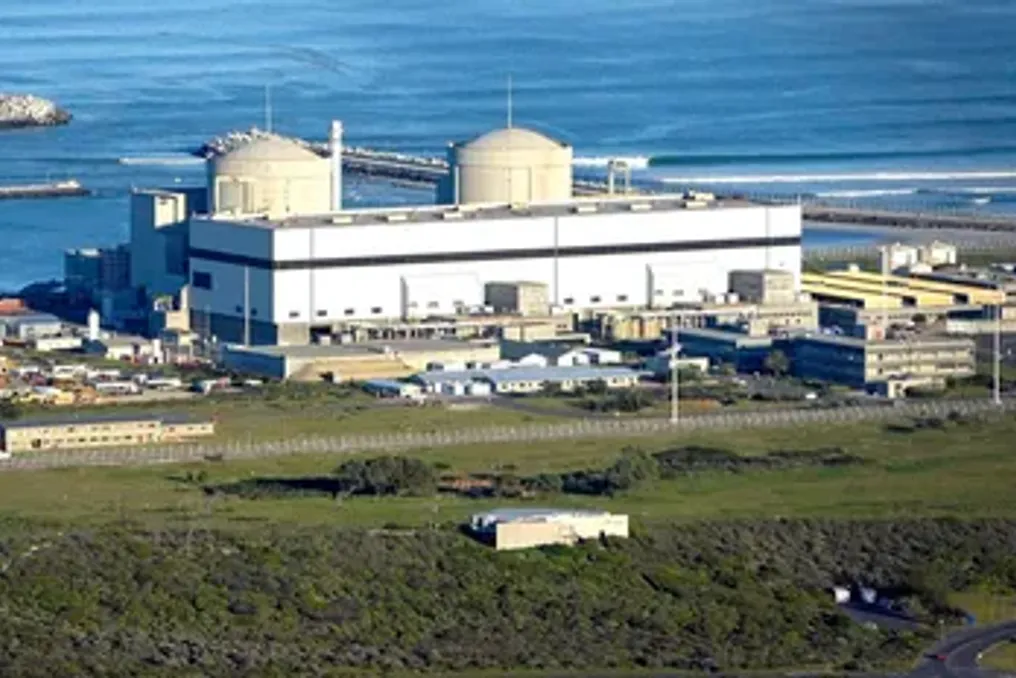
Although Koeberg Nuclear Power Station remains the only operating nuclear facility in South Africa, experts insist on the need to create a specialist training system for the future expansion of the nuclear industry.
The country's energy development strategy
South Africa is at a crucial stage of its energy journey, striving simultaneously to ensure energy security, economic growth, industrial development, and meet climate commitments. The chosen approach, which involves a diversified energy mix, is considered the only sensible solution to such a complex problem. While renewable energy sources and energy storage systems will play a key role, nuclear energy remains one of the few proven technologies capable of providing reliable, low-carbon baseload power on a large scale.
Popular
Training future operators
In South African classrooms today, there are teenagers in grade 9, students of Technical and Vocational Education and Training (TVET) colleges, and university students. Each of them could potentially become an operator at the country's next nuclear facility, provided that this facility is launched in a timely manner and a talent pool begins to form. Furthermore, this pool does not need to be created from scratch: there are already private Skills Development Providers (SDPs) involved in nuclear training, and there is also a strong argument for establishing specialized TVET colleges focusing on nuclear disciplines.
Energy plans and policy
The Integrated Resource Plan (IRP) 2025 officially includes 5,200 MW of new nuclear generation, which will begin operating from 2036 and continue until 2039, in addition to extending the lifespan of Koeberg Nuclear Power Station. This is not the first attempt to expand nuclear generation in the country. Previously, the IRP 2010–2030 allocated 9,600 MW for new construction, leading to the launch of the New Nuclear Construction Programme, including proposals for new sites in Gqeberha. This programme was halted around 2017, resulting in the exclusion of new nuclear generation from the IRP 2019, leaving only the life extension of Koeberg. The return of new nuclear capacity in the IRP 2025 marks the resumption of a long-delayed goal, based on a different political and planning framework, and represents a procurement and planning commitment supported by state policy.
Role of regulators and skills
Nuclear energy is formally included in South Africa's energy mix, as stated in the White Paper on Energy Policy of the Republic of South Africa (1998) and confirmed in the IRP 2025. As a state body, the Energy and Water Sector Education and Training Authority (EWSETA) is tasked with helping the government effectively implement this policy. The main question is whether South Africa can prepare the necessary skills for building, operating, and maintaining this nuclear future, and use this sector to enhance localization and reindustrialization of certain aspects of the South African economy.
The importance of human capital
While debates about nuclear energy often focus on technology, infrastructure, financing, and regulation, a critically important factor for success that receives less attention is skills. New technologies, such as Small Modular Reactors (SMRs), open up additional opportunities for countries seeking flexible and scalable nuclear solutions amid growing energy demand and the rapid deployment of energy-intensive data centers to support Artificial Intelligence (AI).
The future of nuclear energy in South Africa will be determined not only by energy demand, reactor types, policy, or investment decisions, but also by the availability of people with the right skills to design, build, operate, regulate, maintain, and innovate within the nuclear ecosystem. The logic is simple: you cannot commission a nuclear facility and then start looking for engineers and technical specialists to run it. Implementation timelines span years, and sometimes a decade or more, depending on the required level of competence. Skills and competency development must precede procurement, not follow it.
Experience and workforce development
Koeberg Nuclear Power Station, located on the West Cape coast north of Cape Town, remains the only operational nuclear power station on the African continent and has supplied South Africa with reliable electricity since 1984. Specialists who built their careers there—engineers, radiation safety physicists, radiological protection specialists, and maintenance technicians—represent an exceptional concentration of accumulated experience. It is necessary to ensure the presence of a second generation of specialists sufficient to maintain even the current capacity, let alone support expansion. Skilled workers are not a permanent asset; they require constant replenishment. As experienced specialists retire and technologies evolve, the risk of losing valuable institutional knowledge increases. Through a partnership between EWSETA and Eskom, Koeberg Nuclear Power Station has an accredited training center that has trained hundreds of people in nuclear qualifications in operations, plant management, and radiation protection. This continuous training creates a sustainable talent pool.
Educational foundation and prospects
The nuclear workforce is born in primary school classrooms. Education in Science, Technology, Engineering, Arts, and Mathematics (STEAM) remains fundamental to future nuclear competencies. South Africa already possesses useful foundations: career guidance initiatives such as NECSA Science Week and the Department of Basic Education's Learner Focus Week, as well as school programmes and the Eskom Koeberg visitor centre introduce students to careers in the nuclear sector. However, as the new construction programme increases the country's nuclear share, these efforts must scale proportionally. Nuclear professions are set to become a critical category of skills as the sector grows, and school outreach must match this demand.
When surveying high school students in Soweto, Mitchells Plain, or Polokwane about five possible professions, they are likely to receive a similar list: doctor, lawyer, accountant, teacher, engineer. But if asked who a nuclear medicine physicist is, how much a reactor control systems engineer earns, or what qualifications a radiological protection specialist needs, the answer is almost always silence. This does not mean a lack of foundation. Events such as NECSA Science Week, the Department of Energy and Mineral Resources' Learner Focus Week, the Eskom Koeberg school programme, and various EWSETA career guidance initiatives have opened doors to the nuclear sector for students who might otherwise not have noticed it. Two national high schools offer specializations in nuclear subjects. These are real assets, and they are important. But the scale of the upcoming changes does not match the current level.
Systemic approach to workforce development
As the public investment in the nuclear sector grows, the sector is transitioning from a niche industry to one requiring a significantly broader and more diverse skill base, including reactor operation, radiation protection, nuclear medicine, systems engineering, regulatory compliance, and safety. Career guidance must shift from random to sustainable, from isolated stakeholder initiatives to a coordinated workforce strategy, and from reaching a small number of students to a system actively seeking talent in ordinary schools, as the planned sector growth will not wait for awareness to catch up.
EWSETA bears direct responsibility for changing this situation. As the education and training body for the energy and water sector, its duties extend beyond planning qualifications and skills for the PSET system; it also shapes public perception of what careers in this sector look like and who they are for. Nuclear professions are a prime example: they are highly skilled, long-term, and highly rewarding opportunities. A reactor operator does not leave after two years; these are multi-year careers that build deep expertise—precisely the structured, long-term path that young South Africans should have access to in both basic and higher education.
Partnerships and the industry's future
This is not a new commitment. Over the years, EWSETA has built strategic industry partnerships with NERSA, NIASA, NECSA, Lesedi Nuclear Services, and WINSA, aimed at developing skills for current and future workers, as well as achieving the regulatory alignment necessary for a credible nuclear talent pipeline. The executive leadership development programme for women in the nuclear industry, conducted through the University of Witwatersrand Business School in collaboration with NIASA and WINSA, is proof of sustained transformative work, not just a reaction to the current political climate; Lesedi's scholarship programmes through the North-West University are another example. As the sector's skill needs grow, EWSETA continues to explore further collaboration with these and other partners to develop this expertise.
Given South Africa's young population, our interventions must position youth not merely as beneficiaries, but as architects of the planned future. They must be provided with the skills, opportunities, and support necessary to secure the nation's next era of growth and innovation. EWSETA has a critical duty to ensure that workforce development aligns with technological and industrial changes. This includes forecasting future job demand, funding strategic educational pathways, supporting industry partnerships, and aligning skills development measures with national development priorities.
Students and new entrants to the labour market need exposure to real-world conditions where theoretical knowledge can be translated into practical abilities. Partnerships between industry, universities, TVET colleges, and educational institutions will be crucial. Ultimately, energy transitions are human transitions. Behind every megawatt generated is a qualified and competent professional making it possible. When building South Africa's energy future, nuclear skills should be viewed not as a narrow specialization, but as a strategic national opportunity. Investing in nuclear skills today will strengthen energy security, boost industrial competitiveness, create high-quality jobs, and enable the country to take a significant part in the next generation of global energy technologies.