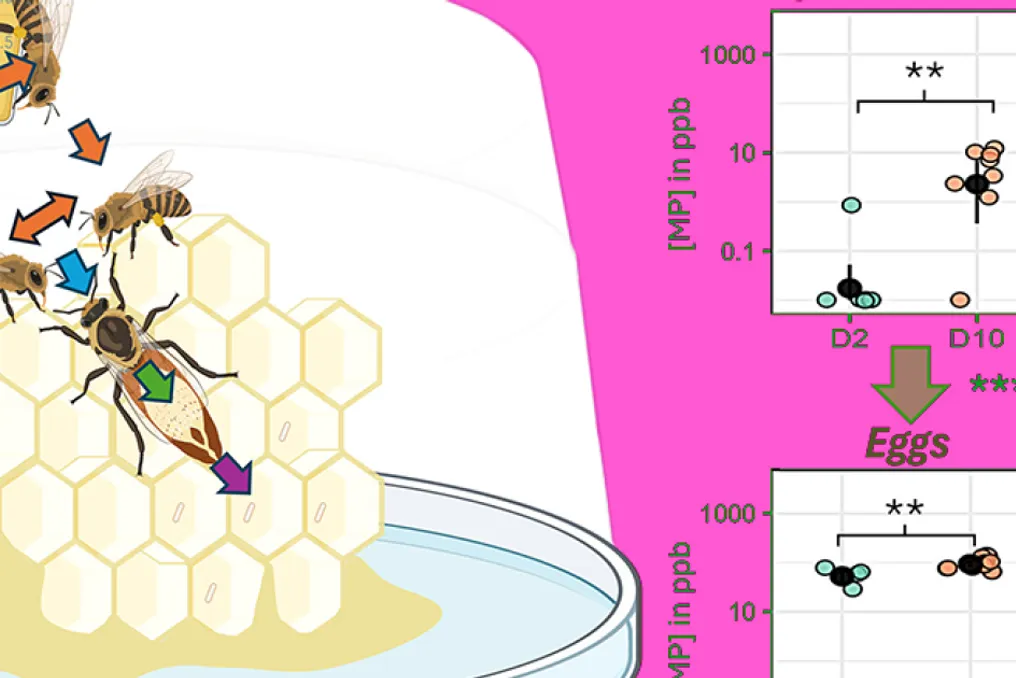
Biologists from the USA conducted a study that revealed maternal transfer of pesticides in honeybees. This mechanism was discovered under conditions of chronic toxin exposure to the colony, when the defensive capabilities of worker bees weakened. In such situations, queens accumulated pesticides in their ovaries and then transferred them into the eggs. Although a similar process is known in other animal species, it had not been previously recorded in bees.
Popular
The Impact of Pesticides on Pollinators
Pesticides pose a threat to insect pollinators, whose numbers and diversity are declining worldwide. Exposure to these substances can disrupt insects' memory, ability to navigate, immunity, and reproductive functions, even if it does not lead to the immediate death of an entire colony. In honeybees (Apis mellifera), foragers collecting nectar and pollen bring pesticides into the hive, where they are found in the bodies of other individuals, in wax, and in honey.
Mechanisms of Defense and Toxin Accumulation
Despite bees having a limited number of detoxification genes, there is a popular hypothesis that worker bees try to protect the most vulnerable and important members of the colony—the queen and the brood. Previous research demonstrated a reduction in pesticide levels when they were moved from foragers to nurse bees and larvae. Nevertheless, the exact mechanism of this defense remained unclear, and it was unknown if bees have other ways to counteract toxins.
Results of the Experimental Study
Biologists from the University of California, led by Sasha Niklich, conducted experiments on mini-colonies of insects using labeled substances. By the second day of food processing by worker bees, the concentration of the pesticide had dropped by 95% compared to the initial feeder. By the tenth day, this reduction reached 86%, indicating a decrease in the workers' ability to protect the hive. On the second day, pesticides were not found in the queens' bodies, but by the tenth day, their concentration reached 16–23 parts per billion, which was significantly lower than the level in the feeders.
Transfer of Toxins into Eggs
However, by the tenth day, the pesticide level in the eggs increased to 81–141 parts per billion, suggesting that queens were actively transferring toxins into the eggs, possibly for their own protection. The concentration of pesticides in the bodies of worker bees was higher in colonies with queens by the tenth day, and it accumulated over ten days, as well as in the wax. Scientists attribute this to the fact that workers building cells for eggs consume more food, as well as to the potential influence of the reproductive female's pheromones.
Conclusions and Limitations of the Work
The authors concluded that the primary line of defense of the honeybee colony against pesticides is provided by worker bees, which metabolize toxins with enzymes and eliminate some of them in the wax. However, with prolonged pesticide exposure, harmful substances begin to accumulate in the eggs at concentrations 4–6 times higher than those in the queen's body. This was the first evidence of maternal transfer of toxins in honeybees. According to the researchers, this process may be the cause of mass colony deaths months after fields were treated with pesticides. The scientists also noted the limitations of their study: small sample sizes were used, unrealistic mini-colonies were employed, only one pesticide was studied, and the fate of the contaminated eggs remains unknown.