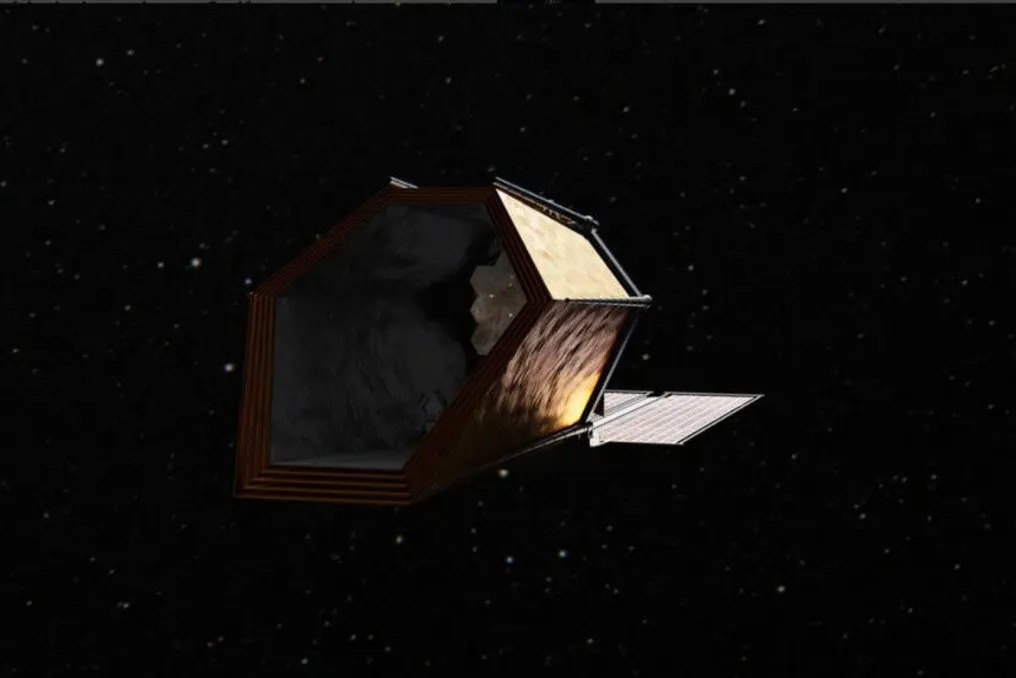
NASA intends for the new Habitable Worlds Observatory (HWO) to be capable of receiving in-space repairs throughout its mission. This strategy aims to extend the telescope's operation while it searches for signs of life beyond Earth.
Design for Continuous Maintenance
Unlike what happened with Hubble, maintenance work in this case will not be performed by astronauts. The proposed solution is much more remote. The HWO is already being designed with a fundamental feature: it should not be a static piece of equipment after launch, but rather designed to allow maintenance throughout its operation.
Shawn Domagal-Goldman, director of NASA's astrophysics division, informed Space.com that the HWO will require some level of maintenance capability. This could range from simple component replacement to more complex technical adjustments, reaching, in certain scenarios, the possibility of partial assembly in the space environment. This functionality is not a luxury, but a requirement, as the longer the update time, the greater the scientific advancement delivered by the instrument.
Contrast with Hubble
Hubble is remembered for being repaired in space by astronauts, which allowed several interventions, such as computer swaps, gyroscope replacements, installation of new instruments, and structural repairs. Initial decisions were made to ensure the avionics were modular, facilitating the removal and installation of new computers or gyroscopes by astronauts.
However, the HWO will follow a different path. It will be positioned at the Lagrange point L2, located approximately 1.5 million kilometers from Earth. This distance makes any manned mission currently unfeasible.
Robotic Maintenance at L2
The positioning location of the HWO coincides with the region of the James Webb Space Telescope, a point known to be stable, ideal for both observations and communication. However, this location implies a logistical difficulty: getting there is not easy. For this reason, NASA is already developing the idea of using robots to perform maintenance, although no defined model exists for this application yet.
Scientific Goal of HWO
The central purpose of the project is to prevent the HWO from being limited by the technology available at the time of launch, ensuring that it keeps pace with scientific evolution. Just as happened with Hubble, which received new instruments over the years, the HWO can incorporate more advanced sensors, new tools, and sophisticated methods for studying exoplanets. The ultimate goal remains clear: to identify Earth-like planets and investigate the possibility of life existing in the Universe.