An international report warns that the entire network of Africa's undersea cables is serviced by only one permanently stationed repair vessel based in Cape Town. This situation puts the continent at risk of prolonged internet outages.
Report and its Compilation
The final report from the International Advisory Body on Submarine Cable Sustainability (IAB) was adopted in Geneva on July 10. This body was established in 2024 by the International Telecommunication Union (ITU) and the International Cable Protection Committee (ICPC). The work on the report took two years and involved the participation of 175 experts from academia, industry, and government bodies.
Popular
The report notes that despite the growing availability of the Internet, the infrastructure for repairing undersea cables in Africa remains critically insufficient. Many regional cables pass through extensive areas of unprotected waters, and the entire region is served by only one vessel located in South Africa.
Details of Dependence on a Single Vessel
Although the report does not name the vessel, it is known to be Orange Marine's Léon Thévenin. This cable layer, based in Cape Town, has moved along the continent's coast for many years, repairing cable damage caused by rockfalls near the Congo River or faults in East Africa.
The report detailed the practical consequences of this dependence: if a fault occurs near Dakar (West Africa) while the vessel is repairing a cable in Mombasa (East Africa), the response time will be extremely long. The distance exceeds 10,000 km, comparable to an interoceanic route, such as Shanghai—Los Angeles.
Global Imbalance and Challenges
Africa, the South Atlantic, and the Pacific Islands together account for only about 13% of the world's active cable repair vessels, whereas the Asia-Pacific region and North America/Europe/North Atlantic each have approximately 40%. Furthermore, there are no permanent repair vessels whatsoever in the South Indian Ocean or the southeastern Pacific Ocean.
The report emphasized that this institutional and geographical imbalance indicates uneven global access to timely repair resources. According to ICPC data cited in the report, the average response time for repairs worldwide has more than doubled between 2012 and 2024—from less than 20 days to over 50, even with a stable number of available vessels and repair volumes. The main reason cited is regulation: complex and lengthy permit acquisition procedures, cabotage rules designed for other maritime industries, as well as taxes and duties on repair vessels and spare parts.
Reasons for Failures and Fleet Renewal
The failures themselves are most often routine. The global network faces 150–200 failures annually, and over 80% of these are caused by human activity at sea, mainly commercial fishing gear and ship anchors. Meanwhile, the response fleet is aging, and older vessels lose 15–20% annual operational readiness due to more frequent drydock repairs. A new specialized repair ship costs between 100 and 150 million US dollars (or 1.6 to 2.5 billion Rands), which, according to the report, is a significant obstacle to fleet renewal. The situation is exacerbated by the high demand for laying new cables, which diverts the limited global pool of specialized vessels from maintenance work.
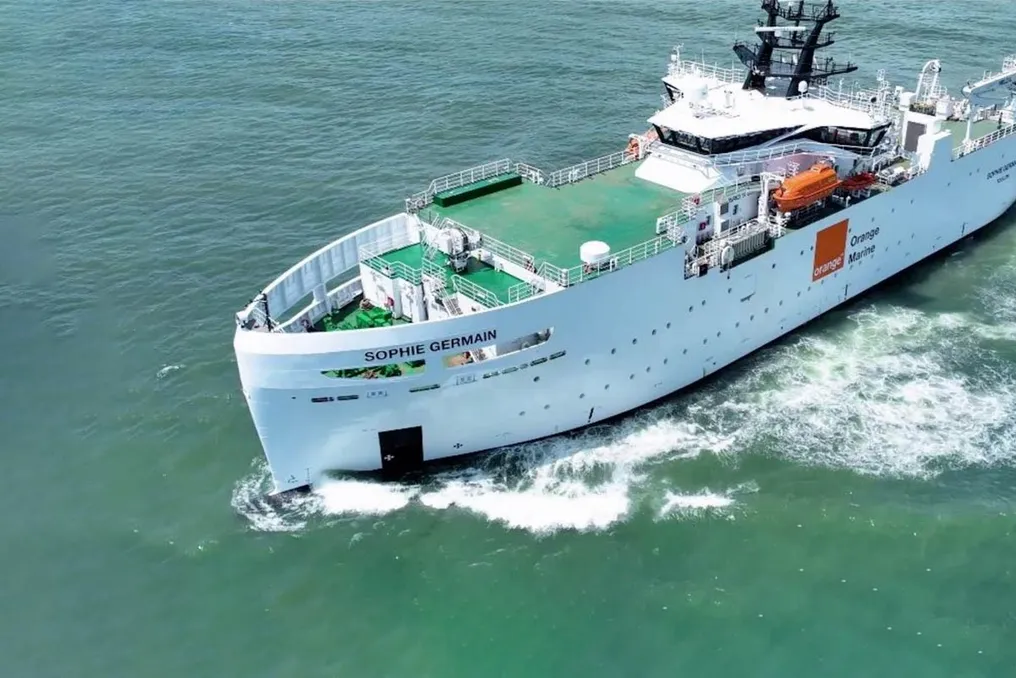
Orange Marine began renewing its own fleet. Its vessel Sophie Germain, valued at 50 million euros (about 1 billion Rands), which has been operating since 2023, repairs cables in the Mediterranean and Red Seas, including routes in North and East Africa, but it is based in Southern France. More relevant to South Africa, the company ordered two new hybrid cable ships in November 2025 at the shipyard in Colombo (Sri Lanka) to replace the 43-year-old Léon Thévenin and the Italian vessel Antonio Meucci. However, the expected delivery is only scheduled for 2028 and 2029, meaning there will be no relief for Africa for at least another two years.
Orange Marine President Didier Dillard noted at the time that 'the aging of the cable ship fleet is a serious concern for all participants in the submarine cable industry.' Despite the overall picture, South Africa stands out as a success story. Analyzing ICPC data from 2007 to 2024, the report found that the country has the shortest 'time to start work' in the world—the interval between a failure occurring and the mobilization of a repair vessel. It is noted that the fastest responding countries, such as South Africa (1.95 days) and the UK (3.66 days), benefit from proximity to cable depots and simplified permitting procedures. The global median figure is eight days, and the global average, skewed by extreme outliers, is 22.7 days.
Regional Practical Examples
Case studies include the region's own failures. The report refers to double cable cuts in 2020 and 2023 that occurred due to rockfalls in the Congo Canyon. These incidents led to a severe slowdown of connectivity for users in South Africa, which 'disrupted financial markets, cloud services, and cross-border data exchange.'
The incident in March 2024, when four cables were severed off West Africa, disrupting communication with 12 countries along the continent's western coast, was also mentioned. According to sources in the report, one country, Nigeria, lost about 590 million dollars (9.7 billion Rands) in just four days. It is noted that the survival of these economies after such events was possible due to the diversity of routes and the ability to reroute traffic, as demonstrated by African internet providers. The report concludes that the losses significantly exceed the annual costs of deploying backup cable infrastructure.