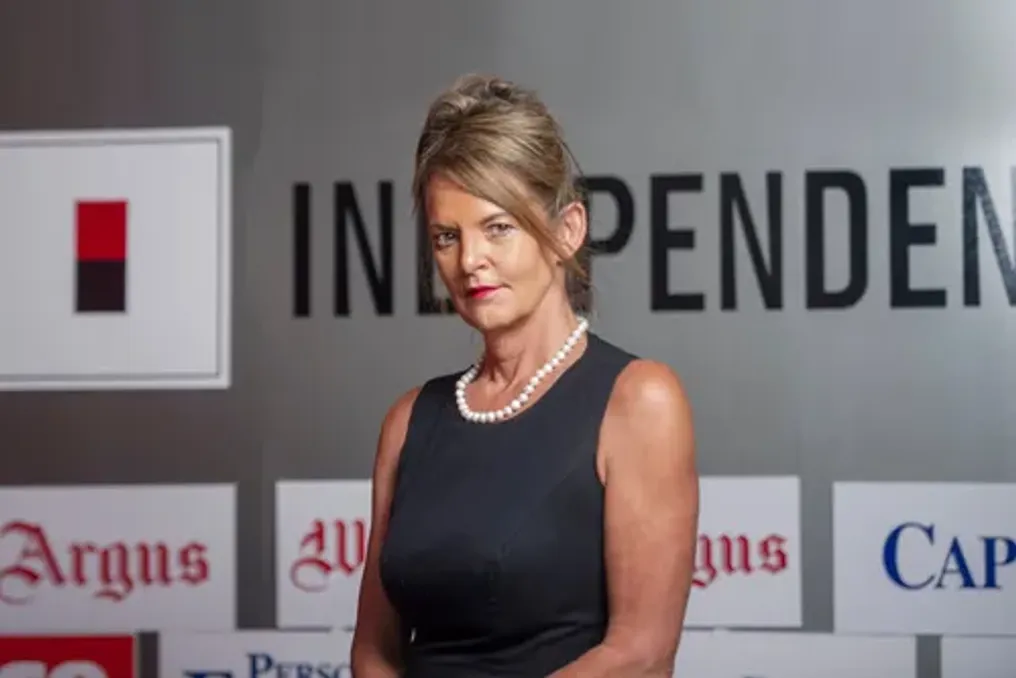
The suspension of the Chief Executive Officer of the Public Investment Corporation (PIC), Patrick Dlamini, following a whistleblower complaint regarding the handling of a disputed payment of 411 million rand related to the shareholders of Lanseria Airport, raises questions that go far beyond the fate of one executive.
Similar stories
Popular
PIC Board's Position
The PIC Board emphasized that the suspension is precautionary and that allegations are still under investigation. It was noted that Dlamini has the right to due process, and no conclusions have been drawn against him yet.
However, the article's authors argue that South Africans should not allow the principle of due process to become an excuse for ignoring equally important issues concerning governance. The problem affects not only Patrick Dlamini but also the institution responsible for protecting the retirement savings of over a million public servants.
Scale of PIC's Responsibility
PIC manages approximately 3.6 trillion rand in assets on behalf of the Government Employees Pension Fund (GEPF) and other public sector clients. Few institutions on the African continent possess such significant influence on financial markets or bear such heavy fiduciary responsibility.
When questions arise in such an institution, it affects the interests of every teacher, nurse, police officer, soldier, and civil servant whose pension depends on these investments. The alleged accusations regarding the Lanseria deal include governance issues, decision-making authority, potential conflicts of interest, and management accountability.
Corporate Governance Issues
These issues must be investigated independently and fairly. Nevertheless, even if all allegations ultimately prove false, the suspension itself highlights a broader problem: why does PIC continue to be at the centre of corporate governance disputes? South Africans have faced this before.
The Mphathi Inquiry found serious governance failures, weak oversight, inadequate controls, and inappropriate relationships between executives, politically connected individuals, and investment decisions. The Commission presented detailed recommendations aimed at restoring confidence in the country's largest asset manager.
Years later, the obvious question remains: have these recommendations changed the structure of the institution itself, or have they merely changed its policies on paper? The troubling pattern cannot be ignored. Over the last decade, numerous investments from PIC's unlisted portfolio have attracted attention. Some have led to significant write-downs, litigation, or parliamentary inquiries, while others have raised complex questions regarding valuation methodologies, due diligence, governance standards, and oversight.
Asset Growth Assessment
PIC often emphasizes the continued growth of assets under management, which at first glance demonstrates exceptional investment efficiency. However, the question arises: does this reflect real effectiveness? PIC occupies a unique position. Unlike a private asset manager competing to attract investors, the vast majority of its assets come from mandatory pension contributions of public servants through GEPF. As the public payroll grows and salaries increase under annual agreements, pension contributions automatically rise, naturally increasing the value of assets under management.
This reality demands a deeper question: what portion of PIC's growth is driven by genuine investment superiority, and what is simply due to mandatory monthly contributions from public servants? The true measure of success is not the size of the balance sheet, but the quality of management. It is the stability of long-term returns after risk adjustment and capital preservation. Above all, it is the assurance that every investment decision was made solely in the best interests of the beneficiaries.
Expertise and Management
Another issue requires much closer scrutiny. PIC hires some of South Africa's most experienced investment professionals. Its senior management includes individuals with advanced qualifications in finance, economics, investment management, accounting, and actuarial science. Historically, executive compensation has been competitive with leading financial sector institutions. South Africans reasonably expect that world-class expertise will be followed by world-class management. Instead, governance disputes continue to emerge.
How is it possible that an institution with such deep technical expertise is repeatedly forced to explain controversial investment decisions post-factum? Were warning signs ignored? Were the investment committees independent enough? Did internal challenges yield to executive power? Were risk assessments sufficiently robust? Or is the institution still suffering from cultural weaknesses that no organizational restructuring could eliminate?
Interdepartmental Linkage
The Lanseria case also prompts a wider examination of governance in South Africa's development finance and public investment sphere. Senior executives frequently move between institutions such as PIC, the Industrial Development Corporation, the Development Bank of Southern Africa, and other state financial structures. There are clear advantages to retaining experienced specialists in the public sector.
But does this interconnectedness create an environment where relationships become too familiar, assumptions are insufficiently challenged, and independent oversight weakens? Good governance depends not only on competent people. It depends on independent thinking, on resolute challenging, and on institutional cultures where complex issues are encouraged, not suppressed. It also depends on whistleblowers feeling safe enough to speak up.
Transparency Requirements
Perhaps this is the most alarming aspect. Why do major governance problems so often surface through whistleblowers rather than through internal governance mechanisms? Should Parliament receive more frequent and detailed reports on governance matters? Should GEPF demand greater transparency regarding major investment decisions? Should PIC publish annual governance metrics alongside its financial results, allowing beneficiaries to assess not only financial performance but also institutional integrity?
These questions are not aimed against PIC. On the contrary, they are necessary to strengthen confidence in the institution. South Africa needs a strong, reliable, and professionally managed PIC. The country's pension system depends on it. Patrick Dlamini's suspension may ultimately be justified, or he may be fully exonerated of all charges. This is precisely why an independent and transparent process is necessary. However, the outcome of one investigation cannot overshadow the larger problem.
The real question facing South Africa is whether this episode represents an isolated governance dispute or another warning sign that deeper institutional problems remain unresolved. If the latter is true, the suspension of one CEO will not suffice. The institution itself will require a new thorough examination. Because when the custodian of 3.6 trillion in public wealth is constantly answering questions about governance instead of celebrating management excellence, the country cannot simply move on to the next headline. The pensions of millions of public servants deserve more than just assurances. They deserve transparency, accountability, and above all, an institution whose reputation is based not on the size of the funds managed, but on the certainty of how those funds are managed.
The Public Investment Corporation (PIC), South Africa's largest asset manager, announced the temporary suspension of its Chief Executive Officer, Patrick Dlamini, and Chief Investment Officer, Augustus van Heerden, following a board meeting.
Reasons for Suspension
According to reports, nine out of eleven members of the PIC board voted for the suspension. The corporation found itself in a complex governance situation stemming from an investment and loan of R300 million provided to BEE shareholder Acapulco Trade & Invest over ten years ago to acquire a stake in Lanseria Airport.
Developments Surrounding the Airport
The suspension followed a series of events related to how PIC handled the Lanseria Airport matter. These events include a whistleblower complaint against Dlamini, the publication of a confidential PwC forensic audit report, the referral of aspects of the case to the Special Investigating Unit (SIU) by PIC Chairman and Deputy Minister of Finance David Masondo, and a lawsuit by Kagiso Matjila in the High Court for R900 million against Dlamini regarding the appointment of PwC to investigate the Lanseria dispute.
PIC's Financial Issues
PIC, which is the largest client of the Government Employees Pension Fund (GEPF), made no public statements by Monday evening. GEPF is Africa's largest pension fund. PIC's situation was complicated by recent revelations in Parliament: since 2003, PIC has directed approximately R67 billion into around 150 unlisted investments, with at least 78 of them reporting partial or total losses.
Ministry of Finance Intervention
Recently, Finance Minister Enoch Godongwana met with the board due to growing concerns over the Lanseria contract and the results of the unlisted investments.