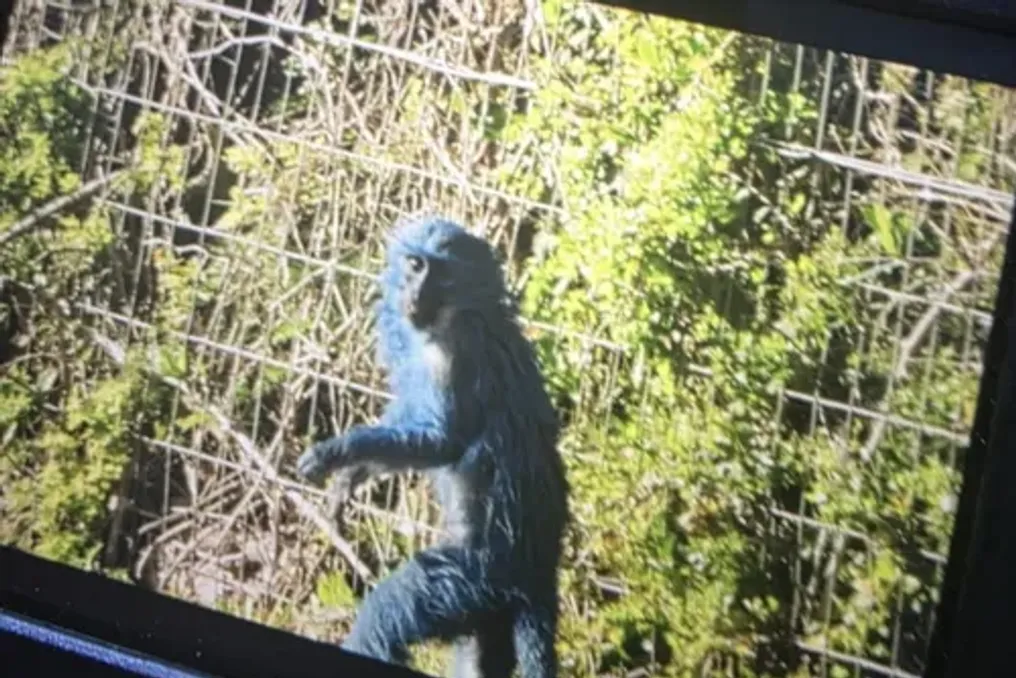
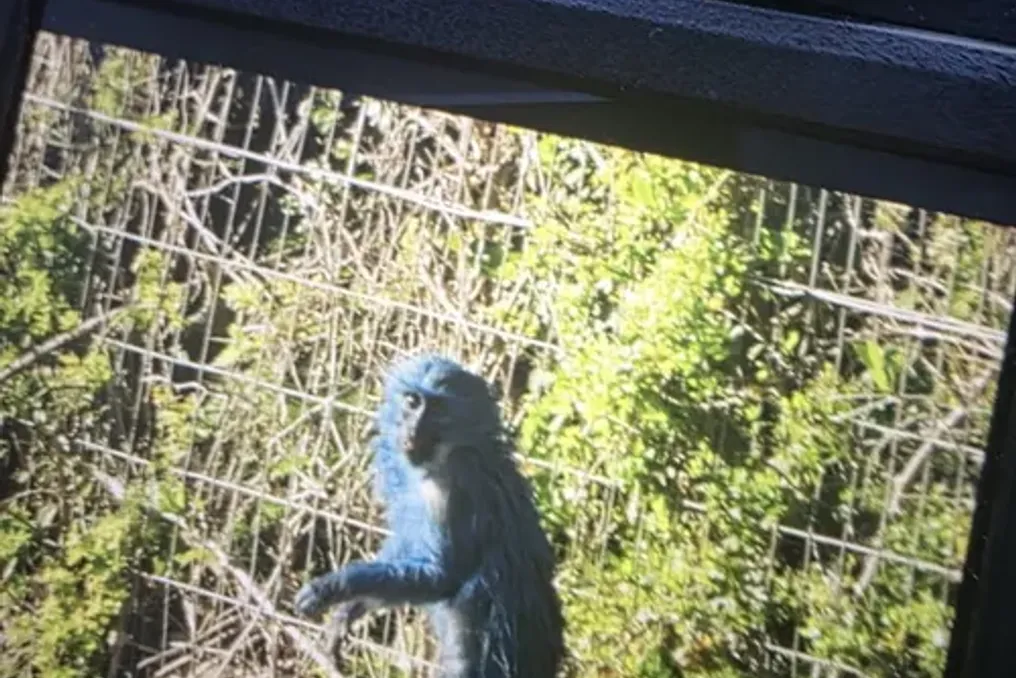
A wild monkey was captured, completely covered in blue paint from head to tail, and then released back into its group's territory in Nelson Mandela Bay. The animal is currently trying to clean off the toxic coating applied by an unknown person.
Animal Defenders' Reaction
The charity group Monkey Matters Eastern Cape reported that the monkey was spotted in Dir Park on Sunday. The group warned that the paint could cause poisoning and lead to the animal's 'slow, agonizing death.'
According to group representatives, the animal was not caught because it moves too quickly for rescuers to find, but the group noted that the animal's condition appeared satisfactory.
Myth of Scaring Away the Troop
Charl van der Mecht, co-founder of Monkey Matters Eastern Cape, which has been rescuing primates in the province for over 25 years, explained that this act was motivated by a misconception that painting the monkey would scare away its group. Van der Mecht told the IOL on Monday that some people believe that painting animals white or, as in this case, blue will frighten the troop and make them leave the area.
She categorically refuted this, calling it an 'old myth' and an act of cruelty towards an animal capable of causing a slow and painful death. In her opinion, painting a monkey any color will not cause its group to reject it, stating that this is ignorance disguised as advice.
Van der Mecht emphasized that the paint can poison the animal and damage its skin, eyes, and fur, forcing it to desperately try to clean itself. She described such behavior as an 'act of cowardice against a creature that cannot defend itself' and expressed disappointment with the organization upon seeing various forms of primate cruelty.
Calls for Wildlife Respect
Activist Marizanne Kemp Ferreira also expressed concern over this act of cruelty, stating that animals do not invade human space; rather, humans expand their boundaries into their territory. Ferreira described primates as intelligent, social, and sentient beings trying to survive in a human-altered environment, insisting that harming them for their existence is neither justified nor humane.
Steve Smith, founder of Monkey Helpline in Durban, noted that painting monkeys is most common in KwaZulu-Natal. He speculated that this practice originated among settlers who painted baboons to protect crops. Smith explained that the initial belief was that the painted animal would return to the troop, which would then leave the area, thus eliminating the problem of crop raiding. However, he said this false idea does not work, as the monkey will be attacked and attempt to clean itself, suffering in the process.
Scientific Data and Legislation
Smith also mentioned that sometimes painted monkeys are shot with darts, and some people treat this as a joke, calling for criminal prosecution of anyone who does this or finds it amusing. He added that rescued painted monkeys were always found among their groups, refuting the myth of their expulsion. He concluded that this practice is cruel, illegal, and senseless.
Sandra Swart, a historian from Stellenbosch University who researches the history of baboons and humans in South Africa, notes that people often exhibit more aggression towards primates than the primates show towards them, viewing animals as a substitute for broader human anxieties about invasion and security. Scientific research confirms the harm from painting: a 2024 study published in the journal Mammalian Biology documented cases of intentional harm to monkeys through physical attacks, poisoning, and painting, which the authors used as evidence of cruelty in human-monkey conflict.
It is important to note that vervets are highly social animals living in groups where they spend hours grooming each other to remove parasites and dirt, strengthening intra-group bonds. Furthermore, studies have shown that female vervets are lifelong residents of their birth territory, meaning that groups are tied to that area for generations and cannot simply leave at a human's whim. The species is protected in South Africa and listed on the IUCN Red List as Least Concern, although in urban and agricultural areas, it is often considered a pest, where retaliatory shootings and poisoning have been documented. Intentionally harming or painting a wild animal is an offense under the Animal Protection Act.