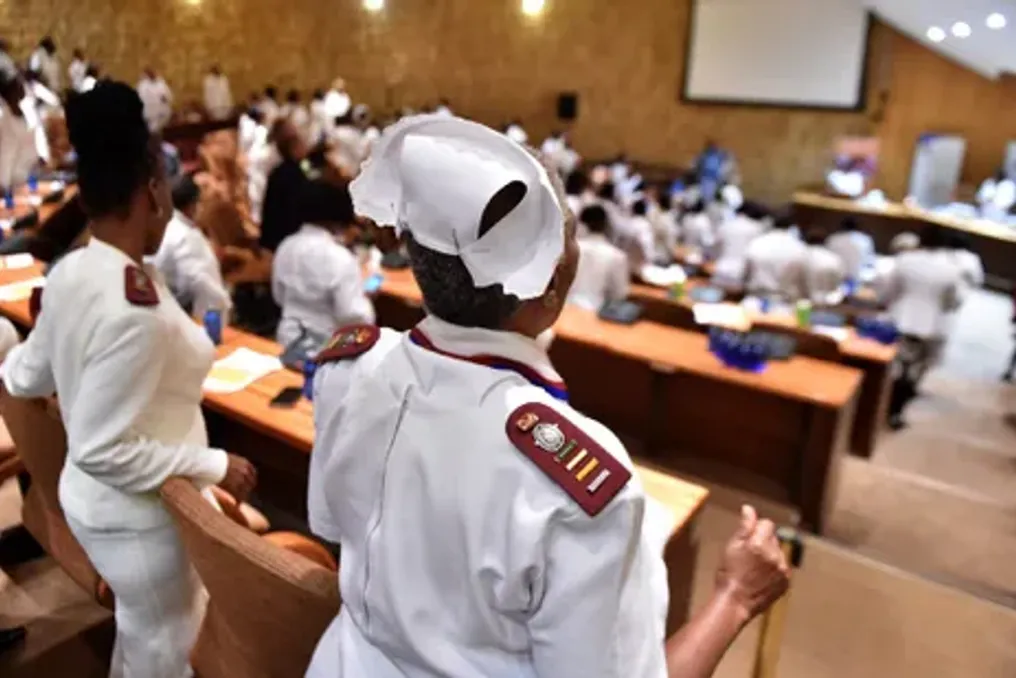
A new study has shed light on the inequality in the stem cell donor recruitment system. DKMS Africa insists on the need to eliminate this gap for Black residents of South Africa to give every patient a chance at recovery.
A new study has shed light on the inequality in the stem cell donor recruitment system. DKMS Africa insists on the need to eliminate this gap for Black residents of South Africa to give every patient a chance at recovery.
Despite the country valuing diversity, patients from Black residents of South Africa suffering from blood diseases and blood cancer face serious healthcare challenges. For a long time, these patients believed that their ethnicity significantly reduced their chances of finding a suitable stem cell donor. However, a recent groundbreaking study published in Blood Global Hematology refutes this long-held misconception, indicating that the real problem lies not in genetic diversity but in the shortcomings of the current donor registry.
According to Palese Mokohele, Head of Public Relations and Communications at DKMS Africa, the study covered nearly 57,000 South African residents, meticulously mapping HLA profiles across various population groups in the country. HLA markers are crucial for determining compatibility in stem cell transplantation. The results showed an encouraging picture: for a patient from a Black resident of South Africa seeking a match, the probability of finding a full match in the public registry of one million donors is an impressive 80%, while for white residents of South Africa, this figure reaches 81%. Thus, it turned out that the genetic makeup of South African society is not the barrier previously assumed.
Nevertheless, Mokohele notes a worrying reality: the national registry does not adequately reflect the country's demographic composition. Currently, Black Africans constitute 81% of South Africa's population, while white residents make up only 7%. Within the study, Black residents accounted for about 37% of the donor pool, while white residents accounted for approximately 45%. This sharp imbalance in donor representation highlights the urgent need to increase the registry's inclusivity.
Mokohele points out that traditional donor recruitment campaigns focused on more accessible communities, leading to the underrepresentation of many potential Black donors. The study identified regions with dangerously low representation of Black African donors, with entire provinces not providing enough donors for comprehensive matching analysis. Out of 15 subgroups studied by language and province, seven were identified as predominantly white communities, indicating uneven donor distribution.
However, a positive trend is observed: 56% of new donor registrations are now coming from people of color. Yet, the current registry, covering all demographic groups, has a modest 200,000 donors, whereas the goal is to reach one million Black African donors.
The emotional weight of this situation is vividly illustrated by the story of six-year-old Sbali, who was diagnosed with aplastic anemia before she could even say it. Despite her resilience and stability, Sbali has been waiting four years for a life-saving transplant that could end her ordeal. Returning to school, her future remains overshadowed by the fact that she still has not found a match. Previously, such misunderstandings about chances caused feelings of hopelessness in families; however, the new data instills hope.
Mokohele warns that despite the positive momentum, differences persist. Coloured and Indian/Asian people in South Africa face more complex difficulties due to greater genetic diversity, which lowers the probability of finding compatible donors. For example, in a registry of 100,000 donors from their group, a coloured patient has a 51% chance of finding a match nine out of ten times and a 92% chance of finding a match eight out of ten times. Nevertheless, advances in transplant medicine have begun to change the paradigm: recent discoveries show that post-transplant interventions, such as cyclophosphamide, significantly mitigate the negative consequences of donor mismatch, giving new hope to patients who may not receive a perfect match.
The main question posed by this study has finally received an answer: Black South Africans are not inherently harder to match. The task now is to create a donor registry that accurately reflects the nation's demographics. Every new donor added to the registry contributes to achieving this goal and brings patients like Sbali closer to a life-saving transplant.
To achieve real change, the focus must shift to recruiting donors from historically ignored communities—areas in Limpopo, KwaZulu-Natal, Eastern Cape, North Cape, and rural areas where donor bases are currently absent. This task is difficult, expensive, and certainly less appealing, but it represents a concrete action necessary to ensure equal opportunities for all South Africans to save lives through stem cell donation.
Despite the common perception among South Africans that the public healthcare system is deteriorating, recent data suggests a more complex picture: improvements in medical capacity are evident, although problems remain unresolved.
Many citizens encounter long queues, overcrowded facilities, overworked staff, and uneven service provision, leading them to believe in the continuous decline of the system. However, empirical data paints a different, more multifaceted picture.
According to the 'Health in South Africa' report by the Inclusive Society Institute, key indicators of medical capacity have indeed increased. The number of people served by public sector doctors decreased from 4,143 in 2002 to 2,795 in 2023. Similarly, the ratio of people per nurse improved from 496 to 446 over the same period. Pharmaceutical capacity also grew significantly: the number of patients per public sector pharmacist dropped from 40,263 in 2000 to 10,436 in 2023. Furthermore, emergency services expanded, increasing from 713 ambulance providers in 2019 to 834 in 2024.
At first glance, these improvements are difficult to reconcile with the experiences of many patients. If the proportion of healthcare workers per capita has risen, why does the system still feel overloaded? Part of the answer lies in the significant population growth of South Africa. Since 1994, the country's population has increased by over 50%, and today every clinic, hospital, ambulance service, and healthcare worker serves a much larger population than at the beginning of the democratic era.
It is important to understand that simply matching capacity to population growth is not enough. Although the availability of medical personnel has improved, the country still faces serious limitations. These include immense pressure on public sector doctors, shortages and uneven distribution of nurses, and access issues in several communities. Compared to many upper-middle-income countries, South Africa is still far from solving its healthcare workforce challenges.
This explains the discrepancy between official statistics and public opinion. Patients evaluate the system not based on national averages, but on the quality of care at a specific clinic or hospital. The system may have more doctors than twenty years ago, but it can still force patients to wait for hours, and improved nurse availability may be accompanied by management issues and staff shortages in certain areas.
The report's findings point precisely to this reality: capacity constraints have eased in various aspects but have not disappeared entirely. Progress has been made, yet the gap between the current situation and reasonable citizen expectations remains significant. This difference is critically important because it changes the direction of political discussions. If the system were collapsing, the priority would only be to stop the decline. But since the system has expanded while remaining under strain, the task becomes more complex: policymakers must continue to build capacity while simultaneously improving management, efficiency, distribution, and patient care quality.
South Africans have every right to demand better healthcare, and they must continue to do so. However, these demands must be based on an honest assessment of the country's current state. The data does not support the narrative of a 'washed out' system; rather, it points to a system that has expanded key elements of its capacity under difficult conditions but lags significantly behind citizen expectations for a country of this level of development. The problem is not that South Africa failed to build a large healthcare system, but that it needs to build a better one.
The decision to stay in South Africa has become extremely risky for many migrants due to growing political hostility and a changing legal landscape, creating an atmosphere of intense fear and uncertainty.
Pressure has reached a critical point with the emergence of the 'March and March' movement—a nationwide campaign against immigrants that has set an unofficial deadline of June 30, 2026, for all undocumented foreigners to leave.
One anonymous 28-year-old citizen from Zambia spoke about the support she received during recent unrest. When the June 30th closure occurred, her South African neighbor hid her children in her home while protesters marched through their neighborhood. For her, this act represents the 'real South Africa,' which strongly contrasts with the aggressive images of protesters often shown on television.
She also noted that while politicians may blame migrants for economic problems, such as job shortages, the people they interact with in daily life truly understand their character. A 34-year-old citizen from Zimbabwe, who wished to remain anonymous, explained that returning home is impossible for him because there are no employment opportunities there, and he came here seeking a better life.
He emphasized that his attempts to legalize his status did not receive proper assistance from the Department of Home Affairs (DHA). He also stated that crime should not be attributed to any specific nationality.
For those who have decided to stay, the situation is not just a fight against bureaucracy, but a struggle for survival against coordinated efforts aimed at making their existence impossible. However, the current climate has allowed some employers to exploit xenophobic sentiments, leading to reports of unfair dismissals and illegal 'pseudo-layoffs' among migrant workers.
A 30-year-old citizen from Mozambique, who preferred to remain anonymous, stated: 'I am not a criminal, and I am not depriving anyone of a livelihood.' She clarified that her only 'crime' is selling vegetables to support her family back home. She vowed to stay at all costs until her status is legalized, claiming that assistance from the Department of Home Affairs is unavailable.
She also dispelled the common misconception that they arrived without any documents, which is untrue. An anonymous 40-year-old citizen from Zimbabwe noted that people perceive them as criminals but ignore the thousands of rands they spend maintaining legal documentation in a fundamentally flawed system. He added that the Department of Home Affairs suffers from terrible queues and even more serious corruption, and that being undocumented is not a choice, but a consequence of the system itself. Nevertheless, his life has taken root here, and he intends to stay, even if it means living in the shadows.
Ultimately, belonging is not a piece of paper issued by the government; it is an act of sheer will. Migrants who have chosen to stay are redefining the very fabric of the communities in which they live, proving that home is built not where you started, but where you stand your ground.
While political discussions and border debates continue within echo chambers, these people quietly continue their lives, embodying their beliefs in the schools, workplaces, and streets of the country they have come to call home.