The city of Almaty is not only a major industrial center but also a formed area of engineering thought that plays an important role in the country's development. The Almaty State Technical Institute, operating in this area, has been training qualified specialists for the mining and metallurgy sectors for over half a century.
History and Development of the Institute
The history of the institute begins in 1963. In that year, the Faculty of Mining and Metallurgy of Tashkent Polytechnic Institute was transferred directly to the city of Almaty for educational purposes. This decision stemmed from the need to supply the country's major mining and metallurgical enterprises with highly skilled engineers.
In subsequent years, the educational institution was reorganized several times. Although its activities were suspended in 1995, it was re-established as part of the Navoi State Mining Institute in 2001. Since 2017, it has operated as a branch of Tashkent State Technical University. As a result of the President's decision on September 8, 2025, the higher education institution gained the status of an independent Almaty State Technical Institute, marking a new era in its development.
Modern Tasks and Education
Currently, the institute is not limited to training engineering personnel. It has been tasked with developing scientific solutions for industry, introducing innovative technologies, and integrating science with production. To this end, a development concept for 2025-2030 has also been adopted.
The institute currently has over 5,400 students enrolled. It is planned to increase this number to 9,000 in the coming years. In recent years, 12 new educational programs have been introduced, and the number of specialties has been increased to 23, with modern fields such as information technology, computer engineering, construction, architecture, economics, and ecology being developed alongside mining and metallurgy.
Production and Scientific Research
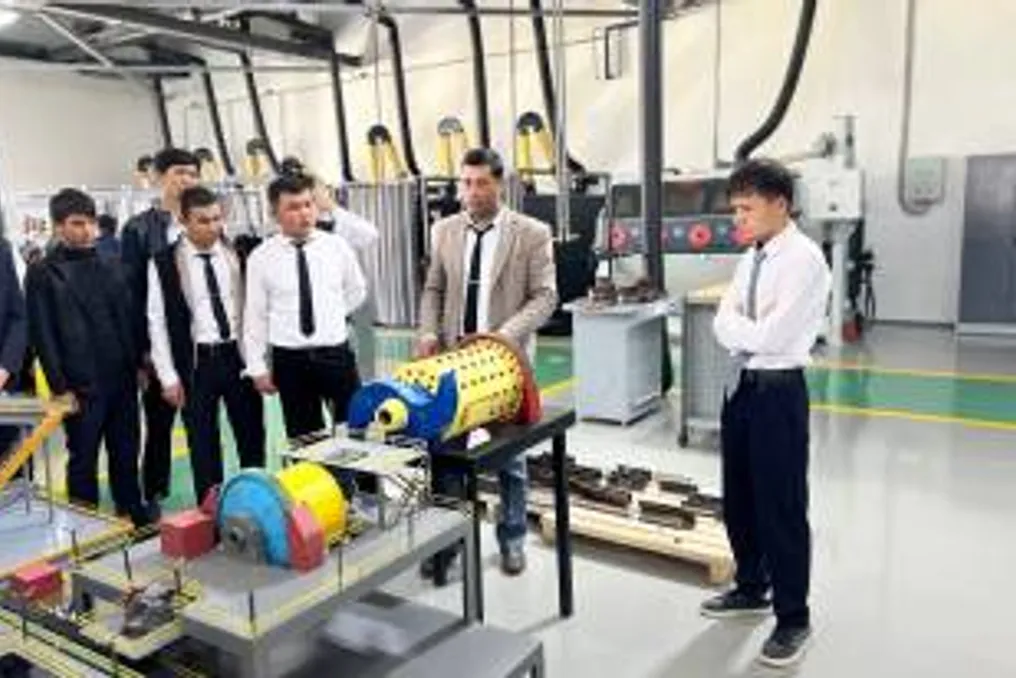
One of the main features of the Almaty State Technical Institute is the deep connection between education and production. 17 branch departments have been established at the Almaty Mining and Metallurgical Combine enterprises. Through this, students strengthen their theoretical knowledge directly in the production process, while company specialists participate in the educational process, which allows young specialists to be prepared according to the demands of the labor market.
Great attention is also paid to scientific research. In 2026, a scientific council was established under the institute to award the Doctor of Philosophy (PhD) degree in the fields of metallurgy and enrichment of mineral resources, based on the decision of the Higher Attestation Commission. This allowed young researchers to defend their scientific works specifically in Almaty.
Innovations and International Cooperation
Innovative activity at the university is also entering a new stage. Based on the President's decree of April 4, 2026, work has begun at the institute on commercializing scientific works and establishing 'spin-off' innovative companies. Furthermore, the 'GeoMetTex' engineering school specialized in geology, metallurgy, and engineering, as well as the 'Simbiotech' laboratory based on artificial intelligence technologies, are planned to be established.
Another strong direction of the institute's activity is international cooperation. Agreements have been concluded with leading higher education institutions from China and Turkey to establish joint educational programs, scientific research, and laboratories, which serves to enhance the institute's international prestige.
In conclusion, the Almaty State Technical Institute is shaping up not only as an educational institution for training engineers but also as a scientific center where industry, science, and innovation converge. Its development is of great importance for the future of the city of Almaty, the country's industry, and engineering education. The tasks set before the institute lay a solid foundation for it to become one of the leading engineering universities in the country by increasing the number of students, achieving international accreditation, forming its own scientific school, and establishing innovative companies.