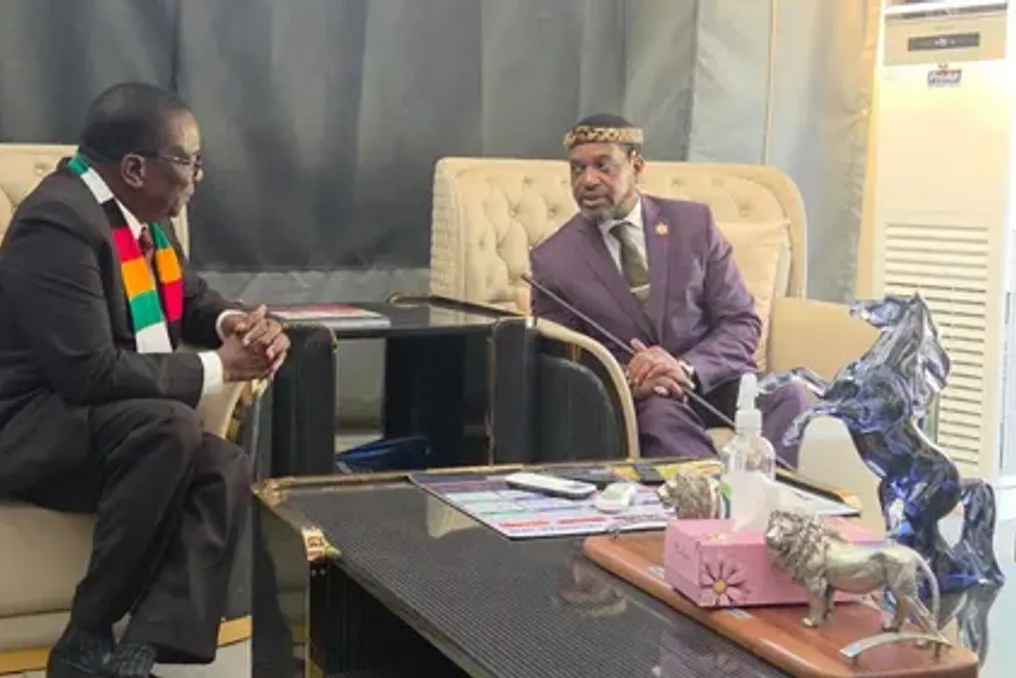
During his visit to Zimbabwe, King Misuzulu Kazvelatini emphasized the need to distinguish between legal migration and illegal immigration. He also warned that governance issues contribute to tensions surrounding migration across Africa.
During his visit to Zimbabwe, King Misuzulu Kazvelatini emphasized the need to distinguish between legal migration and illegal immigration. He also warned that governance issues contribute to tensions surrounding migration across Africa.
King Misuzulu Kazvelatini noted that Africa's shared history and cultural ties should not be used as a reason to ignore the immigration laws of sovereign nations. He argued that enforcing border controls and immigration rules should not be confused with xenophobia.
These statements were made during an official visit to Zimbabwe, where he met with President Emmerson Mnangagwa. The discussion focused on balancing African unity with respect for the sovereignty and laws of individual states.
The comments came amid ongoing discussions in South Africa regarding illegal immigration. Calls are being made in the country for stricter enforcement of migration legislation, alongside growing concerns about increased tensions, including accusations of xenophobia and persecution of foreigners.
King Misuzulu stated that he arrived in Zimbabwe not only as the King of the Zulu Nation but also as a son of Africa, convinced that the continent's greatest strength lies in its shared history, common humanity, and mutual responsibility. He stressed that South Africa and Zimbabwe are not just neighbors but a family with centuries of history predating modern borders.
Nevertheless, he added that this shared heritage does not negate the obligation to respect the laws of sovereign states. The King used his own entry into Zimbabwe as an example, recounting that he followed immigration procedures despite his status as a traditional leader. He reported presenting his passport to immigration authorities, receiving a stamp, declaring his nationality, purpose of visit, and place of residence.
According to him, complying with Zimbabwean requirements did not diminish his dignity but rather honored the country's sovereignty. He insisted that every country has the right to regulate entry into its territory—who, for what purpose, and for how long. He clarified that this is not an African principle but a universal principle of international law utilized by all United Nations member states.
Misuzulu cautioned against polarized debates on migration, noting that some mistakenly view any concern about illegal immigration as xenophobia, while others unfairly blame foreign nationals for any community problems. He stated that neither position serves Africa.
He emphasized that violence against innocent people is unacceptable regardless of nationality, but countries should not forgo immigration control for fear of being labeled xenophobic. The King stressed that the distinction between illegal immigration and legal migration must remain absolutely clear.
He noted that people who enter legally, comply with the laws, and make positive contributions to society deserve respectful treatment. However, he also pointed out that illegal entry, document fraud, organized human smuggling, and deliberate violations of migration laws fall under criminal justice and state administration, not matters of race or nationality.
Referring to historical ties between communities in South Africa, Misuzulu noted that African identity extends beyond colonial borders but should strengthen mutual respect among nations. He mentioned the movement of Nguni speakers in the 19th century, including Chief Mzilikazi Kamashobane, who founded the Ndebele people in modern Zimbabwe, and Shoshangane Kazikode, who founded the Gaza State in parts of modern Mozambique, Zimbabwe, and Eswatini.
The King rejected assumptions of hostility from South Africans towards other Africans, reminding that the country has historically welcomed students, entrepreneurs, professionals, investors, refugees, and visitors from across the continent. He concluded that the real problem for Africa is not xenophobia, but governance. Poorly controlled borders, documentation system failures, corruption, human trafficking, and weak intergovernmental cooperation contribute to tension.
Misuzulu called on African governments to work on what he termed the 'Harare Principles on Reasonable African Mobility,' aimed at promoting legal, safe, and managed migration while strengthening cooperation between states. He stated that Africa does not need open borders without accountability, but rather legal, safe, and managed mobility. The continent must protect both the dignity of legal migrants and the sovereignty of nations, without choosing between compassion and order.