One of the key factors defining the international authority of New Uzbekistan in recent years are the ideas promoted by the country in the fields of enlightenment, openness, and intercivilizational dialogue.
International Forum of Islamic Civilization
The practical embodiment of these noble principles was the First International Forum of Islamic Civilization, which took place in the country from July 7 to 11 and became a significant event not only for Uzbekistan but also for the entire Islamic world. The five-day forum turned into a major platform for scientific and educational exchange in the cities of Tashkent, Samarkand, and Termiz.
Representatives from more than fifty countries participated in the event, including ministers, muftis, heads of international organizations, academics, museum and archive directors, manuscript specialists, university rectors, and experts in cultural heritage. The topics discussed went beyond the study of the history of Islamic civilization and covered such current issues as science, education, digital technologies, preservation of cultural heritage, manuscript restoration, combating Islamophobia through enlightenment, youth upbringing, and humanitarian diplomacy.
Concept of Enlightenment and Global Dialogue
This forum is assessed as a logical continuation of President Shavkat Mirziyoyev's concept of 'Enlightenment against Ignorance,' which he promotes on the international stage. This initiative of the head of state, put forward at the United Nations General Assembly, has turned into a global humanitarian appeal supported by many countries.
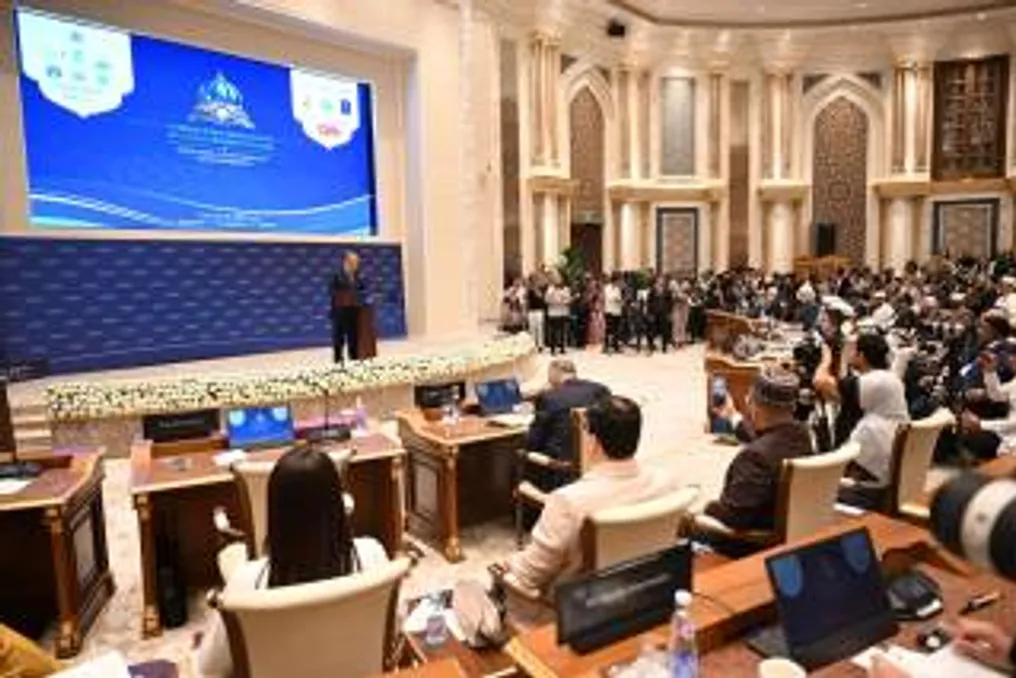
The opening of the forum took place on July 7 at the Center for Islamic Civilization in Uzbekistan. This complex, which amazes world scientists with its architecture, modern technologies, and rich scientific concept, became the symbolic center of the forum. During the opening ceremony, an address by the President of the Republic of Uzbekistan, Shavkat Mirziyoyev, was read to the forum participants. In it, it was emphasized that Islamic civilization has made enormous contributions to the development of science, medicine, astronomy, philosophy, literature, and human culture, and that studying and widely promoting this heritage is of particular relevance today.
Firdavs Abdukholikov, Director of the Center for Islamic Civilization in Uzbekistan, noted that President Shavkat Mirziyoyev's greeting once again demonstrated the high status of this forum and its exceptional importance for the country and the international community. He added that the noble ideas of the head of state, aimed at developing enlightenment, religious tolerance, and intercivilizational dialogue, serve as an important guide for all participants.
As the President stressed, the most appropriate response to forces trying to link Islam with violence today is demonstrating the essence of true Islamic civilization, based on enlightenment. Therefore, all major projects implemented in Uzbekistan, including the Center for Islamic Civilization, as well as the Imam Bukhari, Imam Mutaridi, and Imam Termizi International Scientific Research Centers, serve this noble goal.
Recognition by the Global Scientific Community
Forum participants highly praised the reforms being carried out in Uzbekistan on the very first day of the event. Dr. Salim Al-Malik, Director General of ICESCO, stated that Uzbekistan has become an example for the entire Muslim world in terms of preserving and transmitting the rich heritage of Islamic civilization to future generations. He noted that here history is not just preserved, but revived.
According to Al-Malik, the Center for Islamic Civilization is not just a museum or a scientific institution, but a global intellectual platform uniting different peoples and cultures. Sultan Raev, Secretary of TURKSOY, assessed the forum as a 'new stage of humanitarian cooperation between the Turkic and Islamic worlds,' emphasizing that the cities of Samarkand, Bukhara, Termiz, and Tashkent hold an important place in the history of human civilization, and Uzbekistan demonstrates itself as a country that harmoniously combines this great heritage with modern sciences.
Most foreign guests were impressed by the manuscripts presented at the Center for Islamic Civilization, unique copies of the Quran, interactive exhibits, and modern museum technologies. At the plenary sessions of the first day, topics were widely discussed, including the contribution of Islamic civilization to global development, the heritage of great scholars and thinkers, cultural diplomacy, religious tolerance, science, and the connection with digital technologies.
Experts reached a consensus: understanding Islamic civilization in the 21st century should not be limited to studying history. It should serve to strengthen universal values such as human dignity, enlightenment, science, peace, and mutual respect.
Heritage of Great Scholars in Light of Science
A notable feature of the First International Forum of Islamic Civilization was that it was not limited to general plenary sessions in Tashkent. In the following days, prestigious conferences dedicated to the scientific heritage of great scholars were held in Samarkand and Termiz, which increased the practical and scientific significance of the event.
In Samarkand, an international conference on the topic 'Al-Jami' as-Sahih - Book of the Ummah' was held at the site of the Imam Bukhari memorial complex, attended by leading world scientists, Islamic scholars, and manuscript specialists. The presentations provided a detailed analysis of the great imam's method of collecting hadiths, the manuscript traditions of the work 'Al-Jami' as-Sahih,' its place in the development of world civilization, and its significance for modern Islamic studies. New academic publications and scientific projects on this work were presented within the framework of the forum.
Another important meeting took place in Samarkand, dedicated to the scientific heritage of Imam Mutaridi. The conference discussed the role of the Maturidi doctrine in issues of tolerance, consistency of reason and tradition, and its significance in the fight against religious radicalism and extremism. Scientists from Turkey, Egypt, Morocco, Saudi Arabia, the United Kingdom, and India emphasized that Imam Mutaridi's teachings serve as an important theoretical basis for forming an enlightening immunity against modern global threats.
The next stop for the forum was Termiz, where an international conference, held jointly with the Termiz State University and the Imam Termizi International Scientific Research Center, discussed Imam Termizi's contribution to the development of hadith studies, as well as Hakim Termizi's teachings on Sufism and the role of the Termiz school in Islamic civilization. In sectional meetings, practical proposals were developed for the preservation and digitization of manuscripts, protection of archaeological heritage, preparation of scientific publications, support for young researchers, and expansion of international academic exchange programs. Forum participants visited pilgrimage sites, such as the tomb of Hakim Termizi and the Sultan Saodat complex, familiarizing themselves with the large-scale work on preserving and developing historical heritage in Uzbekistan.
Practical Results of the Forum
Another significant aspect of the forum was that it was not limited to theoretical discussions. A number of cooperation memoranda were signed during the event between museums, archives, universities, research centers, and international organizations. In particular, an agreement was reached between ICESCO and the Center for Islamic Civilization in Uzbekistan to establish the Imam Bukhari International Prize. This prize will be awarded to scientists and institutions that have made worthy contributions to the study of Islamic civilization, manuscript preservation, hadith studies, promotion of cultural heritage, and the development of tolerance ideas.
Furthermore, several strategic initiatives were proposed, including the formation of a unified digital database of manuscripts, the creation of an electronic library on Islamic civilization, the preparation of an international encyclopedia, the organization of a young researchers' forum, and the establishment of an international association of museums of Islamic civilization. Experts believe that the implementation of these initiatives will allow Uzbekistan to become one of the most important centers of international scientific cooperation in the field of Islamic civilization in the coming years.
Discussions in Samarkand and Termiz showed that the First International Forum of Islamic Civilization was not limited to updating historical memories; it laid a solid foundation for new scientific projects, joint research, and long-term international cooperation.
Concluding Documents and Resolution
The most important outcomes of the forum were reflected in the documents adopted at the closing. After the multi-day discussions, scientific debates, and meetings of the participants, the Tashkent Declaration was adopted, and a special Address on behalf of the President of the Republic of Uzbekistan, Shavkat Mirziyoyev, was sent.
The Tashkent Declaration defined key tasks: preserving the rich scientific and spiritual heritage of Islamic civilization, widely promoting its true humanistic content internationally, educating the younger generation in the spirit of science and enlightenment, and using enlightenment as the most effective means of combating extremism and Islamophobia. Specific initiatives were also proposed for the preservation, restoration, and digitization of manuscripts, the organization of joint scientific research, and the strengthening of international academic partnership.
The Address addressed to the President of the Republic of Uzbekistan, Shavkat Mirziyoyev, holds special historical significance. It notes that this forum, initiated by the head of state, marked the beginning of a new era of international cooperation in the field of studying and promoting the heritage of Islamic civilization. Participants note that the Center for Islamic Civilization, a product of the high will and erudition of the President, is becoming not only a modern scientific and educational complex of world-class standards but also an important platform for implementing joint projects on the study and preservation of invaluable heritage in this unique process, uniting various states, international organizations, leading scientists, scientific institutions, universities, libraries, museums, and spiritual and educational centers.
In conclusion, the Uzbek reforms in the field of preserving spiritual, scientific, and cultural heritage made a huge impression on the forum participants. Institutions such as the Center for Islamic Civilization, the renovated Imam Bukhari Memorial Complex, and the Imam Bukhari, Imam Mutaridi, and Imam Termizi International Scientific Research Centers, as well as the Academy of Islamic Sciences and the Tashkent Islamic Institute named after Imam Bukhari, are bright manifestations of consistent state policy in preserving historical memory, developing fundamental science, and strengthening humanitarian cooperation.