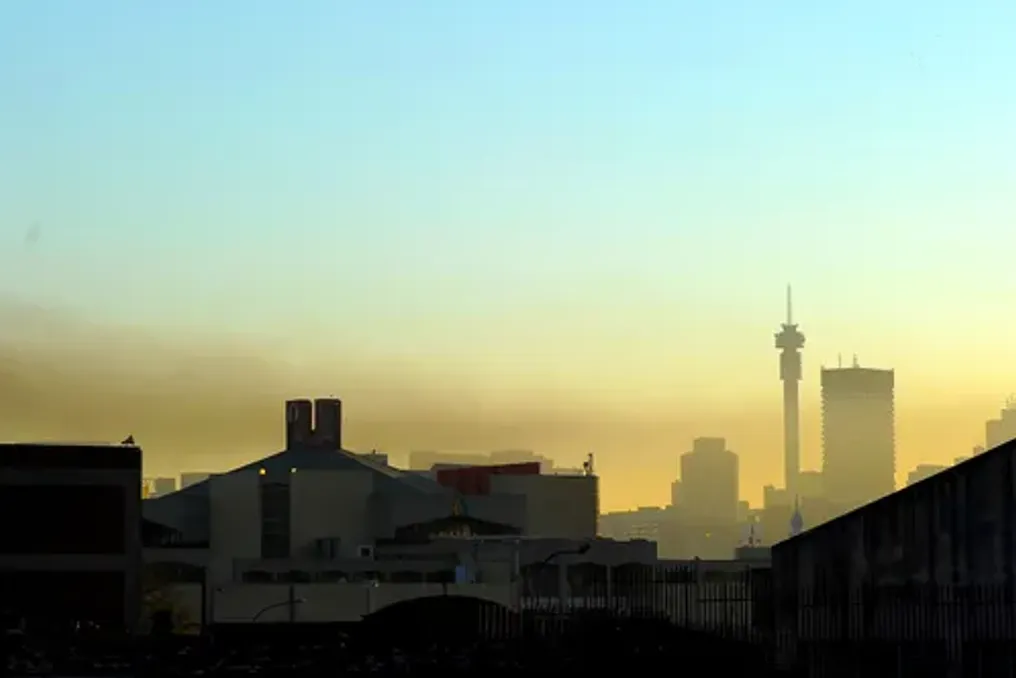
A warning about air quality has been issued in Johannesburg. A new study demonstrated that outdated vehicles contribute a disproportionate share of harmful emissions.
Discovery of Pollution Problem
According to the new report prepared by the Technical Station for Process, Energy and Environmental Technologies of the University of Johannesburg (UJ-PEETS) in collaboration with the International Clean Transport Council (ICCT), residents of central and southern areas of Johannesburg are most exposed to transport emissions and air pollution.
Popular
This report, released by the TRUE Initiative, revealed the uneven distribution of vehicle emission impact across the city of Johannesburg. The TRUE Initiative conducted the first remote sensing campaign in Africa along roads in real conditions, collecting over 250,000 vehicle exhaust gas measurements in Johannesburg for a comprehensive analysis of light and heavy truck emissions in the region.
Methodology and Study Results
The study, supported by Breathe Cities, was conducted from July to September 2025 using remote sensing technology at 11 different points in the city. This technology recorded emissions such as nitrogen oxides (NOX), hydrocarbons (HC), carbon monoxide (CO), ammonia (NH3), and smoke opacity through ultraviolet light absorption, which serves as an indicator of particulate matter.
It was found that gasoline passenger cars registered before 2006 accounted for 4% of the fleet but contributed up to 24% of measured emissions, including NOX, HC, CO, and PM. Furthermore, it was found that old gasoline minivans, making up 8% of the fleet, had an average CO content more than four times higher than models registered after 2006, while new diesel minivans emitted up to 18 times more PM than their gasoline counterparts.
Health Impact and Recommendations
The newest diesel passenger cars and light commercial vehicles showed average NOX emissions four to seven times higher than comparable vehicles in Europe. Transport-related emissions were linked to approximately 500 premature deaths and 200 new cases of childhood asthma in Johannesburg, as well as over 1200 premature deaths and nearly 500 new cases of childhood asthma across the province in 2024 alone.
The report highlighted that residents of central and southern Johannesburg, who rely more on public transport, face the highest level of transport emission exposure in the city. In these areas, minivans accounted for 10% of the measured fleet but provided between 21% and 40% of total emissions, with particularly high levels of CO and HC.
The oldest vehicles, despite having a smaller share of the overall fleet, demonstrated the highest emission levels. Gasoline passenger cars registered before 2006 contributed 12% to total NOX emissions, 21% to HC, 22% to CO, and 24% to PM. Meanwhile, gasoline minivans registered before 2006 were responsible for 22%–25% of the total HC and CO emissions in the fleet.
Diesel minivans registered PM and NOX emissions 18 and 44 times higher, respectively, than their gasoline counterparts. The report noted that diesel vehicles made up 98% of all new minivan registrations in 2025, compared to 7% in 2001, which could have serious health consequences for residents if not addressed.
Proposed Solutions and Expert Opinions
The report supports the existing recommendation from the City of Johannesburg from June last year to introduce Clean Air Zones (CAZ) as a key solution for a gradual and equitable transition to a cleaner transport sector, especially in central and southern Johannesburg. Other policy options recommended by the TRUE Initiative include adopting European regulatory standards Euro 6d/VI-D for new vehicles, expanding and strengthening Johannesburg's vehicle inspection and maintenance program, and introducing electric minivans through financing schemes to reduce initial costs.
Bothemgollo Kkwakwo, Project Lead at UJ PEETS, stated that conducting the first remote sensing campaign of vehicle emissions in real conditions in Africa is a significant achievement for both South Africa and the entire continent. He added that UJ PEETS played a key role in implementing the study on the ground and developing local expertise in this advanced emission monitoring technology. Their goal is to use this success to replicate similar campaigns across South Africa, providing cities and governments with reliable, locally generated data to accelerate cleaner transport policies, improve air quality, and protect public health.
Nokutula Dubazan, Portfolio Manager at Breathe Cities, noted that this report provides Johannesburg with the necessary evidence to take action. She emphasized that such data, showing exactly where emissions are highest and who bears the greatest burden, allows recommendations to be turned into targeted and effective policy. In her view, clean air is achievable when cities have reliable data for informed decision-making.
Lebo Molefe, Director of Air Quality and Climate Change in the City of Johannesburg, stated that the completion of the TRUE Initiative study on vehicle emissions marks an important milestone for Johannesburg. By providing detailed information on actual vehicle emissions under local operating conditions, the study helps eliminate a critical data gap that has historically limited the development of targeted and effective measures. These findings will strengthen the City's ability to collaborate with provincial and national partners to develop scientifically sound policies, strategies, and programs aimed at reducing emissions, improving air quality, and ensuring healthier outcomes for residents.
Mallerie Crowe, lead author and researcher at ICCT, commented that the latest testing campaign expanded the understanding of vehicle emissions in Johannesburg and may help deepen the understanding of emissions in the wider African region. She noted that a small number of old vehicles emit a disproportionately large amount of pollutants, so targeted policy to accelerate fleet renewal will be crucial for improving air quality.
Sheila Watson, Deputy Director of FIA Foundation, stressed that the TRUE Initiative revealed shockingly high levels of vehicle emissions on the streets of Johannesburg. She pointed out that hundreds of city residents suffer or die annually due to dirty air, and road transport is a major factor in this pollution. According to her, such real data in Johannesburg is vital for understanding and solving the public health crisis, indicating the need for urgent action to clean the air and protect residents' lives.