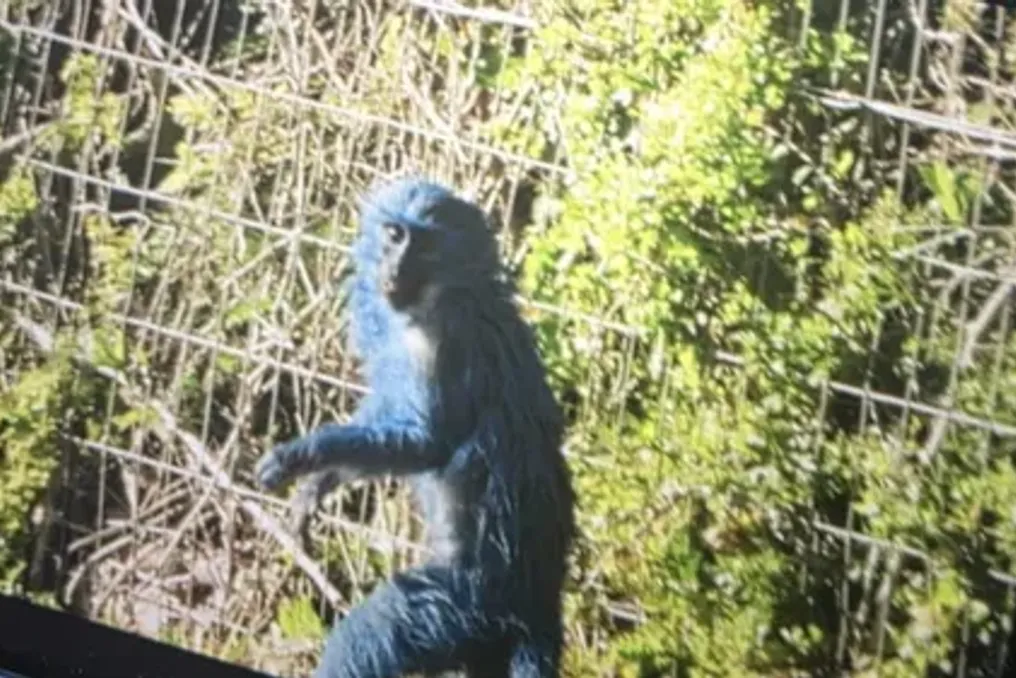
A wild vervet monkey in the Nelson Mandela Bay area was caught and covered in blue paint by an unknown person, after which it was released back into its troop's territory. The animal, painted from head to tail, was spotted in Dir Park.
Discovery and Activist Concerns
The charity group Monkey Matters Eastern Cape discovered the stained vervet in Dir Park on Sunday. The group warned that the paint could poison the animal and lead to a 'slow, agonizing death.' Although the animal evades capture because it moves too quickly, the group reported that it appears healthy.
Charl van der Mecht, co-founder of Monkey Matters Eastern Cape, which has been rescuing primates in the province for over 25 years, suggested that the act was motivated by a belief that painting the monkey would scare away its troop. Van der Mecht stated that there is an old myth that if a monkey is painted white or, as now, blue, the troop will be frightened and run away. However, she emphasized that this is untrue and constitutes animal cruelty capable of causing a slow and painful death.
According to Van der Mecht, painting a monkey any color will not cause its troop to reject it. She called it ignorance disguised as advice. Furthermore, she noted that the paint can damage the animal's skin, eyes, and fur, forcing it to desperately try to clean itself. She added that there is nothing brave about subjugating and painting a wild animal, and this incident left the organization devastated due to witnessing various forms of primate abuse.
Reaction from Other Wildlife Defenders
Activist Marizanne Kemp Ferreira expressed concern over this act of cruelty, stating that animals do not invade human space. Ferreira believes that persecuting, poisoning, painting, injuring, or killing these animals simply because they exist is unjustified and inhumane.
Historical Context of the Practice
Steve Smith, founder of Monkey Helpline in Durban, noted that painting monkeys is most common in KwaZulu-Natal. In his opinion, this practice originated among settlers who painted baboons to protect crops. There was a belief that the painted animal would return to its troop, and the troop, in turn, would leave the area, eliminating the problem of crop predation. Over time, this practice shifted from baboons to monkeys, but the underlying belief remained false.
Smith also reported that sometimes painted monkeys were shot with darts, and some people took this as a joke. He confirmed that rescued painted monkeys were always found among their troops, refuting the idea that the paint drives them away. He concluded that this practice is cruel, illegal, and serves no purpose.
Scientific and Legal Aspects
Persecution of primates by farmers and settlers is documented. According to a Yale Environment 360 report, white settlers spread across South Africa often viewed baboons as pests and placed bounties on them, some dating back to the 1900s. Sandra Swart, a historian from Stellenbosch University studying the history of baboons and humans in South Africa, notes that people often exhibit greater aggression towards primates than the primates towards them, viewing animals as a substitute for broader human anxieties about invasion and security.
Harm caused by painting has been recorded in scientific literature. A 2024 study on vervet monkey admissions to a wildlife rehabilitation center in Durban, published in the journal Mammalian Biology, documented cases of intentional harm inflicted on monkeys by humans through physical attacks, poisoning, and painting, which the authors cited as evidence of cruelty in the human-monkey conflict. Vervets are highly social animals that live in troops and spend hours grooming each other to remove parasites and dirt, strengthening group bonds. This species is protected in South Africa and listed as Least Concern on the IUCN Red List, although in urban and agricultural areas, it is often considered a pest where retaliatory shootings and poisonings have been documented. Intentional painting or harming a wild animal is an offense under the Animal Protection Act.