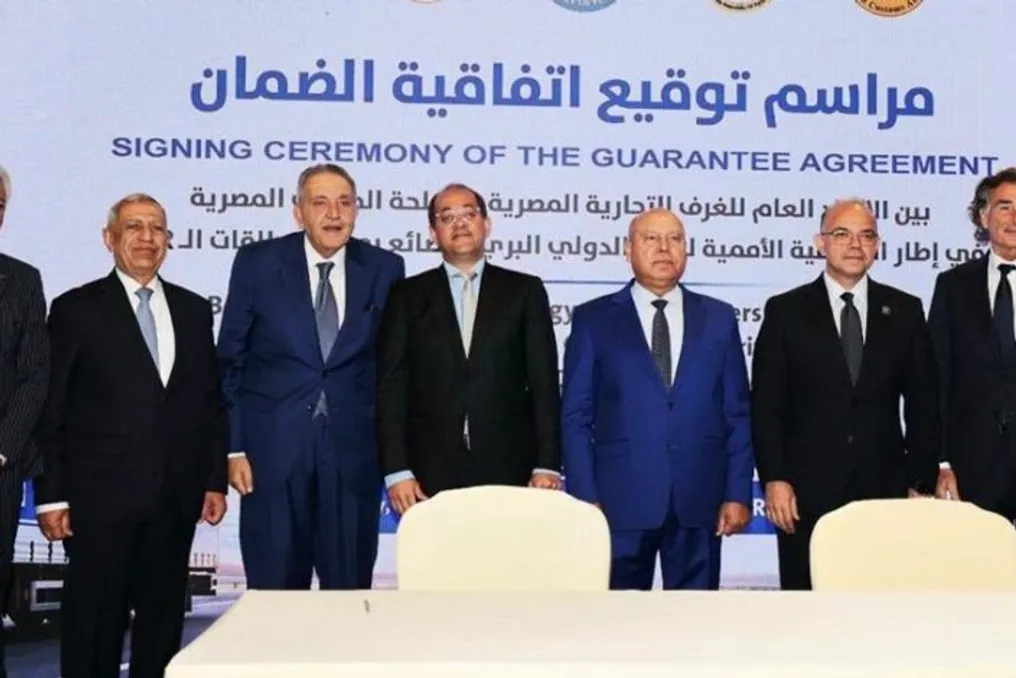
The Egyptian Customs Authority and the Federation of Egyptian Chambers of Commerce (FEDCOC) signed a TIR guarantee agreement. This step is an important element in implementing the UN-supported international road transport system aimed at facilitating cross-border trade.
Popular
Ceremony and Official Participation
The signing ceremony was attended by Finance Minister Ahmed Koshuk, Transport Minister Kamel Wazir, and Minister of Investment and Foreign Trade Mohamed Farid.
Strategy for Developing Transport Corridors
The Transport Minister stated on Monday that Egypt plans to launch two international Arab trade corridors. These corridors will connect Europe with the Gulf countries through Egyptian territory. This is part of a broader strategy to develop eight integrated logistics corridors connecting Asia, Africa, and Europe.
Integration with Global Initiatives
Wazir noted that the two planned trade corridors will complement major international transport projects. These include the India-Middle East-Europe Economic Corridor (IMEC), China's 'Belt and Road' initiative, and the 'Iraq-Turkey Development Road' project, all being implemented in partnership with global shipping lines.
Routes of the New Corridors
The proposed North Arab Trade Corridor will provide a link between Europe, Jordan, Iraq, and Syria via Egypt, primarily utilizing the Arish-Taba logistics corridor and services provided by Arab Bridge Maritime Company. The South Arab Trade Corridor will connect Europe with the Gulf countries via Port Safaga and the NEOM port in Saudi Arabia, after which the route will extend across the rest of the Gulf.
Infrastructure Capabilities
The Minister emphasized that these corridors will enable the connection of Mediterranean Sea, Red Sea, and Suez Canal ports with dry ports, logistics centers, as well as industrial, agricultural, and mining zones via railways, high-speed rail lines, and highways.
Egypt's Role in World Trade
He also announced that this initiative aligns with President Abdel Fattah el-Sisi's strategy to leverage Egypt's strategic position at the crossroads of global trade routes and strengthen its role as a regional logistics and transit hub. According to Wazir, Egypt is developing eight such integrated logistics corridors aimed at reducing transport costs, shortening cargo transit times, increasing supply chain efficiency, and supporting exports and industrial production.
Corridor to Central Africa
Among these corridors is the Berenice-Aswan-Eastern Uweinat-Kufra-Njamen logistics corridor. It is intended to strengthen trade ties with Libya, Chad, and Central Africa, creating a new trade route connecting the Red Sea with the African continent. Wazir added that the Egypt-Libya-Chad road project is a key component of this corridor and should promote trade between Egypt and African states while improving connectivity between Chad, Gulf countries, South Asia, and East Asia.
Long-Term Investments
The Minister noted that Egypt continues to invest in ports, railway networks, high-speed lines, and logistics zones as part of a long-term plan to strengthen regional connectivity, enhance competitiveness, and establish the country as a gateway connecting Europe, the Gulf, Africa, and Asia. These plans were announced after Egypt signed the guarantee agreement for the implementation of the Transports International Road Transport (TIR) system, which aims to simplify customs procedures, reduce border crossing time, and solidify the country's position as a regional transport and logistics hub.