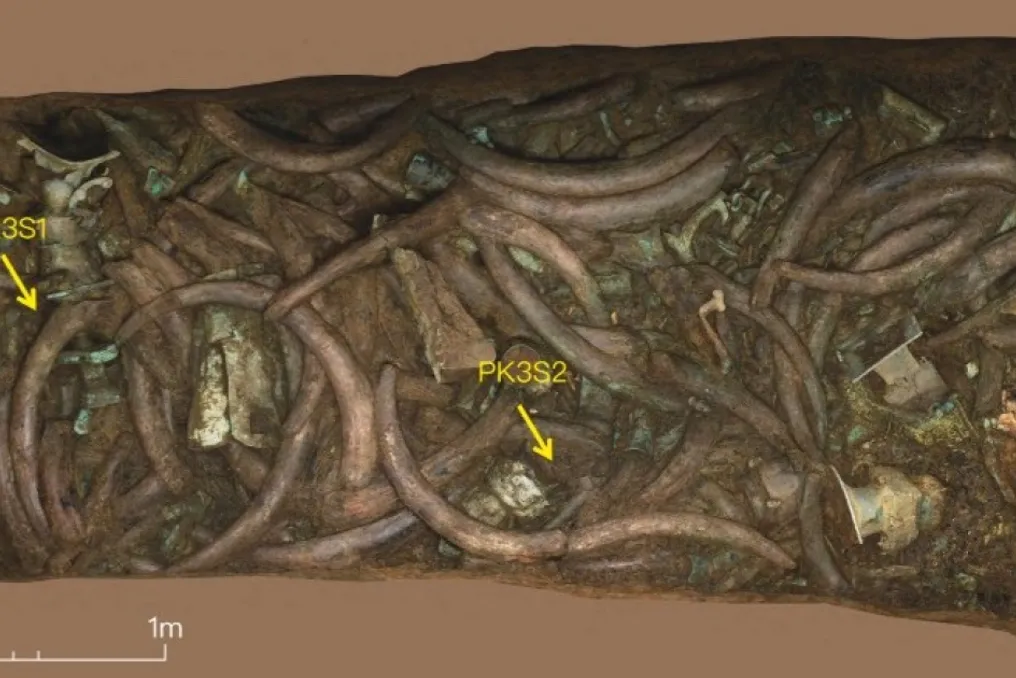
Researchers conducted a biomolecular analysis of samples extracted from four sacrificial pits discovered in Sansinduo. The analysis allowed for the detection of numerous animal proteins, which are estimated to have been sacrificed approximately 3000–3200 years ago.
Presumed Sacrificial Animals
Popular
Although it is extremely difficult to identify the specific species of animals that were preferred, the scientists' data indicates that the vast majority of identified proteins are most likely remains of cows or bulls. This information was published in the journal Journal of Archaeological Science: Reports.
History and Culture of Sansinduo
Historical records attest to the existence of the ancient state of Shu in the second millennium BCE in the Sichuan Basin, located in southwestern China. For a long time, archaeologists failed to find convincing evidence of this state. However, in the 20th century, it was established that the Sansinduo culture flourished in this region, named after the settlement discovered in Sichuan province.
According to modern understanding, the fortified settlement of Sansinduo functioned approximately from 1700 to 1000 BCE and was likely the center of the State of Shu. The settlement gained widespread fame due to its sacrificial pits. Two of them were excavated back in 1986, and six others were discovered and began to be studied between 2018 and 2019. More than 13,000 artifacts were found inside these pits, including elephant tusks, jade, bronze, and gold items, as well as unusual masks, heads, and statues, including a bronze figure of a half-human, half-snake and dragon sculptures. All eight sacrificial pits date back to the period of 1200–1000 BCE.
Comparison with Other Cultures
Matthew Collins from Cambridge and Copenhagen Universities, together with Chinese colleagues, focused their attention on the type of animals sacrificed by the inhabitants of this ancient city, rather than on values. In contrast to the neighboring Shang state (which existed from approximately 1560 or 1554 to 1046 BCE), where inscriptions on oracle bones and bone assemblages clearly indicate sacrifices of cows, bulls, pigs, sheep, and humans, similar evidence was absent in the Sansinduo culture. Animal bones were present in the sacrificial pits, but they mainly consisted of unidentified remains.
Methodology and Analysis Results
The researchers hypothesized that rapid burials, low oxygen content, and the presence of many bronze objects in the pits contributed to the preservation of organic matter, as copper has the property of inhibiting microbial growth. Therefore, it was decided to take samples of sediment and ceramic fragments from four pits for biomolecular analysis to identify specific proteins remaining from decomposed tissues. The excavation of the latter pits adhered to strict protocols, minimizing the risk of external contamination.
Proteomic analysis of control and selected samples allowed for the determination of which animals likely participated in the rituals of the Sansinduo culture. A large number of specific proteins from the Bovidae family were identified. However, establishing the specific genera and species proved very difficult. Nevertheless, the data obtained allow for the preliminary assumption that the bulk of the proteins belongs to the remains of cows or bulls (Bos taurus), and some sequences may belong to domestic sheep (Ovis aries).
Cultural Ties and Trade
The authors concluded that the molecular data indicate cultural exchange between the population of Sansinduo and other Bronze Age centers. The choice of bovids as sacrificial animals (primarily cows and bulls) links this culture to the traditions of the later Shang state, which was located in the Central Plains. In that state, ruminants, especially cows and bulls, occupied a central place in state rituals by that time, replacing pigs, which had previously dominated.
Furthermore, scientists had previously reported other findings from Sansinduo: it was established that carnelian found in the sacrificial pits was mined more than a thousand kilometers away from the settlement, and analysis of one object's remains showed that it was likely made of meteorite iron.