A popular beach bar in Mozambique has rejected claims that Mozambican citizens expelled South African tourists from the establishment. The bar stated that the viral video showing the on-site conflict was misinterpreted.
A popular beach bar in Mozambique has rejected claims that Mozambican citizens expelled South African tourists from the establishment. The bar stated that the viral video showing the on-site conflict was misinterpreted.
Pinto's Beach Bar, located in Ponta do Ouro, issued a statement following the widespread circulation of footage depicting a tense argument between South African vacationers and a local Mozambican resident. The venue emphasized that the incident, which occurred on July 4th, was not motivated by nationality and did not result in the expulsion of South Africans, as suggested in some social media posts.
The management reported that a group of South African citizens arrived at the establishment around four in the afternoon with the intention of speaking with the management. According to the bar, some members of this group behaved provocatively, 'raising their voices, banging on the bar, and threatening staff.'
The bar noted that a Mozambican woman present at the venue intervened, calling for calm and respect, which provoked a verbal altercation between visitors from Mozambique and South Africa. The video only captures part of the confrontation; it can be heard that the South Africans insisted they were legally in Mozambique. One woman stated that they 'were not swimming here,' while another remarked, 'You are our helpers at home,' which caused laughter from a local Mozambican resident.
Pinto's Beach Bar reported that the conflict escalated to acts of vandalism, including removing advertising materials from windows, disrupting business operations. The statement read: 'Several customers left the premises due to safety concerns, resulting in financial losses for the business.'
Order was restored after the intervention of the Mozambique Republic Police (PRM), who escorted the involved individuals from the premises. Management also mentioned tension earlier in the evening when the same South Africans claimed their mobile phone had been stolen. The bar added that although available footage did not confirm the alleged theft, accusations continued, creating an atmosphere of instability.
Refuting accusations of xenophobia, the bar stated that it welcomes customers of various nationalities and adheres to the principles of 'respect, equality, hospitality, and peaceful coexistence.' The administration categorically rejected any form of xenophobia, discrimination, or incitement to hatred between peoples, stressing that the incident arose from the behavior of the participants at the time, not from their nationality.
A video that has gained wide circulation on social media demonstrates a tense argument between a group of tourists from South Africa and a local resident of Mozambique, who reportedly was legally in the country. The incident took place at a coastal restaurant.
Following the viral video confrontation, the Department of International Relations and Cooperation (DIRCO) urged travelers facing difficulties to contact consular services. A DIRCO representative, Crispin Ferry, advised South Africans experiencing serious problems abroad to seek assistance through their country's diplomatic missions.
The video shows a group of South Africans engaging in a heated exchange with the local resident. The South Africans claimed they were in the country legally. One woman stated that 'I didn't swim here,' while another heard the phrase 'You guys are our helpers back home,' which caused laughter from the local resident. Since the recording does not show the beginning of the clash, the reason for the dispute remains unclear, although it is believed to have occurred after recent anti-immigrant protests in South Africa.
During the altercation, the local resident repeatedly asked why the South Africans decided to visit Mozambique. One woman from South Africa replied: 'Why are you there (in South Africa)? We are here to visit, not to live, unlike you.' The local resident countered that 'We are a beautiful country. That's why you like it.' The woman tried to explain that they came to Mozambique as tourists and paid for the visit.
Another woman covered her mouth and pulled her away, trying to de-escalate the tension. The local continued to insist: 'So why are you driving us there? Why are you driving us? Why don't you talk to your friends from South Africa? Why don't you go to Cape Town? Why did you come here, to Mozambique?' He continued addressing the group even when the two women stopped answering and sat down. Group members gestured for him to continue speaking.
The local resident stated: 'We are not satisfied with you. I tell you, you should tell your president,' before informing the group that he was recording the interaction. The South Africans responded by asking him to continue filming. Other people in the restaurant were heard shouting: 'Tlhele lani Mzansi,' which means 'Go back to South Africa.' This incident sparked active discussion on social media, where many linked the confrontation to growing regional discontent over the treatment of foreigners in South Africa.
Shirin Eraman, head of the academic program in global tourism at MANCOSA, noted that when borders divide, tourism suffers, and South Africa cannot afford another crisis of confidence. She emphasized that tourism is based on trust, respect, and cultural understanding, not just beaches and luxury lodges. When political tension or xenophobia penetrates tourist areas, it threatens livelihoods and the reputation of destinations.
According to Eraman, this incident in Mozambique followed increased tension caused by xenophobic attacks on Mozambicans in parts of South Africa. She believes that social and political problems quickly cross national borders, and tourism becomes one of the first victims. Eraman added that social media can spread dramatic footage instantly, often without full context, which influences potential tourists' decisions.
The expert also pointed out the mutually beneficial nature of tourism relations between the two countries, as thousands of Mozambican visitors travel to South Africa for education, medical, and leisure purposes. She concluded that despite the unpleasant events, there is optimism about the future of tourism, as the relationship between the countries is rooted in centuries of cultural exchange and economic cooperation.
Joana Zandamel, a Mozambican carrier with over twenty years of experience on routes between Maputo, Johannesburg, and Durban, told the Lusa agency about sharp changes in the situation in recent days. He noted an almost complete reversal of passenger flow back to Mozambique amid tension and uncertainty on every trip from the neighboring country.
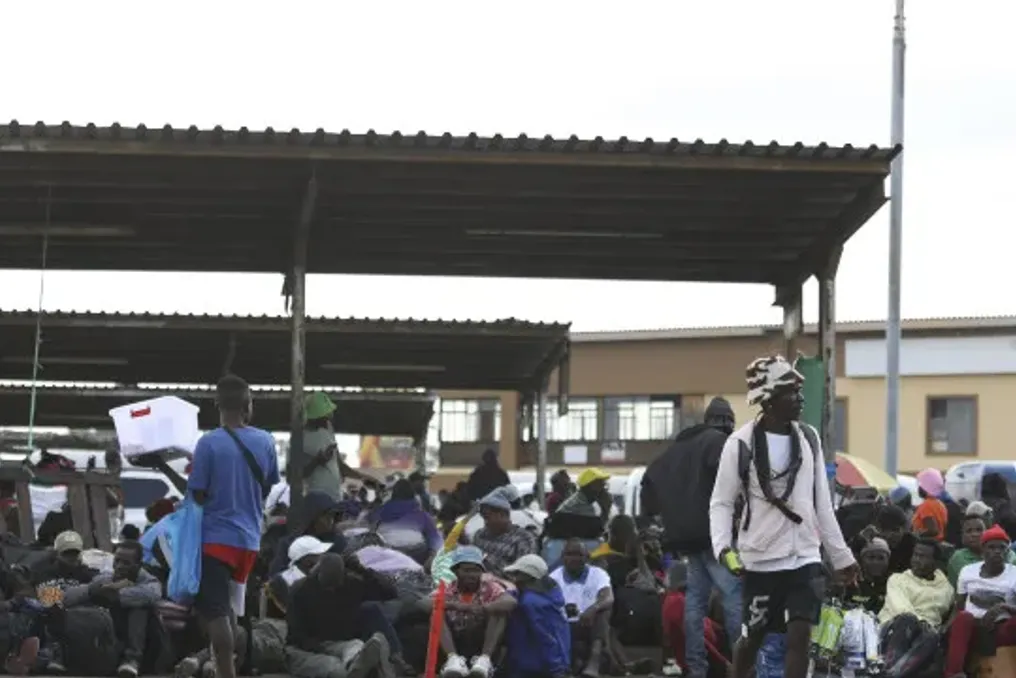
Zandamel described heavy traffic at the Junta bus station, located near Maputo, where many passengers—Mozambicans and Malawians—had gathered. They are all fleeing attacks and xenophobia in South Africa, awaiting transport home.
The carrier reported that during the last trip, they faced threats from xenophobic groups. However, the necessity of evacuating as many Mozambicans and Malawians as possible took priority, prompting them to continue moving. He believes this was his last rescue trip, completed before June 30—the deadline set by anti-immigrant groups in South Africa for foreigners to leave.
Zandamel admitted that fear accompanied him throughout the journey due to the possibility of encountering these aggressive groups, especially considering that at least nine Mozambicans have died. He predicts that the coming days will be marked by uncertainty, as South Africa, the only route he operates on, is rapidly emptying, portending an unprecedented crisis.
Armindo Machavane, who has been working on the route between Gaza province, southern Mozambique, and Pretoria since 2016, also expects business to become more difficult. He notes that there are currently no clients heading to South Africa, only those leaving the country, blaming this on the ultimatum issued by anti-immigration protesters in South Africa.
Machavane added that despite the current high level of departures, the route will soon face a drop in demand because 'there will soon be no one left there.'
At the Junta bus station, passengers and luggage are crowded, competing for space with the constant movement of vehicles, including private cars transporting compatriots from South Africa. Pedro Massango, who has been running regular trips between Maputo and Stanger in South Africa since 2008, noted that there are no problems in Stanger, but 'the big problem is in the city of Durban.'
According to Massango, despite the insecurity, he is forced to return because 'people there are in bad condition.' He also reported receiving calls from people hiding in the forests in difficult conditions, needing help.
While for carriers operating between South Africa and Mozambique this flow means a race to evacuate compatriots, for those involved in domestic transport, it affects the redistribution of this flow across the country. Sergio Kivi, who works on the Maputo-Gaza route, recorded an increase in passengers from South Africa, reflecting the arrival of migrants returning from the neighboring country.
However, the driver does not see this increase as positive, emphasizing that it is a consequence of the difficulties passengers are facing. He added that this surge intensified slightly more than a week ago, and he is concerned about the sustainability of operations in the future. Kivi warns that the situation requires caution, as the flow could quickly decrease after returns cease, leaving the sector with low demand and no clear alternatives.
Officially, authorities have removed fewer than a thousand Mozambicans from South Africa in recent weeks. The Government of Mozambique reported on Thursday that at least 283 Mozambicans were attacked, their homes burned, and property looted during the latest wave of xenophobic attacks in neighboring South Africa. The Government of Mozambique recently acknowledged the difficulties related to the repatriation and reintegration of citizens who became victims of xenophobia in South Africa, after nine Mozambicans died and 738 were repatriated due to these attacks.
Xenophobic tension is a recurring problem in South Africa. Many immigrant communities have been repatriated by their own countries, such as Mozambique or Nigeria, and South Africa has faced international criticism for xenophobia. Mozambique has about 300,000 citizens residing in South Africa, and the Presidency stated in its announcement that 'thousands' have already returned to the country due to violence.