India is home to 59.3 million micro, small, and medium enterprises (MSMEs), which contribute to 30% of the country's GDP, account for 45% of exports, and create jobs for over 25 million people. These enterprises act as the unsung engines of India's growth.
MSME Sparks 2026 Event
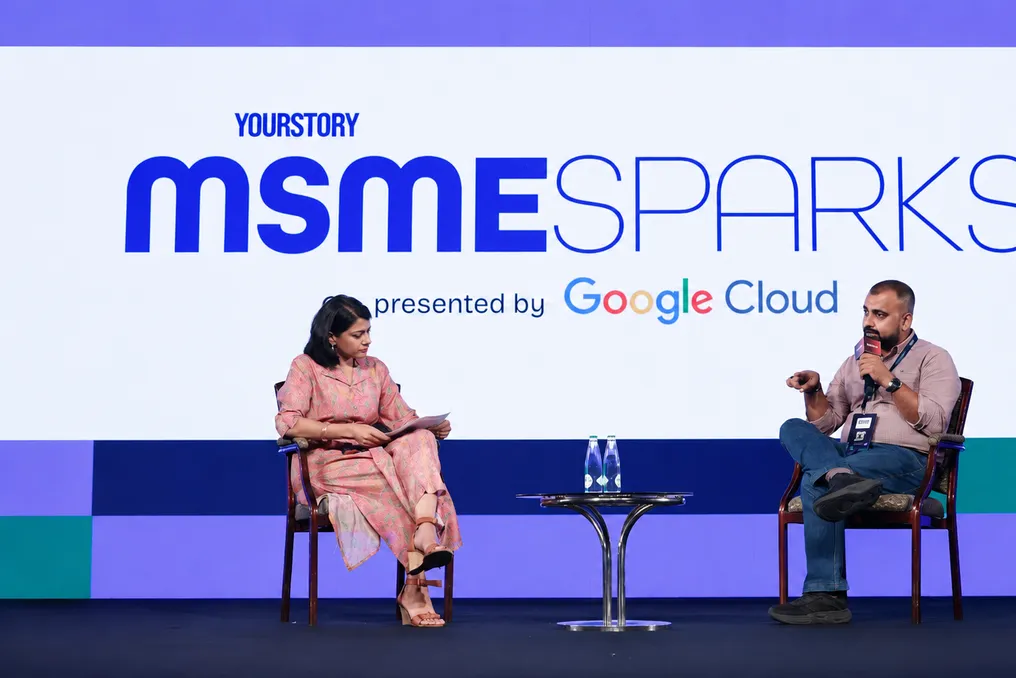
Recognizing the significance of MSMEs, the organization YourStory launched the MSME Sparks 2026 event. The five-day virtual event took place from June 22 to 25 and concluded with a grand finale on June 26 at ITC Gardenia, Bengaluru. The initiative was built around the concept of 'Bharat feeds the world' and gathered founders, policymakers, and ecosystem participants to highlight the sustainability and ambition driving the Indian business economy.
Key Themes and Talk
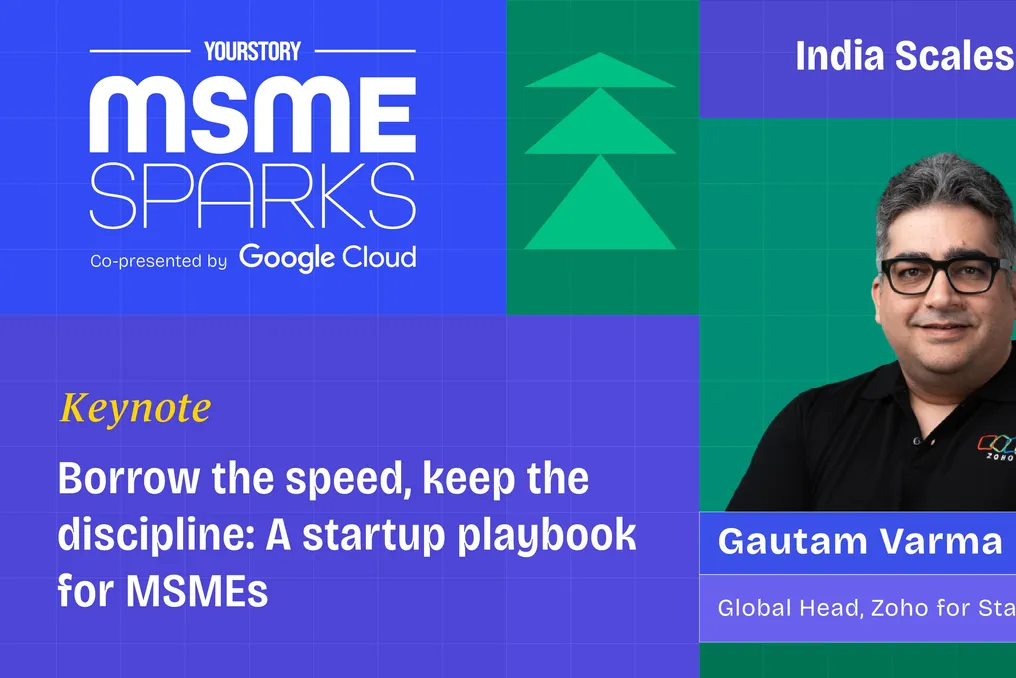
The event covered six key themes: digital transformation, access to capital, sustainable development, global market entry, policy and compliance, and the future of artificial intelligence and data-driven innovation. During the first day of the virtual format, a key session titled 'Borrow the speed, keep the discipline: A startup playbook for MSMEs' took place. In it, Gautam Varma, Global Head of Zoho for Startups, explored how MSMEs can adopt startup agility while maintaining the financial discipline that has sustained their operations for decades.
The Philosophy of SME Growth
Varma refuted the common myth about startup success. He cited data from Startup Genome and Carta, according to which 74% of fast-growing startups attribute their failure to premature scaling. He noted that in 2024, one startup closed after a year of operation, and this number increased to seven by 2025.
The central message was that MSMEs do not have to completely copy the startup model. They should borrow the 'engine' of startups while retaining their own foundation. According to Varma, it is necessary to take the 'engine,' make data-driven decisions, conduct rapid experiments, scale using technology, and utilize a very fast feedback loop, and then supplement this with AI to ensure speed, while maintaining the core structure that includes financial discipline, profitability, long-term thinking, and deep customer trust.
Challenges in Family Businesses
Varma argued that much of this tension manifests within family businesses, where friction between old and new ways of working often arises not in boardrooms, but at the dinner table. He presented data showing that 40% of next-generation members entering family businesses feel frustrated when trying to implement digitalization, while nearly 45% of current owners do not expect their children to simply continue running the business in the same way. The solution, in his view, lies in finding common ground around objective metrics, as margins and pricing are facts that both generations already agree upon.
Practical Example and Conclusion
In Varma's view, the role of technology is to organize and present shared data so that decisions can be made faster and with less friction. To illustrate this point, Varma recounted the journey of Tulsiway Solutions, a 70-year-old company based in Kolkata. This company serves over 6,200 clients in 15 countries without ever seeking external funding. In 2022, the business migrated to the Zoho One platform, unifying CRM, finance, HR, and collaboration tools into a single ecosystem.
Despite improved control across individual teams, the founder still lacked a unified overview of the entire business. The next step was connecting this consolidated data to an AI layer, which allowed the founder to ask simple questions in natural language—such as about renewal rates by region or conversion rates of recent leads—and receive instant contextual answers across the entire business.
Concluding the session, Varma offered three practical steps for MSMEs: transform one intuitive decision into a data-driven one; run a small experiment based on it; and allow AI to work with existing business data while adhering to proper constraints. He left the audience with a powerful phrase: 'Speed without discipline is just a faster way to spend money.' He added that the true strength of MSMEs lies not in size or adaptability, but in longevity itself. 'It's not about being small and agile. It's about still being here.'