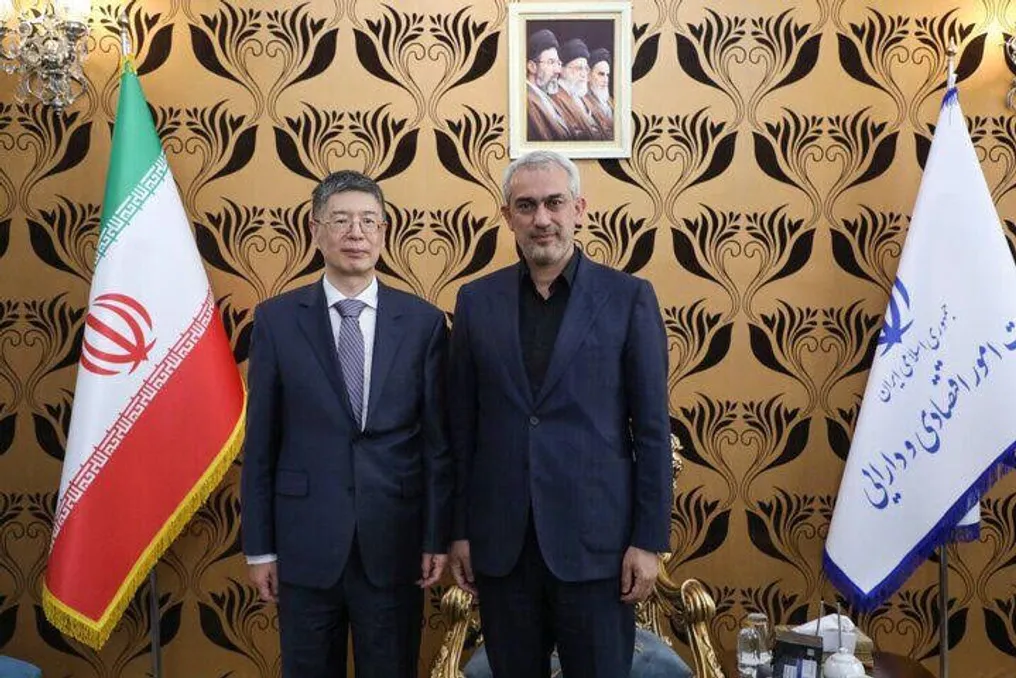
The Iranian Minister of Economic Affairs and Finance, Seyed Ali Madanizadeh, met with the Chinese Ambassador to Iran, Kong Peiwu. During this meeting, he emphasized his country's determination to develop sustainable and strategic relations between the two states.
Discussion of Strategic Partnership
According to IRNA, on Monday evening, Madanizadeh highly praised China's support, especially during the aggression against Iran by its enemies, while stressing the strengthening and development of strategic ties between Iran and China. He also viewed the proposal from the President of the People's Republic of China regarding the restoration of peace and stability in the region as constructive.
Economic Cooperation
One of the key issues discussed and agreed upon by the parties during the meeting was the development of trade and economic relations, as well as creating the necessary conditions for establishing a joint committee on economic cooperation by the end of the current year. It was decided that experts from both countries would take the necessary steps in this direction.
Principles of Global Governance
Ambassador Kong Peiwu previously noted in an article for the Tehran Times on June 22 that China recently released a 'White Paper' titled 'A More Just and Equitable Global Governance: China's Principles, Proposals, and Actions.' Foreign Minister Wang Yi detailed this document at a press conference. The ambassador expressed a deep conviction that China's principles and proposals for global governance strongly resonate with the ancient cultural traditions, foreign policy orientation, and aspirations of the Iranian people.
Four Pillars of Cooperation
The article details four foundations of alignment between China and Iran based on this 'White Paper': firstly, countering unilateral hegemony, as both nations reject the 'law of the jungle,' unilateral sanctions, and military coercion, supporting Iran's sovereignty and territorial integrity, and advocating for international law and UN-centered dialogue. Secondly, promoting the Global South, where China and Iran, as key members of the Global South (including through SCO and BRICS), work to amplify the voice of developing countries in world affairs by integrating 'southern power' into governance reforms. Thirdly, developing civilizational dialogue, rooted in the ancient Silk Road connections, where both countries support mutual study of civilizations, as well as the UN-recognized Initiative for Global Civilization and International Day of Civilizations Dialogue. Fourthly, implementing the Global Governance Initiative (GGI), with Iran being one of the early proponents and founders of the GGI Friends Group, and both sides commit to embodying the GGI principles (sovereign equality, rule of law, multilateralism, human-centricity, and concrete actions) in practical cooperation.
Conclusion on Diplomatic Relations
In conclusion, the 55th anniversary of diplomatic relations is noted, and the parties call for increased coordination to build a fairer system of global governance and a community with a common future for humanity.