At the Future of Mining Summit 2026, Paratus Botswana and Eutelsat demonstrated reliable and comprehensive solutions to provide connectivity for the South African mining industry, which continues to implement digital transformations.
At the Future of Mining Summit 2026, Paratus Botswana and Eutelsat demonstrated reliable and comprehensive solutions to provide connectivity for the South African mining industry, which continues to implement digital transformations.
Paratus Botswana provides Low Earth Orbit (LEO) satellite communication services from Eutelsat, integrating them with ground infrastructure. This enables the support of increasingly digitized mining operations, especially in remote areas where traditional infrastructure cannot always meet operational requirements.
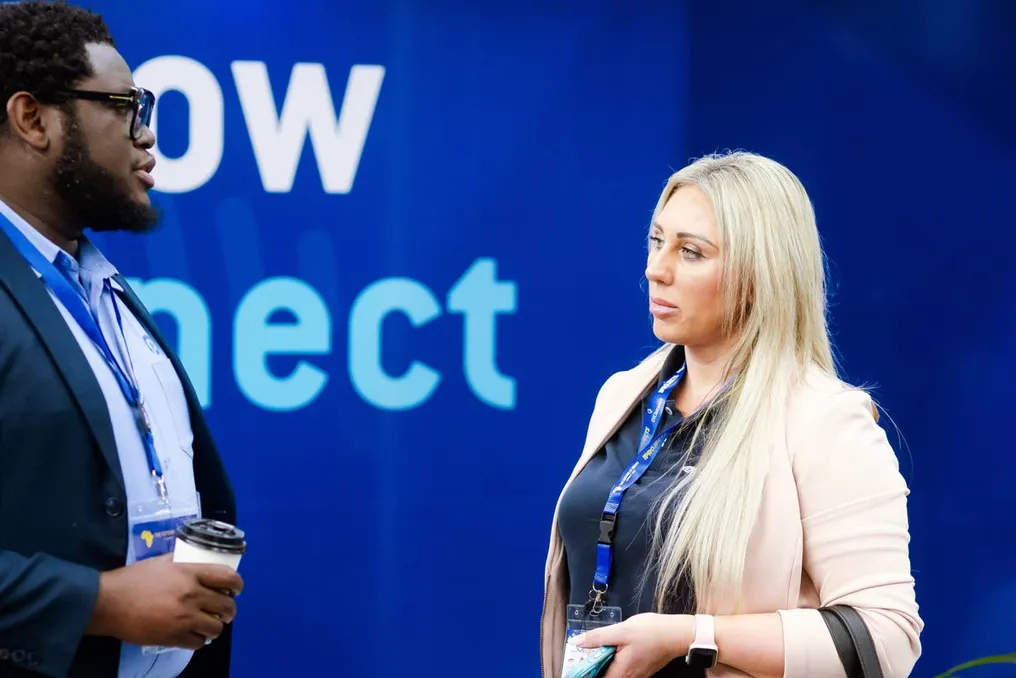
As official connectivity partner and silver sponsor, Paratus Botswana and Eutelsat held a meeting with delegates to discuss how the combination of terrestrial and satellite capabilities can support Botswana's mining sector.
Paratus Botswana Manager, Sean Brewer, spoke on the second day of the summit on the topic 'Rethink How You Connect.' He stated that the future of the mining industry is determined not only by minerals and what can be extracted from the earth but also by the entire ecosystem of industries that allow mining to thrive. According to him, the mining sector acts as a catalyst for growth in numerous auxiliary industries, including people, energy, railways, roads, and telecommunications. Modern mining requires integrated, scalable, and sustainable connectivity, along with appropriate support.
Eutelsat's LEO technology is ideally suited for mining conditions as it provides low-latency connectivity in remote and distributed sites. Furthermore, it adds redundancy where fiber optic or microwave links may be limited, slowed down, or unavailable.
Eutelsat Africa Vice President Philip Bodie stated: 'Integrated network models create a new connectivity environment for the mining sector. By combining Eutelsat's LEO OneWeb capabilities with Paratus' extensive network and experience across Africa, its local support and expertise in mining environments enable mining operations to achieve greater efficiency, sustainability, and continuity.'
Paratus Botswana is part of the Pan-African Network Operator Paratus Group. The company offers advanced solutions for network connectivity, internet, voice, satellite communications, and hosting that can support any business through a full-service, fully covered network. Founded in 2016, Paratus Botswana has grown significantly and manages an extensive network covering over 90% of the population. After acquiring BBi in 2022, Paratus became a diversified telecommunications company providing numerous services to large and small businesses, as well as residents across Botswana. With its unparalleled infrastructure, Paratus Botswana provides unmatched solutions for resilient connectivity, guaranteeing clients unlimited, high-quality, and stable connection constantly.
Due to its geographical location in South Africa, Botswana is an important communication hub serving as a transit point between countries. Using its international network, Paratus can open and create new opportunities for Botswana. Paratus Botswana aims to provide a quality network for Africa, demonstrating great ambition and deep belief in the continent's potential by investing in infrastructure and providing unlimited, reliable, and accessible connectivity.
Eutelsat is a global leader in satellite communications, providing communication and broadcasting services worldwide. In 2023, Eutelsat was formed by the merger of Eutelsat and OneWeb, becoming the first fully integrated GEO-LEO satellite operator with a fleet of 31 geostationary satellites and a Low Earth Orbit constellation of over 600 satellites. Eutelsat meets customer needs in four key verticals: video, where it distributes about 6300 television channels, and in fast-growing connectivity markets: mobile, fixed, and government services. Eutelsat's unique set of orbital assets and ground infrastructure allows it to provide integrated solutions to meet the needs of global customers. The company's headquarters are in Paris, and it employs over 1600 people in more than 75 countries. Eutelsat strives to provide secure, sustainable, and environmentally friendly connectivity to help bridge the digital divide. The company is listed on the Euronext Paris Stock Exchange (ticker: ETL) and the London Stock Exchange (ticker: ETL).
The opportunities in the Internet of Things (IoT) market in South Africa have proven to be smaller than anticipated, as a significant portion of this space is already occupied by established companies. The history of BlackBerry demonstrates how a specialized product can lose ground when a universal solution capable of performing similar functions enters the market.
A specialized business can only survive in areas where standard technologies fail to meet the requirements. Such conditions include equipment deployment over vast territories, high costs and unreliability of physical inspections, weakness or absence of local back-office systems, and the presence of a large amount of valuable but unconnected equipment in locations inaccessible to smartphone-based solutions.
These conditions apply not only to South Africa but also to many regions of Sub-Saharan Africa. Applying these criteria allows for the exclusion of much of what is typically factored into large IoT market forecasts.
The analytical firm Omdia forecasts that 35.6 million African devices will be connected via mobile networks by 2030, excluding equipment operating on cheaper wireless networks. If one adds utility meters, agricultural machinery, delivery trucks, and factory equipment across 54 African countries, Omdia's figure is merely a lower bound, and a rather low one at that.
The network level of communication is actively developing in South Africa: in 2019, Vodacom acquired the IoT company IoT.nxt for 1 billion rand, and now uses its systems for major clients such as Eskom. Furthermore, MTN created the Chenosis marketplace, designed to open the mid-market to external developers. Although these investments have stated goals, there is a significant time lag between announcing an open ecosystem for developers and the actual creation of products based on it—a lag that lasts years, not months. This gap in the mid-market segment is not accidental, but a problem that no single operator is willing to solve independently.
South Africa's transport industry loses more money to theft than its own reports show. Over 18 months leading up to June 2022, the industry association group Tapa recorded 2,670 instances of cargo theft across all nine provinces, with documented losses amounting to 577 million rand, based on data from only 3.4% of affected parties. The real loss amount is likely significantly higher. Transport accounts for 9–10% of the South African economy and provides employment for over a million people.
The problem is not the lack of trackers. Existing tracking systems are often circumvented: GPS jammers are used to disable trackers without contacting the truck, criminals impersonate police to stop transport, and forged documents are used to collect goods from warehouses that should never have left them. What is missing is trusted, prompt accounting that confirms three things: that the correct goods left the correct location, that they arrived undamaged, and that payment was automatically activated upon delivery confirmation. This gap lies between two tasks—one managed by the CFO and another by the COO.
At an industry expert conference, Tom Kruger from Hussar Security Solutions noted that it is impossible to implement new technology in an industry lacking overall coordination between companies. Each major operator develops tracking for its own fleet. No company has created a common, trusted standard among competing operators because no company has a commercial incentive to build infrastructure that its competitors could use for free. An analysis of South African ports, based on 24 interviews and two industry seminars, revealed precisely this pattern.
One large company already possesses most of the necessary components developed for its own needs. DSV, after acquiring DB Schenker in 2025, uses the myDSV platform, which provides proof of delivery, billing-linked shipping checkpoints, and GPS tracking explicitly positioned as anti-theft protection. This covers two of the three missing functions, but the platform only works for DSV's own fleet and customers. A common standard for all operators would allow customers to compare DSV with smaller competitors on equal footing, which is the direct opposite of the platform's current use.
Two possible scenarios remain. DSV, becoming significantly larger, could expand myDSV and make it an industry standard to which everyone connects. Or the company could keep the platform closed, as openness would strip it of its competitive advantage over its own clients. There is currently no evidence pointing in either direction. If DSV chooses the latter path, which aligns more closely with its commercial interests, the coordination gap will remain open because the party best suited to close it lacks the incentive to do so.
The platform designed to bridge this gap brings real, measurable value to both sides: reduced theft and a documented trail for the CFO, as well as reduced delivery disputes and automated invoicing for the COO. It is only missing a standard mobile connection. The missing element was never the mobile connection itself.
Eskom is 87% behind its target for installing smart meters by 2027. At the beginning of 2025, municipalities owed Eskom 98.5 billion rand, and since then, this amount has exceeded 110 billion rand and continues to rise despite the rollout process. The National Treasury's response—a 2 billion rand program for meter installation and direct payment routing to Eskom—covers only about 250,000 meters over three years, while the national base comprises millions of connections.
This response does not solve the right problem. People generally pay for electricity. The failure occurs later, somewhere in the chain between fund collection and Eskom.
The Maluti-a-Phofung example illustrates this. In May 2023, the municipality entered into an agreement to transfer billing directly to Eskom. The payment rate rose from 17–18% to 40% by October 2024, mainly due to written-off debt and interest, but then dropped to 24–25% by March 2025 and remained at that level. Eskom's explanation cited billing errors, incorrect time-of-day pricing, and prepaid service vendors who collected money but did not remit it. This is not a faulty meter; it is a failure in how money moves through the system after collection, regardless of the billing technology used.
A platform-based solution must address two tasks simultaneously. First, it must correctly handle billing and reconciliation, eliminating the specific gaps named by Eskom in the Maluti-a-Phofung case. Second, it must execute direct payments to Eskom instead of routing funds through the municipal treasury, where they arrive unreliably. The municipality retains customer relationships and its political standing but loses control over funds in transit. The Maluti-a-Phofung agreement itself provided for direct billing to Eskom, yet the payment rate still fell to 24–25%. Direct payment alone was insufficient; it needed to be combined with back-office accuracy, not replace it.
There is a legitimate path for a private company to take on this role: a public-private partnership (PPP) with the municipality, governed by its head of the Municipal Finance Management Act. The Midvaal Municipality is already in the process of procuring a 20-year power concession agreement through this very process. However, this path is legally viable but practically empty: a 2025 legal review showed that very few PPPs ever concluded at the municipal level. The National Treasury simplified PPP rules at the national level in February 2025, leaving the old municipal rules unchanged.
Eskom is not a neutral observer. It already occupies the same role a private platform could play and is expanding it: it has designated 14 municipalities with the highest arrears for its own Distribution Agreements (DAAs), and reports indicate this number could rise to 30. For the three already signed DAAs, customer payments go directly to Eskom's bank account, and Eskom decides how to apply those funds, leaving the municipality, as one report put it, 'with pocket change if anything'. Eskom has a direct commercial interest in expanding its own version of this role, not in creating conditions for a competitor.
A more realistic path lies through Eskom, not around it. Its own implementation of DAAs shows clear weaknesses, so the likely client for a private platform may not be a municipality seeking a PPP partner. It could be Eskom itself, purchasing the accuracy that its own rollout fails to provide, while maintaining payment relationships and political credit. The technology already exists within banks, mobile networks, and payment processors that handle a far greater volume than all 257 South African municipalities combined. The lack is not of capability, but of the deal that will connect this capability with Eskom.
The term 'operator' in this context means something broader than just a mobile network: it refers to anyone occupying a platform position. In both reviewed verticals, such an operator version already exists, and neither is a telecommunications company. Eskom represents something akin to an accounting platform, and DSV represents something akin to a logistics verification platform. Neither is complete: Eskom's version is poorly implemented, and DSV's version is confined to its own network, but the space is not empty. It is occupied, albeit imperfectly, by incumbent players who arrived first and did not need to be mobile operators to achieve this.
This changes the question. The question is not whether a platform will be built, but whether the incumbent will complete its creation, or if the gap in its own implementation will remain open long enough for someone else to enter. For accounting, whoever can most plausibly close this gap will sell Eskom's accuracy, not try to replace it. For logistics, the outcome depends on a decision DSV has not yet made. A new specialist without an existing foothold in any of the markets has narrower prospects than the scale of the underlying problem suggests.
Simple solutions built on existing infrastructure usually emerge before a ready alternative. BlackBerry learned this lesson while it was still winning. The specialist who survives is the one who builds their platform before the universal solution makes it obsolete, and who understands that the time for this is shorter than it seems.