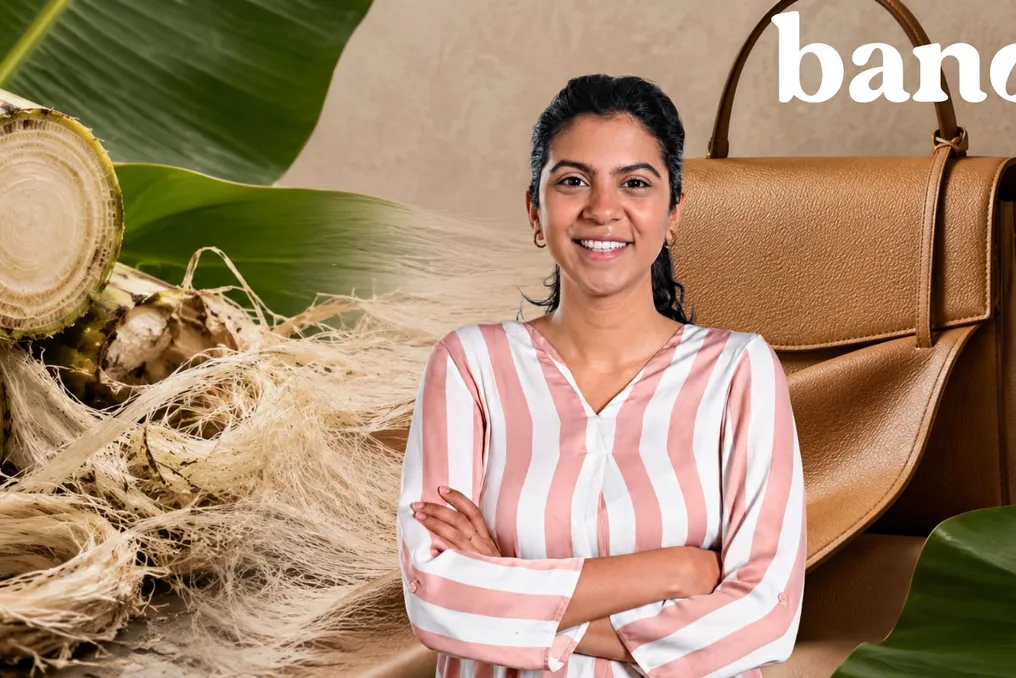
The startup's story began with the personal dissatisfaction of Janali Modi, who was searching for an eco-friendly leather bag. She discovered that the industry was in a difficult position: either animal leather with serious environmental impact, or vegan substitutes that often turned out to be just plastic in green packaging. Therefore, she created her own solution—Banofi, a name that combines the concepts of banana and fiber.
Similar stories
Popular
Creating material from waste
Banofi is a climate technology startup that recycles one of India's most common agricultural wastes into a material that is externally, texturally, and olfactorily similar to traditional leather.
Problems of the traditional leather industry
The leather industry has long been associated with pollution, water-intensive processes, and ethical issues. Fashion as a whole is the third-largest manufacturing sector in the world, responsible for up to 8% of global greenhouse gas emissions. Modi, who grew up in India, personally observed this problem. She possessed extensive experience for a materials science startup founder: a biochemistry degree from St. Xavier's College in Mumbai, consulting experience at McKinsey and Co., and a master's degree from Yale University's School of the Environment. Her insight was surprisingly simple: banana plantations produce enormous amounts of stem waste that farmers usually burn or discard. The question arose: what if this waste could become raw material?
Economic benefit for farmers
Founded in 2022 and based near Kolkata in West Bengal, Banofi is not just producing a sustainable product; it is changing the economic model for participants at the beginning of the supply chain. One of the company's early partners, a farmer from West Bengal, previously viewed banana stems as a burden to burn, but now he receives additional income from selling them. The company claims to have helped over 100 small farmers in India create new sources of income.
Environmental advantage and recognition
The environmental aspect is also impressive. Banofi states that its cellulose material requires 93% less water and emits 97% less CO2 compared to leather, without generating wastewater. The UN Environment Programme, which conducted an independent analysis of the company, notes a 95% reduction in water consumption and a reduction in carbon emissions of more than 90%. In any case, this is a rare example where the story of sustainable development and the economy of a single product mutually reinforce each other.
From Yale competition to a million-dollar prize
Modi presented an early version of her idea at Startup Yale in April 2022 and won a $25,000 sustainable enterprise prize, which funded the initial development of Banofi. The first order came from the Yale Center for Design and Innovation, which ordered notebooks as a proof of concept. The turning point came in 2023. Participating in a competition among over 40,000 students worldwide, Banofi won the Hult Prize worth $1 million, announced on stage in Paris by sustainable fashion pioneer Stella McCartney. Modi, along with early team members Maggie Boreham and Isobel Campbell, accepted the award. In the same year, Banofi took first place in the circularity-focused Wege Prize, receiving $30,000.
Leather imitation production technology
After a banana fruits, the entire stalk must be cut for the growth of a new plant. This stalk constitutes about 80% of the plant's mass, and India, the world's largest banana producer, generates about 120 million tons of such waste annually. Banofi extracts cellulose-rich fibers from the stalks, mixes them with natural binders and starches, and then presses them into sheets that are treated to mimic the grain and texture of animal hide. Because the process bypasses traditional tanning, it avoids chromium and heavy metals that make tannery wastewater so toxic.
Expansion of application markets
The first Banofi material was used for rigid leather goods; the team then developed a version for soft goods, significantly expanding the target market. Modi reported that this breakthrough allowed the company to enter negotiations with two major luxury brands and a French conglomerate, although names remain confidential. The application of Banofi material is wide-ranging: the company participated in pilot projects with over 150 brands in the fields of fashion, lifestyle, and automotive, received a grant from Mercedes-Benz, and serves as Yale's official stationery partner. The material is certified for export to the US and EU.
Financial performance and investments
According to the startup data platform Tracxn, Banofi's annual revenue as of March 31, 2025, was approximately 1.63 crore rupees with a staff of about 16 people. Most of the current activity is related to pilot projects with major brands, which typically precedes larger production contracts. According to PitchBook, the company has raised about $1.14 million, with investors including Social Alpha, MIT Solve, Hult Prize, and MassChallenge.
Recognition and future prospects
In September 2025, Modi, who was 28 years old at the time, was named one of three winners of the UN Environment Programme's Young Champions of the Earth award, which was presented during Climate Week in New York. Each winner received $20,000 plus mentorship and a global platform, after which they participated in the first Pitch Planet A competition, where Joseph Ngutiru from Kenya received a $100,000 grant. For Banofi, this recognition is less important than the signals it sends: farmers earn income from waste that was previously burned; brands receive high-quality material that has undergone sustainability audits; and the planet absorbs only a small amount of the damage. Amid high competition among alternatives to leather made from apple, cactus, and mushrooms, this tripartite alignment, backed by the Hult Prize, the UN award, and the Mercedes-Benz grant, is Banofi's true competitive advantage.
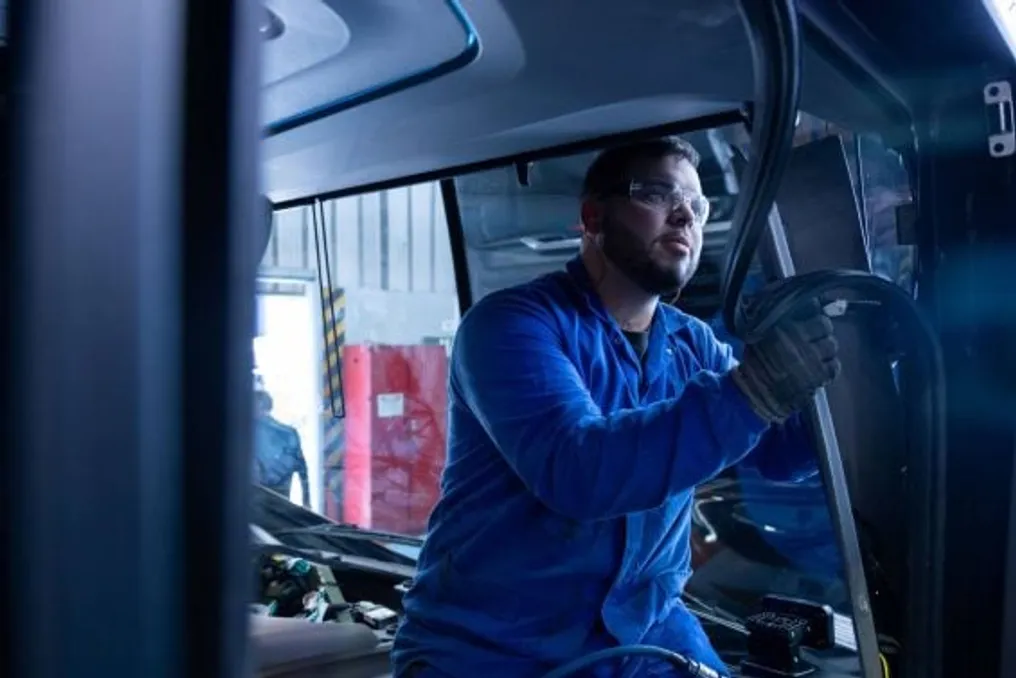
Marcopolo obtained its first ecological patent with Massa Hefesto, a technology created for bus sealing that converts industrial waste into new components for manufacturing. This solution allows for the replacement of some traditional raw materials with recycled materials and includes silica extracted from rice husks, which is a renewable source.
Objectives of the innovation project
The development of this technology took place between 2024 and 2025, resulting from a collaboration between the SENAI Institute of Polymer Innovation (ISI Polímeros) and Ciaflex, with support from the Brazilian Company for Industrial Research and Innovation (Embrapii). The central purpose of the project is to increase material circularity, minimize waste, and decrease dependence on inputs from fossil sources.
Environmental and economic impact
According to Marcopolo, tests conducted during the technology creation process indicated a reduction of over 50% in greenhouse gas emissions related to the material. Specifically, emissions were reduced from approximately 1.7 tons to about 831 kilograms of CO2 equivalent. Additionally, there was a reduction of over 50% in the use of fossil resources in the mass composition.
In addition to environmental benefits, the company points out financial advantages. It is estimated that this technology can prevent about two tons of waste from being sent to industrial landfills annually. In one of the production lines analyzed, the application of this technology can result in an annual saving of approximately R$ 27 thousand in disposal costs.