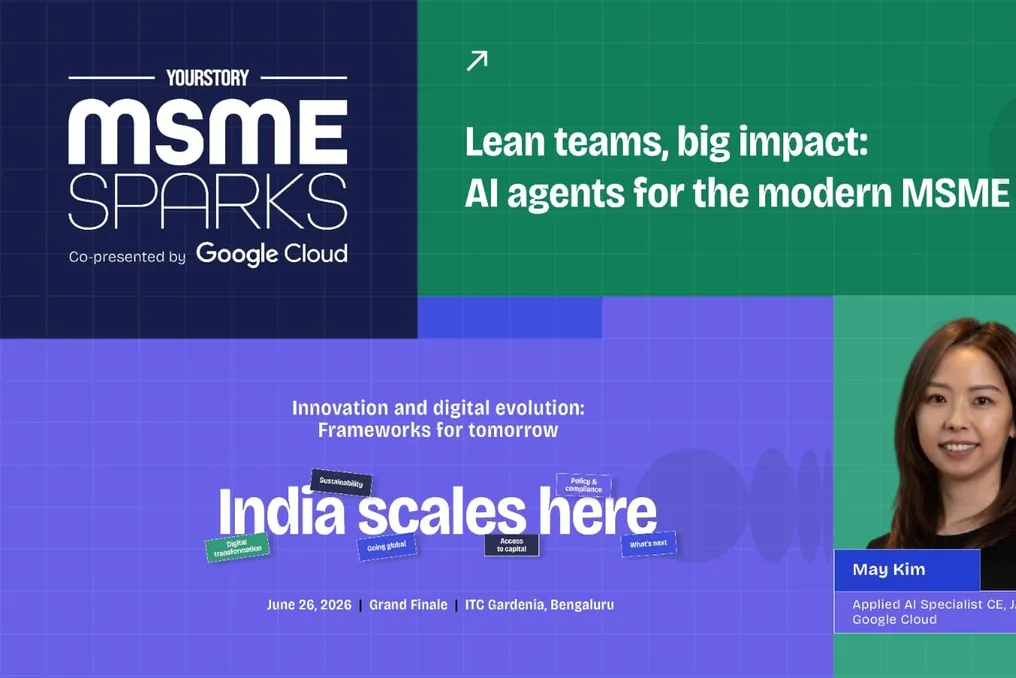
For most small and medium-sized enterprises (MSMEs), adopting artificial intelligence is not following a trend but a strategic advantage that helps solve daily business challenges with limited resources. During the Google Gemini MSME Sparks 2026 session, Mai Kim, a Customer Engineer and Applied AI Specialist at Google Cloud JAPAC, demonstrated how companies can create intelligent customer service agents in less than an hour using Gemini Enterprise for customer experience, all without writing a single line of code.
AI Agent Functionality for Business
These AI agents are capable of automating responses to customer inquiries outside of business hours, tracking orders, managing returns, or qualifying potential leads. Thus, small businesses can overcome structural and organizational barriers by providing enterprise-level service experiences even with a small team.
The session reflected a broader trend in enterprise AI. According to Google Cloud, about 75% of customers are already using the company's AI products, and models process over 16 billion tokens per minute through customer APIs in 2026. This indicates that AI agents are moving beyond experimental status to become practical tools for businesses of any size.
A New Frontier in Customer Service
Mai Kim noted that in this AI-driven era, customers expect much more, moving from simple chatbots to deeply personalized service and purchasing experiences. She provided examples of agents that can analyze handwritten recipes and instantly add necessary ingredients to a customer profile, or process text orders if a customer is late. Her emphasis was on the need for quick problem resolution and timely assistance.
Traditionally, meeting these expectations required significant investment in technology and support staff for MSMEs. Google Cloud's vision aims to eliminate this hurdle.
Demonstration of a Multimodal Agent
During the demonstration, Mai presented a multimodal AI agent capable of handling voice interactions, understanding customer intent, conducting complex dialogue analysis, and retrieving up-to-date business information—all through a self-service interface. She reported that creating such an agent took her less than an hour, highlighting the progress in modern AI development, which accelerates setup using natural language and visual tools.
For a growing D2C brand, such an agent created in 60 minutes could handle inquiries, suggest complementary products, process order returns, and escalate complex questions to a human representative. The result is faster service, increased stability, and reduced operational costs—critical advantages for small teams.
Gemini Enterprise for Customer Experience
The central element of the session was Google's Gemini Enterprise platform for customer experience, which unifies AI-powered customer service, commerce, and search into a single ecosystem. Instead of viewing customer support as an isolated function, the platform connects all stages of the customer journey: from product discovery and purchase to after-sales support and performance analysis.
This suite of features includes Customer Experience Agent Studio, Agent Assist, Customer Experience Insights, ready-made agents for shopping and food ordering, and Vertex AI Search. For MSMEs, this means they do not need to build every function from scratch; they can leverage pre-built AI components, adapting them to their specific products, customers, and workflows.
One of the platform's main strengths is its ability to balance automation with human intervention. While AI agents can autonomously handle routine interactions, the Agent Assist feature takes it further by supporting live representatives during conversations, providing contextual answers. As Mai showed, this feature delivers relevant knowledge and guidance in real time. Furthermore, Customer Experience Insights helps companies track key performance indicators such as customer satisfaction, response quality, and agent performance via an integrated dashboard, ensuring more efficient support operations even with a small team.
Significance for Small Businesses
Small companies often hesitate to adopt AI due to budget constraints, lack of technical expertise, and implementation time. Mai emphasized that Gemini Enterprise is designed to remove these barriers, offering intuitive low-code and no-code tools that allow organizations to create high-quality AI agents without hiring specialized development teams. Instead of spending months on development or hiring dedicated AI engineers, business teams can build, test, refine, and deploy conversational agents using visual workflows.
This democratization of AI can be particularly valuable for MSMEs striving to compete with much larger enterprises that traditionally had greater access to technological resources. By automating repetitive customer interactions, companies can allow employees to focus on higher value tasks while simultaneously boosting operational efficiency and customer satisfaction.
Building an Agent Without Programming
A significant portion of the session was dedicated to Customer Experience Agent Studio—the visual development environment used for the live demonstration. Users do not have to start from scratch; they can simply describe the goal of their AI agent in one or two sentences. Gemini then automatically generates instructions, workflows, tools, and dialogue structure for the agent. Mai shared that they 'use AI to create an AI agent, not to write code.'
Developers can further customize the agent by defining its role, behavior, task flows, and decision-making logic, as well as adding optional knowledge sources to improve contextual understanding. The platform also supports numerous integrations, allowing agents to connect to Google Search, open APIs, Salesforce, ServiceNow, and custom functions.
Other features presented included cross-agent variables, customizable guardrails to block unwanted conversations, multilingual support, voice customization, model selection, and advanced dialogue settings. To ensure production readiness, Agent Studio also provides built-in evaluation tools. Companies can compare AI responses against expected outcomes using gold standard evaluations or simulate realistic customer interactions through scenarios, helping to identify edge cases before deployment. These built-in testing features allow teams to increase accuracy, reducing the risk of hallucinations or inconsistent responses.
AI for Small Teams
The session reinforced an important message for MSMEs: building AI-powered applications no longer requires large budgets, specialized engineering teams, or months of development. With platforms like Gemini Enterprise, companies can increasingly focus on identifying customer problems rather than writing code. For MSMEs looking to enhance customer interaction, automate routine support, and deliver a faster, more personalized experience, AI agents are becoming a practical business opportunity, not just an experimental technology. As the Google AI ecosystem evolves, opportunities for small businesses are becoming clearer: not just adopting AI, but using it as an amplifier that enables small teams to deliver enterprise-scale customer service experiences.