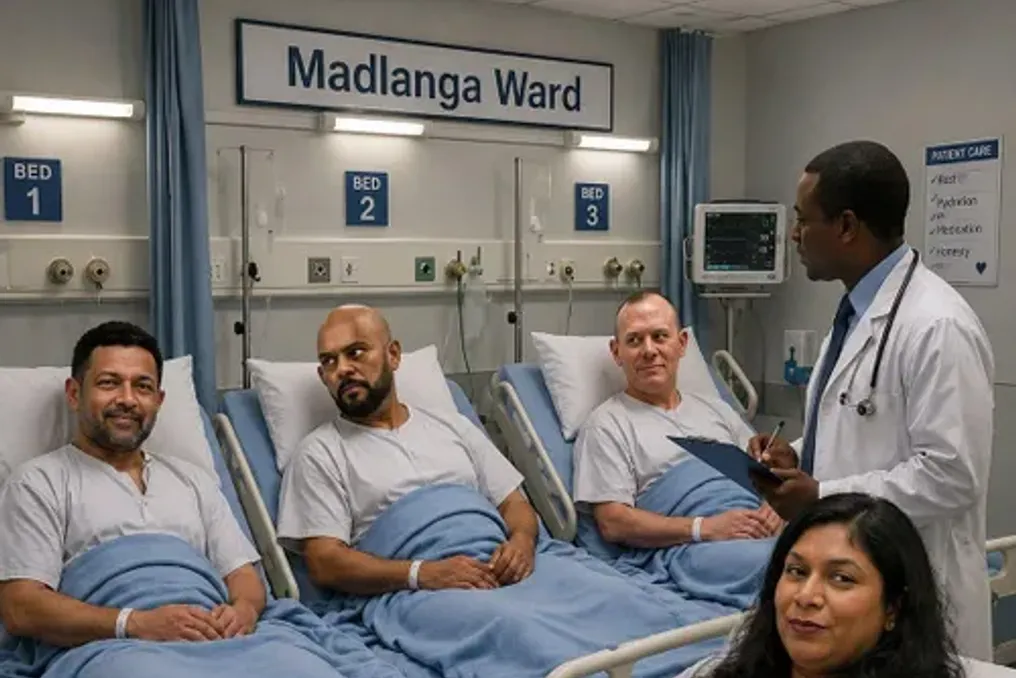
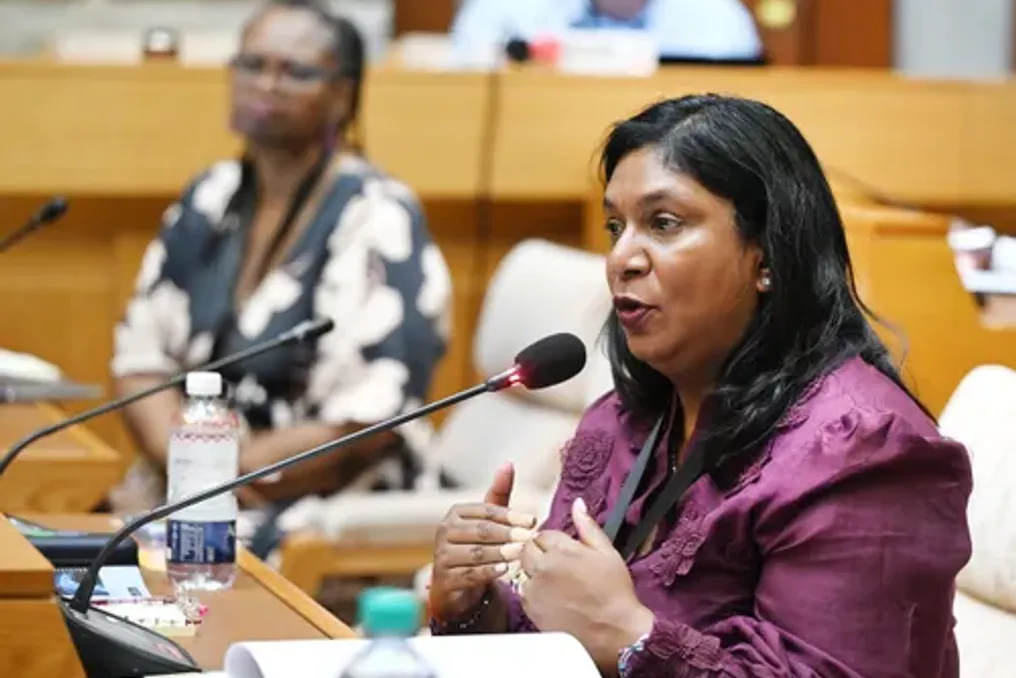
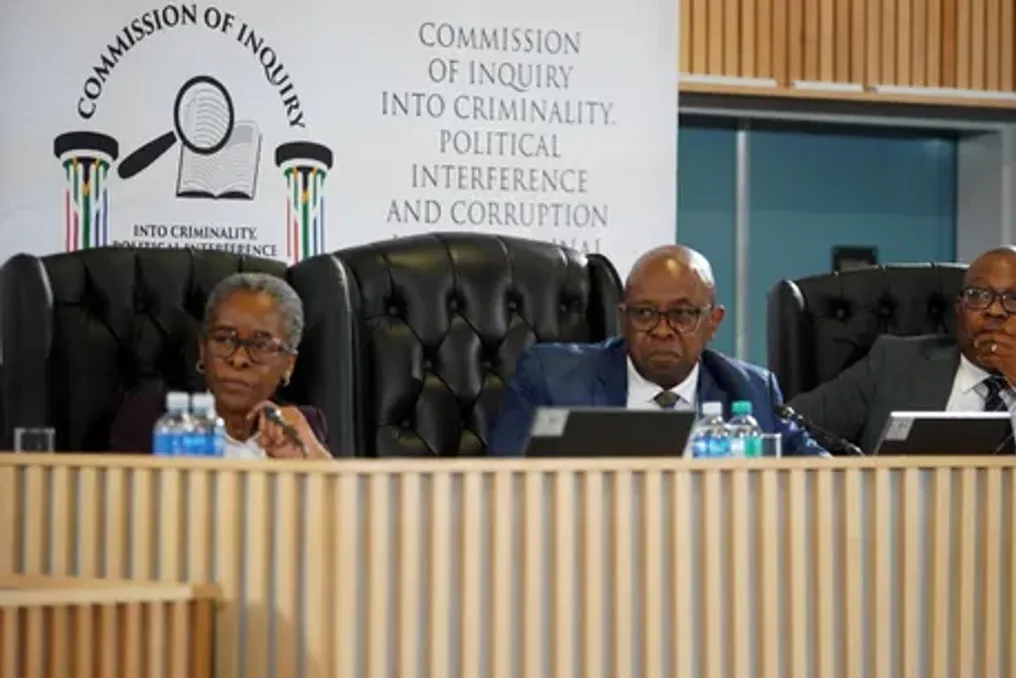
As the Madlanga Commission continues to hear evidence, public attention is focused on the serious allegations before it. However, issues concerning the Parliament's own oversight processes are equally important, especially the role of the Special Committee established to examine related matters.
Issues of Institutional Integrity
It is important to emphasize that the Commission is still gathering evidence, many allegations remain disputed, and no final conclusions have been drawn yet. Nevertheless, the issues raised require careful consideration because they go beyond individual conduct and touch upon the resilience of democratic institutions.
The concern is no longer limited to whether misconduct occurred in state institutions. It extends to the question of whether the very institutions responsible for investigating and overseeing this misconduct are susceptible to influence.
The Phenomenon of Oversight Capture
The author describes this phenomenon as 'Oversight Capture.' It occurs when the very institutions created to ensure independent control become objects or appear to be objects of political, personal, institutional, or external influence.
Unlike 'State Capture,' which targets government mechanisms, Oversight Capture targets the mechanisms designed to detect and prevent abuses. This is particularly dangerous because it weakens the last line of defense in a constitutional democracy.
Challenges for Parliament
Although the final confirmation of the allegations presented by the Commission remains at the discretion of the Commission itself and subsequent legal or parliamentary procedures, the evidence presented prompts South African citizens to ask complex but necessary questions.
Questions arise as to whether Parliament can effectively investigate cases where some of its own members may themselves be subject to evidence. There is also the question of whether members whose conduct is the subject of credible testimony should continue to participate in oversight proceedings without an independent assessment of potential conflicts of interest. Furthermore, it must be considered whether political loyalty can coexist with the constitutional duty to conduct impartial oversight.
Inconsistency of Standards
These issues cannot be dismissed as mere political rhetoric; they are matters of high-level governance. In the corporate world, executives are expected to declare actual or perceived conflicts of interest and, if necessary, abstain from discussions. The goal is not to imply guilt but to protect the integrity of the decision-making process. Ironically, the standards usually applied to corporate boards are not consistently observed in public oversight bodies.
This inconsistency undermines public trust. Trust in democratic institutions depends not only on justice being done but also on it appearing to be done. As soon as citizens begin to suspect that outcomes are predetermined, oversight loses its credibility, regardless of the final findings.
Structural Weaknesses of the System
The current moment also reveals another structural weakness in South Africa's accountability system. Investigation commissions, parliamentary committees, criminal investigations, disciplinary processes, and ethical mechanisms are currently operating simultaneously. While multiple accountability processes can reinforce each other, they can also create overlapping mandates, conflicting findings, and opportunities for political maneuvering if not carefully coordinated.
The greatest danger is that oversight gradually turns into performance. This is the author's central argument in the work 'Governance Theatre.' Institutions may continue to hold hearings, issue statements, form committees, and prepare reports, while the purpose of accountability slowly disappears. Governance becomes something performed rather than practiced.
Signs of Threat to Democracy
There are warning signs that every democracy must recognize. These occur when issues seem selective, when findings appear predetermined, when institutional loyalty outweighs objective investigation, when political interests overshadow constitutional obligations, or when public communication becomes more important than the evidence itself. In such cases, oversight begins to resemble theatre rather than accountability.
South Africa cannot afford such an outcome. The solution is not to weaken Parliament or diminish the importance of investigative commissions. On the contrary, the solution is to strengthen them. Parliament should consider establishing independent recusal procedures for committee members whose impartiality could reasonably be questioned. An independent Parliamentary Ethics Commissioner, shielded from partisan political influence, could provide objective oversight of ethical issues concerning members.
Leaders and investigators should enjoy enhanced institutional independence and job security when conducting confidential investigations. Greater transparency in committee proceedings, balanced with witness protection where necessary, would further bolster public trust. Above all, whistleblowers and witnesses must receive significant protection, as accountability cannot function without them.
The Future of Constitutional Democracy
These reforms are not an expression of distrust in Parliament. They are an expression of confidence in constitutional governance. Strong institutions are not afraid of scrutiny; they welcome it because scrutiny strengthens legitimacy. The Madlanga Commission will eventually conclude its work and present its findings. These findings will undoubtedly be important. However, history may ultimately judge this period not by what the Commission achieved, but by how South Africa responded to the institutional questions it raised.
The greatest threat to democracy is not just corruption. It is the gradual erosion of the institutions created to expose corruption. Once oversight itself becomes vulnerable to influence, accountability begins to fail. When accountability fails, public trust declines. And when citizens lose confidence that institutions can self-regulate fairly, democracy itself begins to weaken. Therefore, South Africa faces a critical choice: continue relying on accountability structures whose independence is questioned, or strengthen these institutions before public trust erodes further. The future of constitutional democracy will be determined not only by how we combat corruption, but by whether we can guarantee that those tasked with oversight remain beyond its reach.