Stories can have an impact that goes beyond simple reading. When The Better India covered the story of the Indian women's national hockey team, which won a historic bronze medal, it was not just about the match results.
Stories can have an impact that goes beyond simple reading. When The Better India covered the story of the Indian women's national hockey team, which won a historic bronze medal, it was not just about the match results.
It was the story of women from Ladakh who built their own ice arena, layer by layer, in the middle of the night, and demonstrated resilience by continuing to train there despite criticism. The team's journey began in 2016 when India first participated in international women's hockey competitions, relying mainly on their own determination and equipment they had to borrow.
Training conditions were extremely harsh: cracks in the natural ice, minimal institutional support, and a very short period each year when water bodies managed to freeze for play. Players and organizations like the Ladakh Women's Ice Hockey Foundation worked in the cold, manually preparing the ice, often at night, to provide a venue for practice.
Despite many players facing ridicule, their perseverance bore fruit nine years after their first international appearance. The national team won its first bronze medal at the IIHF Asia Cup for Women's Hockey in Al Ain, UAE, in 2025. In the third-place final, they defeated Thailand 3–1. Furthermore, 19 out of 20 members of the team are from Ladakh, and one is from Himachal Pradesh.
After this story was published on The Better India's platform, it resonated with over 285,000 people by July 10, 2026. Many reported that they learned about the existence of the Indian women's hockey team for the first time. Readers noted that the story changed their view of Indian sports, showing that worthy attention is deserved not only by cricket or other more prominent disciplines.
This growing level of coverage allowed the team's story to reach audiences far beyond where they competed. Ultimately, this led to the team's story being featured on the show Kaun Banega Crorepati Season 17, which dedicated a special episode on National Sports Day. The players were invited to join host Amitabh Bachchan on stage.
Bachchan called it the highest honor of his career, admitting in his blog that he had previously been unaware of the Indian women's hockey team, let alone that they had won bronze. He noted that the team proved to everyone who doubted them that they were right. For readers who followed the initial coverage by The Better India, watching the team transform from an unknown name to guests on one of India's largest television stages felt like participating in the story.
A folk song passed down through generations reflects the reality of many villages in Bihar where men are forced to leave in search of better opportunities. Migration has long been an integral part of the social and cultural life of Bihar. However, a lack of local jobs combined with growing aspirations of the population in recent years has accelerated the exodus from rural areas.
Bihar has long served as a major source of labor for the country. As early as the 19th century, young people from this region began migrating due to widespread poverty and underdevelopment. After gaining independence, this trend continued, with migrants primarily heading to more developed states in India.
Today, residents of Bihar can be found across the country, holding diverse positions: from managing small businesses like tea stalls in Jammu and Kashmir, working in factories in Gujarat and Maharashtra, and participating in agriculture in Punjab and Haryana, to holding skilled, professional, and entrepreneurial roles in rapidly growing cities.
The decline of traditional industries, including sugar, jute, rice, flour, pulses, oilseed, and paper mills, coupled with the slow growth of local employment opportunities, keeps job creation a serious problem in Bihar. This outflow is evident at almost every railway station in the state, where trains heading to other parts of India are packed with young men leaving due to a combination of ambition and economic necessity.
It is estimated that about three million residents of Bihar work outside the state. Approximately one in four adults and two-thirds of households have a relative living far from home. Migration is no longer confined to the poor; it affects castes, classes, and communities. Nevertheless, it remains predominantly male, with women accounting for only about five percent of migrants.
Men leave villages in Bihar, often hoping to provide their families with a better standard of living. However, remittances are not the only outcome. The departure of men also changes the demographic composition of villages and transforms family dynamics.
The village of Baikatpur, located just 36 km from Patna, demonstrates the human cost of migration in Bihar. Ashok Kumar Dutta, a resident of this village, describes the situation as 'dystopian.' Speaking to The Times of India, he reported that men from almost every family have left in search of work in big cities. Although migration has slightly improved the economic condition of some families, it has also left villages populated mainly by women, children, and the elderly.
Dutta noted that 'when people leave, they do not take entire families with them. Those who migrate rarely earn as much as they hoped. As a result, instead of improvement, the family's economic situation often worsens.'
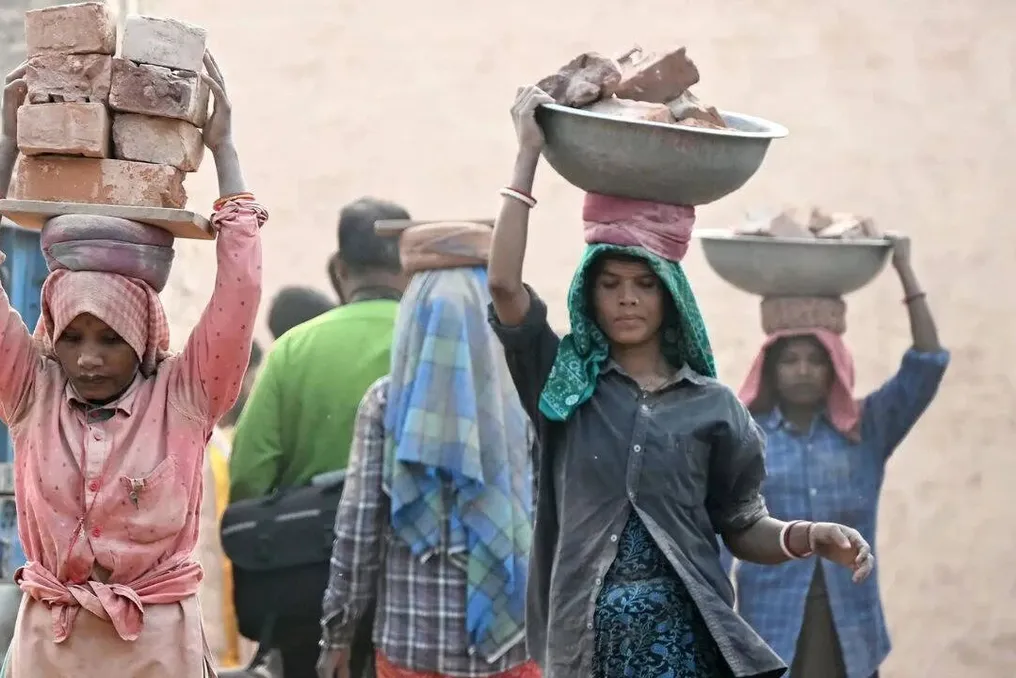
He added that 'the remaining women, as well as the elderly and children, are forced to take up any small job to make ends meet. Women from the poorest families have little choice but to work in the fields, planting rice and doing daily labor.'
Subhash Kumar, founder of Samadhan Kendra, an NGO in Vaishali district that works with women's self-help groups, presents a similar picture. He argues that mass migration has depleted the village economy and led to a severe shortage of labor. Even families planning to build a house often struggle to find enough workers.
Kumar told The Times of India: 'If you look at the villages today, it is natural that there are fewer young people. There are simply no sources of income here. When local jobs are absent, the youth have no choice but to leave.'
He emphasized that the reason for migration is that people believe they can earn better elsewhere, as they see more opportunities outside Bihar than at home.
In any society, it is commendable when women achieve economic and social independence. However, in Bihar, this shift often happens not by choice, but by necessity. Many women are forced to take on additional responsibilities beyond domestic duties, including roles they previously did not perform as frequently.
Subhash Kumar believes that a family cannot survive solely on meager remittances from migrants. To earn extra income, women often engage in livestock rearing or daily wage labor to maintain household function.
He explained that 'it is simply impossible today for an entire household to live only on the husband's earnings. Suppose the husband works outside the state and sends home 5000 or 10000 rupees every month. The family cannot live on just that money. If there is a wedding, a social event, a medical emergency, or any unforeseen expenses in an extended family, they need extra funds.'
Kumar also mentioned that if the husband falls ill or cannot send money for two or three months, the household finds itself in difficulty. In such situations, women take up daily work, working in the fields or wherever they can find employment. If there is no work, they engage in raising cows, buffaloes, or goats. Any small income from livestock helps sustain the family's functioning.
Nabanipa Bhattacharjee, a professor of sociology at Sri Venkateswara College, notes that seasonal migration, common in Bihar, often leads to a temporary gender imbalance in villages, where women predominate over men for most of the year. She calls this the 'feminization of agriculture.'
Professor Bhattacharjee pointed out that although women are forced to manage everything while men are away, the right to make important decisions still largely belongs to men. She also stressed that despite the growing role of women in villages, their workload and emotional stress from separation from their spouses have increased, but this does not always translate into greater social status or authority.
The Bihar government has launched a series of welfare programs aimed at the financial independence of rural women and enhancing the long-term viability of women-led enterprises. Programs such as Mukhyamantri Mahila Rojgar Yojana provide women from households with a grant of 10,000 rupees, with additional assistance up to 200,000 rupees tied to the progress of their enterprises.
Another poverty alleviation program, Jeevika, focuses on the social and economic empowerment of rural women by organizing them into self-help groups. These groups help women save money, acquire new skills, start small businesses, and become part of the formal economy. Jeevika has mobilized over 14 million women across Bihar into self-help groups, creating one of the largest women's collectives in the world.
Although initiatives such as self-help groups and community livelihood programs like Jeevika have contributed to increasing women's economic participation by promoting collective entrepreneurship and creating local earning opportunities, for many families, the success of these efforts is still determined by migration.
However, Subhash Kumar points out that these schemes operate within a complex rural economy. He says that direct financial aid can help women start working, but low purchasing power in villages and dependence on remittances continue to dictate the survival of small businesses. He warned that most women take loans, but even these loans depend on the men in the family. If the husband goes to work, loan payments are made on time while he sends money. But if the money stops coming for two, four, or even six months, how can the family avoid default?
This is the paradox of migration in Bihar: it gives families a lifeline, but it also leaves women bearing the burden of homes, farms, debts, and decisions that are not always their own. Until local employment becomes stable enough to keep men at home, the villages of Bihar will continue to function on two engines: money sent from outside, and the unpaid, undervalued, and often invisible labor of the women left behind.