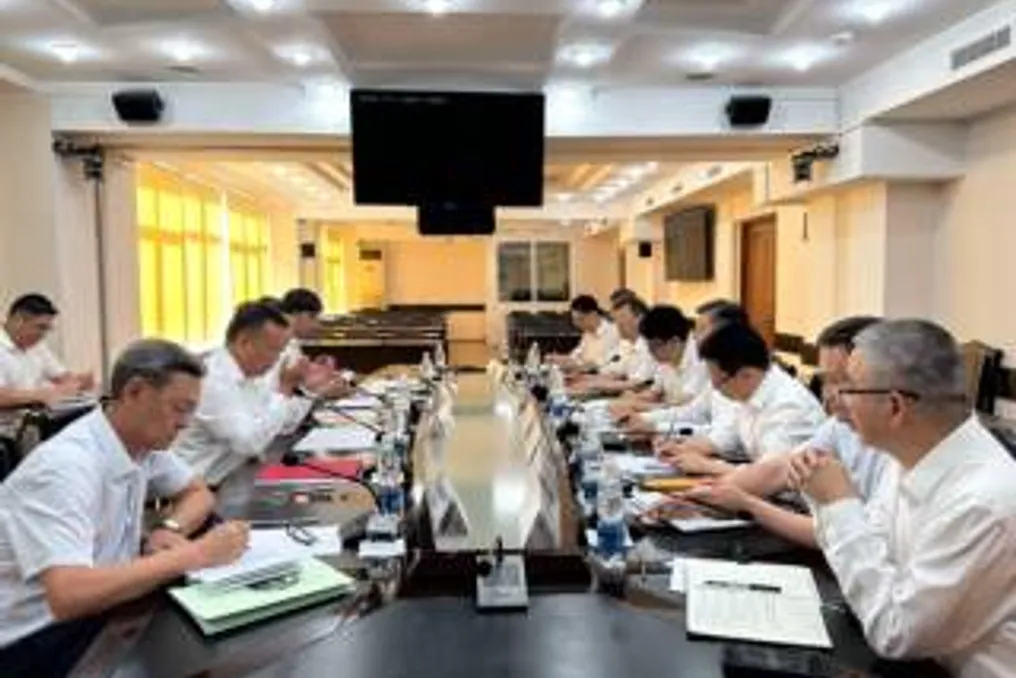
The Deputy Minister of Transport and Communications of Kyrgyzstan, Olmos Turgunboev, met with representatives of the China State Railway Corporation. The parties discussed the stages of construction of the 'China-Kyrgyzstan-Uzbekistan' railway.
The Deputy Minister of Transport and Communications of Kyrgyzstan, Olmos Turgunboev, met with representatives of the China State Railway Corporation. The parties discussed the stages of construction of the 'China-Kyrgyzstan-Uzbekistan' railway.
During the meeting, it was emphasized that the main international and investment agreements for the project have already been signed, and all financial issues have been resolved. Currently, the construction of tunnels, bridges, and other infrastructure is ongoing.
Representatives from both countries also highlighted the importance of transparency in the implementation of the project and agreed to continue joint work to ensure timely completion of the construction.
This railway line is one of the largest infrastructure projects in the region. The total length of the route is approximately 480 kilometers, of which more than 304 kilometers runs through the territory of Kyrgyzstan. The official opening of the railway is scheduled for December 27, 2024, and will be conducted by the heads of the three countries.
Uzbekistan has joined an important initiative aimed at promoting international cooperation in the field of sustainable development. Currently, work is underway to form a national platform for the Sustainable Development Solutions Network (SDSN) with the participation of the Institute of Macroeconomic and Regional Studies and the University of World Economy and Diplomacy.
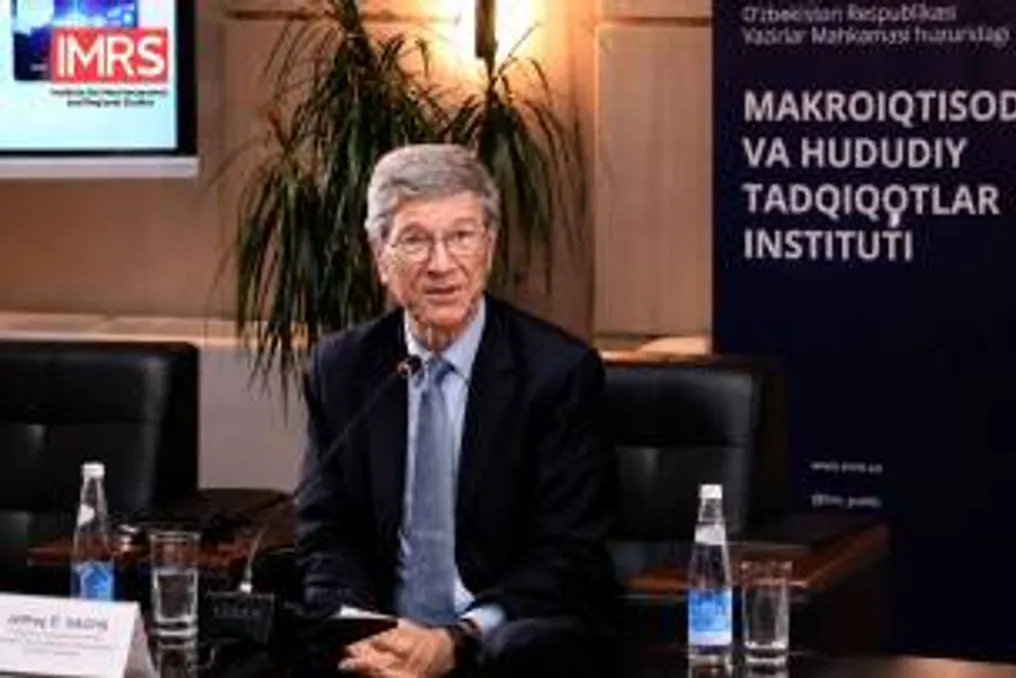
This decision was the first made by organizations representing Uzbekistan within the framework of SDSN. In this regard, a meeting was held at the Institute of Macroeconomic and Regional Studies with Jeffrey Sachs, a professor at Columbia University, a recognized economist, and president of SDSN.
The meeting discussed topics such as the role of science in achieving the Sustainable Development Goals, expanding innovative approaches, developing effective solutions to environmental problems, and strengthening international cooperation in education.
The event was organized as part of the international initiative 'The Drive of Peace', led by Jeffrey Sachs and entrepreneur Patrick June. Under this project, the delegation holds meetings with heads of state, government members, and representatives of international organizations in many countries across Europe and Asia. Major companies and organizations participating in this initiative also include 'BYD', 'Michelin', 'Santander', 'Franklin Templeton', 'Trip.com', 'Ferrari', Cambridge University, 'FIFA', and 'TikTok'.
Representatives from the Senate of the Supreme Council, international organizations, leading universities, and scientific institutions participated in the meeting. During the negotiations, the issue of establishing a national SDSN center in Uzbekistan was separately considered. It is expected that this center will help unite the country's scientific and expert potential, strengthen interaction between state bodies, educational institutions, and the private sector, and contribute to achieving the Sustainable Development Goals by 2030 in Central Asia.
In his lecture, Jeffrey Sachs emphasized that new centers of global economic growth are increasingly shifting to the Asian region. In his opinion, this opens up opportunities for Central Asian countries to actively participate in international economic, scientific, and infrastructure projects, attract new investments, and integrate more broadly into the global exchange of knowledge. Furthermore, the region is strengthening its significance as an important transport and economic bridge between Europe and Asia.
Jeffrey Sachs stated: 'Central Asia is becoming an increasingly important strategic region connecting Europe and Asia. Uzbekistan, thanks to its favorable geographical location, intellectual potential, and consistent reforms, has all the possibilities to become an active participant in this process and one of the leading countries in the region.'
Following the meeting, the parties agreed on the continued sequential development of cooperation in the field of sustainable development, support for joint scientific research and innovative projects, and the expansion of Uzbekistan's participation in the global knowledge network. This initiative not only strengthens Uzbekistan's cooperation with the global expert community but also creates new opportunities for aligning scientific research, state policy, and practical initiatives in the field of sustainable development in the country.
The statute of limitations is defined as the period established by law for protecting human rights through the court. However, there are certain requirements that are not limited by the statute of limitations, allowing one to appeal to the court at any time.
According to Imomali Tuev, an employee of Tashkent State Law University, the requirements that are not subject to the statute of limitations include the protection of personal property rights and intangible assets. These include honor, dignity, privacy, as well as name and surname.
A citizen's right to demand the return of their own funds from bank deposits or receive compensation from a deposit guarantee agency is not dependent on time. Furthermore, in case of harm to a citizen's health or life, even if the appeal to the court is delayed, compensation will be paid for the last three years.
If material damage is caused as a result of a crime, the person affected by the crime can appeal to the court regardless of how much time has passed. Also, the statute of limitations is not limited for claims to terminate any violations of the rights of an owner or another holder, even if these violations are not related to the deprivation of ownership (according to Article 231 of this Code). The statute of limitations also does not apply to the return of objects of historical and cultural heritage, as well as to the return of national wealth exported from the country before gaining independence, such as artifacts, works of art, and ancient items.
The author emphasizes that the passage of time does not mean the loss of rights. If the issue falls into the categories mentioned above, it should be considered that the possibility of protecting one's rights remains, despite the expiration of the statute of limitations. The basis for these provisions is Article 163 of the Civil Code of the Republic of Uzbekistan.
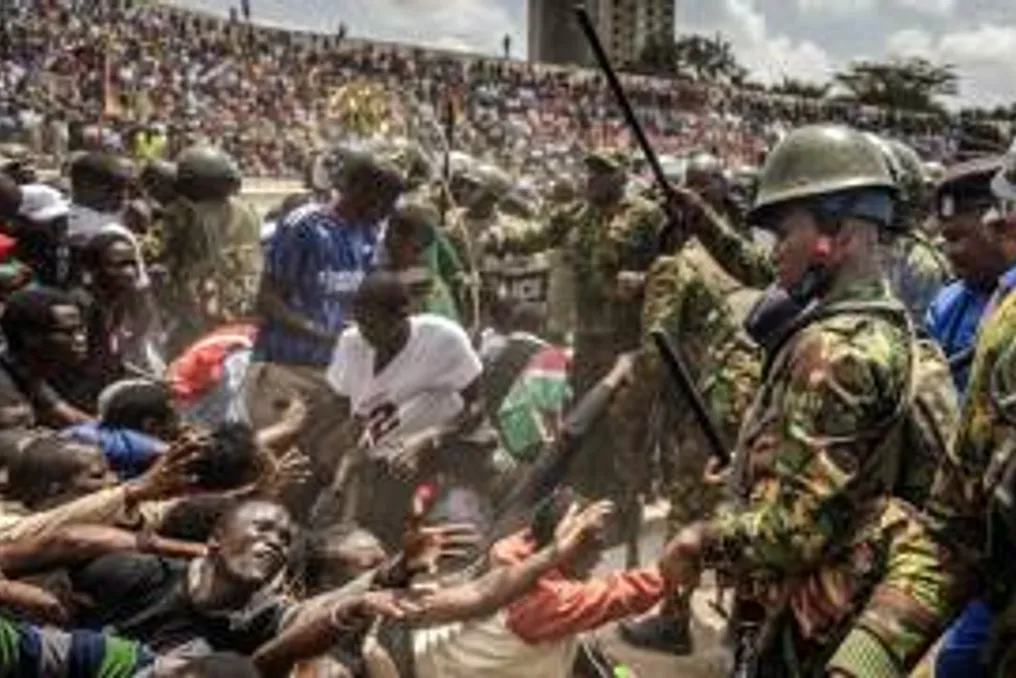
In several cities in South Africa, there is a rise in dissatisfaction among the local population regarding migrants, which has led to a near paralysis of life. Many businesses have ceased operations, shops have closed, and public transport movement has been restricted.
The situation intensified after protesters announced the expiration of the deadline set for illegally residing foreigners. Thousands of people who arrived from other African countries fear finding employment. Some residents left their homes before the demonstrations began due to fear of possible attacks. In major cities such as Johannesburg and Durban, groups of people armed with sticks took to the streets.
As a result of the unrest, which has been ongoing since April, at least five people have died. Thousands of people have been forced to leave their homes, and significant damage has been inflicted on many buildings and property. Human rights activists note that during the attacks, it is impossible to distinguish between migrants who have legal documents and illegal immigrants.
Protesters accuse foreigners of taking jobs, contributing to rising crime rates, and increasing the burden on social services. Researchers, however, point out that there is insufficient evidence to confirm these claims. Nevertheless, high unemployment and economic difficulties exacerbate public discontent.
To prevent riots, the government mobilized thousands of police officers. President Cyril Ramaphosa acknowledged the validity of the public's concerns regarding migration but stressed that dissatisfaction should not escalate into violence and threats. Observers note that the current situation deals a serious blow to the country's reputation regarding human rights.