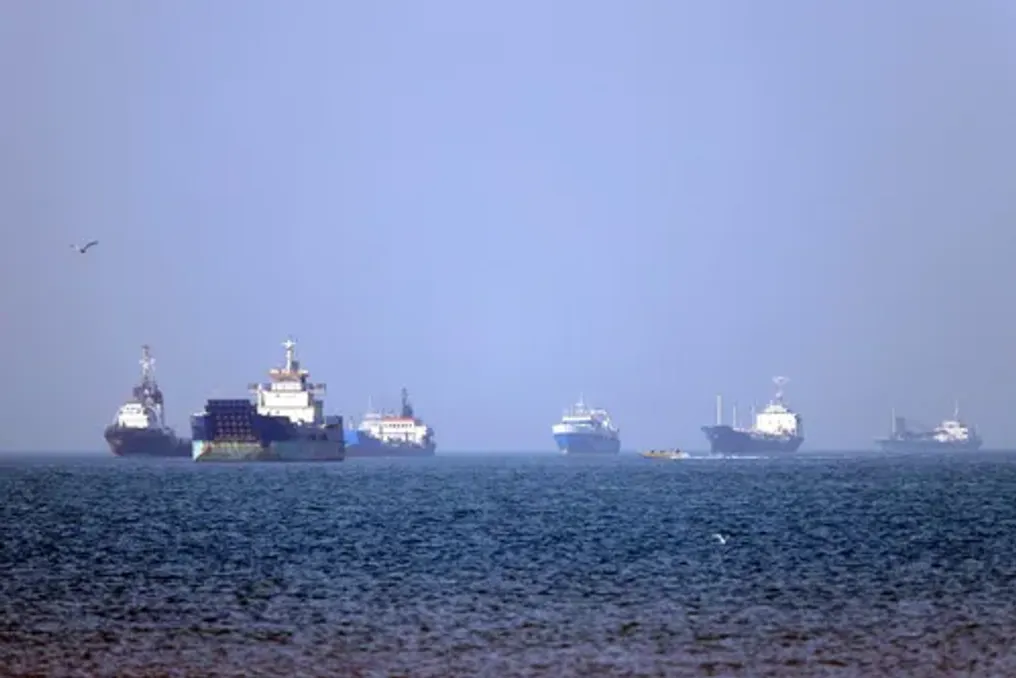
Tensions in the Middle East have led to palpable pressure on global markets. Over the past weekend, escalation occurred following military strikes by both Iran and the United States, causing a wave of uncertainty across global financial platforms.
Tensions in the Middle East have led to palpable pressure on global markets. Over the past weekend, escalation occurred following military strikes by both Iran and the United States, causing a wave of uncertainty across global financial platforms.
Bianca Botes, Managing Director at Citadel Global, noted that ongoing threats and military actions between the two nations are making investors concerned about the consequences for the stability of the financial system and oil supplies.
US futures opened in the negative this morning, which was a sharp contrast to the positive close on Wall Street on Friday. According to Botes, this decline is linked to growing tensions and alarming statements regarding a possible closure of the Strait of Hormuz—a vital route for global oil transport—which raises the stakes for international trade and economic stability.
In Asia, the market reaction was equally pessimistic. The South Korean stock index showed significant volatility, falling by 5% in early trading, with technology stocks being particularly affected due to vulnerability to disruptions in global supply chains.
Botes added that this lack of investor confidence aligns with growing concern over an unstable region whose consequences extend far beyond immediate military actions. Energy markets experienced a particular impact: Brent crude oil prices rose by 4%, reaching $79 per barrel. This sharp increase underscores the threat of oil supply disruptions due to the ongoing conflict, contributing to inflationary pressure and economic uncertainty not only in the Middle East but worldwide.
Conversely, gold prices fell by 1.5%, settling at $4059 per ounce, which is a typical reaction when investors reassess their risk assessments amid geopolitical turmoil. Notably, despite the general commotion, the South African rand showed unexpected resilience, trading at rates of R16.39 to the dollar, R18.69 to the euro, and R21.93 to the British pound. Analysts are closely monitoring this development, as a stable currency amidst risk-averse sentiment may signal broader economic trends.
As the week began without expected major economic data, market participants are advised to remain vigilant, especially regarding the evolving situation in Iran. The combination of military action and financial markets requires careful assessment of global risks, and further steps by Iran and the US could serve as an indicator of broader economic trends.
Investment experts warn that renewed tensions in the Middle East could increase fuel costs, weaken the rand, and raise the probability of another interest rate hike, putting additional pressure on South African households.
Renewed military disagreements between the United States and Iran have once again drawn investor attention to one of the world's most vital energy corridors. Market analysts warn that prolonged disruptions could lead to rising fuel prices, increased inflation, and higher borrowing costs for South African consumers.
Despite initial optimism in financial markets following a ceasefire announcement at the beginning of the month, new military actions caused a sharp rise in oil prices and heightened concerns about shipping safety through the Strait of Hormuz—a vital route for global crude oil supplies.
Stefan Erasmus, an investment analyst at Anchor Capital, noted that markets had largely anticipated conflict stabilization until recent events. He explained that after the recent ceasefire, financial markets reduced the risk of escalation in the Middle East, and oil prices returned to levels similar to those before February 28, 2026. However, following last Wednesday's events, oil prices rose sharply.
In Erasmus's view, the final price of oil will depend on whether shipping through the Strait of Hormuz remains uninterrupted. He emphasized that since South Africa imports oil, higher prices generally lead to a depreciation of the rand and stimulate inflation, which in turn affects interest rate expectations.
According to Erasmus, the latest developments have increased the likelihood that the South African Reserve Bank (SARB) may raise interest rates at its Monetary Policy Committee (MPC) meeting on July 23. In this scenario, rate-sensitive stocks such as banks, retailers, and real estate would be hit the hardest.
He added that drivers will not feel an immediate impact because local fuel prices are adjusted only once a month, so this week's jump will become an August problem.
Andreas Tindlund, a fixed-income specialist at Abax Investments, echoed these concerns, warning that South African households remain particularly vulnerable to rising energy costs. He stated that the most immediate risk for South Africans is related to pump prices, as the rise in global oil prices has already led to a spike in local diesel and gasoline prices. This escalation makes it likely that these prices will remain high longer, and a decrease in August is unlikely, leading to another hike and increasing pressure on financially struggling families.
Tindlund explained that rising transport costs will quickly spread throughout the economy, affecting sectors such as food and goods. He also noted that investors will face broader challenges as higher oil prices strengthen the US dollar and put additional pressure on emerging market currencies. This is viewed as an imported inflation shock.
High oil prices increase global bond yields and strengthen the US dollar, which weakens the rand and increases imported inflation. This puts pressure on South African bonds and rate-sensitive sectors like real estate and retail, although commodity sectors related to energy and gold may provide some support.
Although consumers may not notice the immediate rise in fuel costs, Tindlund believes the effect will become apparent over the next few months, as fuel prices in South Africa are adjusted monthly with a delay, and global price changes are usually reflected at gas stations within one to two months. Thus, the recent surge in oil prices is likely to affect both fuel prices in August and September.
Tindlund also stressed that the implications go beyond pump prices. Higher oil prices are already raising global bond yields, tightening financial conditions. For South Africa, this is transmitted through capital flows and the exchange rate, putting additional pressure on the rand and increasing local borrowing costs.
He believes that inflation expectations are becoming an increasingly serious concern for policymakers. These expectations are currently above SARB's target of 3%, and recent surveys show expectations moving closer to 4%, and the new uncertainty surrounding oil prices limits the Bank's ability to wait.
Abax Investments forecasts another increase in borrowing costs, expecting a 25 basis point rate hike at the upcoming MPC meeting in two weeks, with a clear risk of further tightening over the year. This will result in a double blow for South Africans: higher living expenses and higher bond payments.
Looking ahead, Tindlund advised investors to focus on three key indicators: the price of oil as the clearest real-time indicator of geopolitical risk; the rand exchange rate, as currency weakening will intensify imported inflation and increase pressure on SARB; and, most importantly locally, central bank communication. As inflation expectations rise and oil prices are back in focus, SARB is unlikely to ignore this risk. Markets are already pricing in further rate hikes at upcoming MPC meetings, and any signal from the Bank will be crucial for bonds and other rate-sensitive sectors. He concluded that the situation in the Strait of Hormuz remains the most important point to watch.