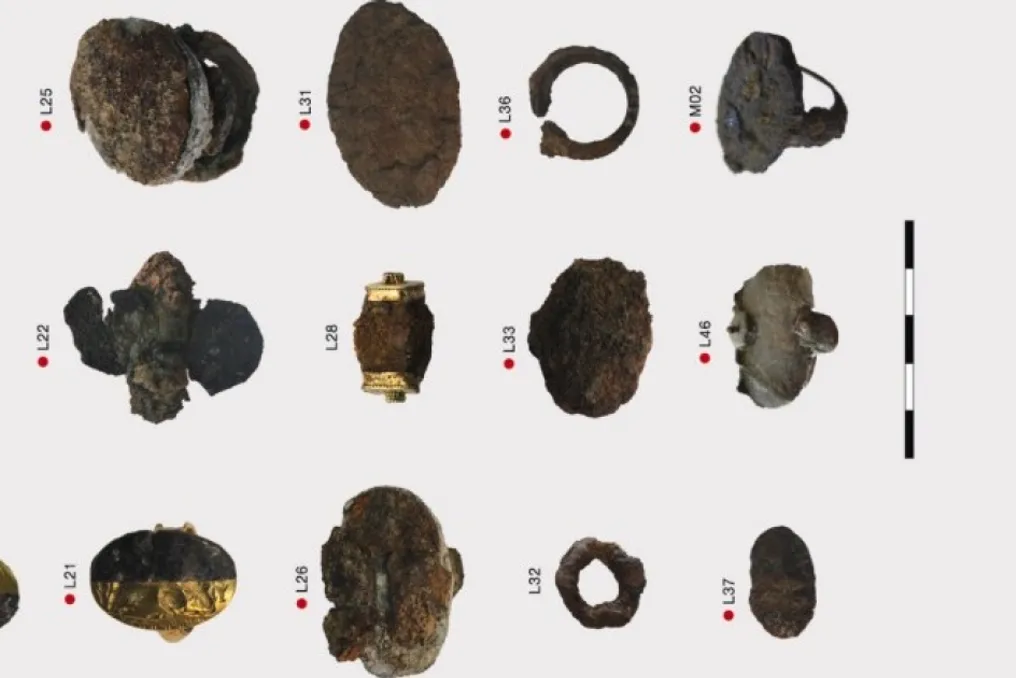
Researchers analyzed the chemical composition of nearly a hundred ancient iron artifacts recovered from Greek archaeological sites over various years. During this analysis, nickel was detected in thirteen items, suggesting that these pieces were likely made from meteoritic iron; the probability of such an origin was high in ten cases.
Popular
Discovery in Elite Rings
These rings apparently belonged to members of the elite during the Mycenaean and Minoan periods. This information is presented in a scientific article published in the Journal of Archaeological Science. Although ancient people sometimes created ironware long before the early Iron Age, at that time they used metal brought to Earth as fragments of meteorites, rather than mined ore.
Historical Context of Metal Use
According to scientists, the oldest artifacts made of meteoritic iron are beads dating back to the fourth millennium BCE, which were found in the El-Gerze necropolis during the Predynastic period in Egypt. Later finds, such as an iron knife, chisel, and adze from the Boldyarevo-I kurgan associated with the Yamnaya archaeological culture, date back to the third millennium BCE.
New Research on Mycenaeans and Minoans
Until recently, there was no reliable data on whether the Mycenaeans and Minoans used meteoritic iron. However, Mathieu Gonel from the Sorbonne and Eleni Mancurani from the National University of Athens managed to address this question. They studied iron artifacts dating from the second to the beginning of the first millennium BCE, which were found at archaeological sites in Ancient Greece, including the mainland, Crete, and the Aegean islands. In total, the scientists identified 168 items potentially containing iron, of which 91 were included in the final selection for various reasons.
Methodology and Analysis Results
A portable X-ray fluorescence spectrometer was used to determine the composition of the selected artifacts. The goal of the analysis was to identify not only a high iron content but also nickel, which served as a marker of the metal's meteoritic origin. Chemical analysis showed that 13 examined items could contain cosmic iron, with nine having a high probability and one artifact found in Mycenae having a very high probability. The authors consider further study necessary for the remaining three artifacts.
Characteristics of the Found Artifacts
All thirteen items were rings. Seven of them were made from a combination of several metals, including gold, silver, and bronze. These ornaments were discovered at archaeological sites associated with the Mycenaean and Minoan elites, mainly in tholos tombs and chamber tombs, where they were often found alongside other valuables such as gold and silver vessels, amber objects, seals made of various stones, and jewelry made of precious metals.
Only one ring was found on the finger of a presumed priest in the ancient Minoan sanctuary of Amnissos in Crete. This artifact is considered possibly the oldest, dating to the 18th–17th centuries BCE, while the other rings date to the 16th–13th centuries BCE.
Conclusions and Hypotheses on Origin
The researchers concluded that the Mycenaean and Minoan elites likely highly valued and assigned symbolic significance to items made of meteoritic iron, which is confirmed by the context of their discovery. A question arose for the scientists regarding where exactly the fragments of celestial bodies used to create these ornaments were found. The authors note that finding meteorite fragments in Greece is extremely difficult, so the most probable source is considered to be Egypt, covered by deserts, with which the Minoan and Mycenaean civilizations maintained trade relations.
It should be noted that artifacts made of meteoritic iron are found elsewhere. For example, scientists recently reported the discovery of a similar item in the Sanshindu sacrificial pit in China, dating back about 3000–3200 years. An older artifact was found in Turkey in a rich burial in Phrygia, and its age is estimated to be approximately 4700 years.