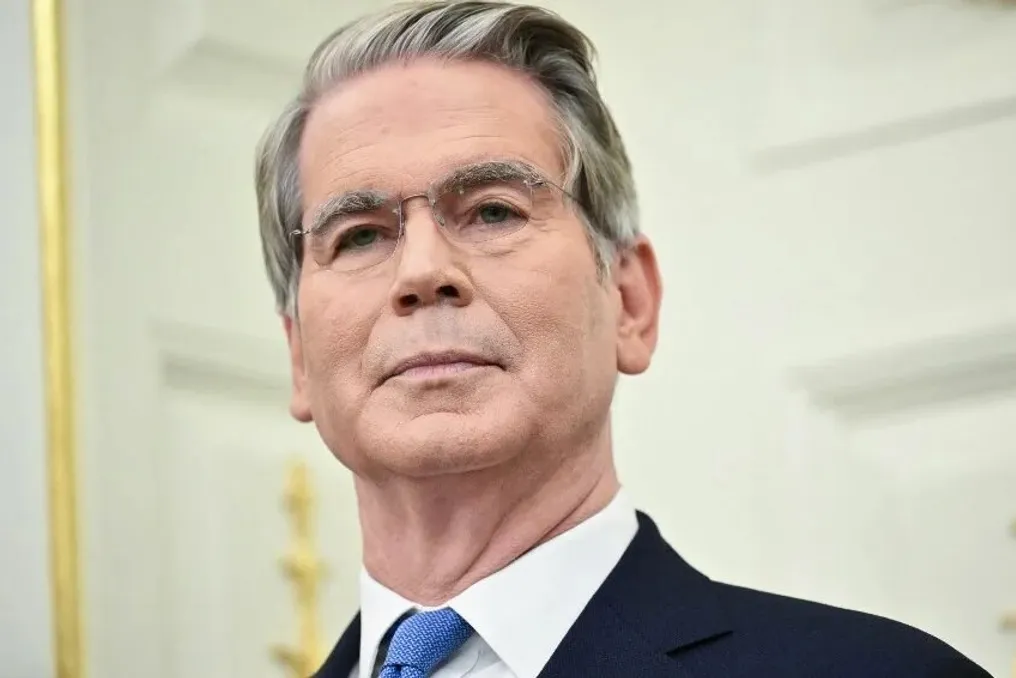
Ahead of the country's 250th anniversary, U.S. Treasury Secretary Scott Bessent delivered an important address in which he presented a comprehensive doctrine termed 'economic statecraft.'
Acknowledgment of Double Standards
In his speech, moving away from references to one of the nation's founders, Alexander Hamilton, there was an open admission: Washington intends to set one set of rules for itself and a completely different set for everyone else.
Popular
This speech was more of a confession than a strategy; it articulated double standards so unconsciously that it mistakenly equates coercion with principle. Essentially, it was another manifestation of American exceptionalism.
Bessent argued that 'for over a century, the United States has been the chief architect and guarantor of an open global economic system that brought immense benefits. It lifted our allies out of the ruins of war, expanded global trade channels, raised living standards, and achieved a position of influence that remains unparalleled in modern history.'
However, he added that 'the success of the system does not absolve us from the need to revise its premises.' He then erroneously argued that when forming the post-war order, the U.S. accepted 'asymmetries' that served a larger strategic goal: 'We opened our market because it helped create a more prosperous world. And we tolerated imbalances because America's economic power seemed undeniable.'
In reality, the U.S. accepted asymmetries and imbalances because at the Bretton Woods conference in 1944, it received the 'excessive privilege' of having its dollar as the world's reserve currency, allowing it to accumulate huge deficits without consequence and project its imperial influence globally.
Threat to Globalization
In his speech, Bessent noted that 'in recent decades we have observed the migration of strategic industries abroad,' but he failed to account for the fact that the U.S. corporate sector consciously decided to outsource industrial production to maximize profits by reducing labor costs, thereby sacrificing its own working classes.
He outlined the U.S. economic statecraft based on five largely distorted principles, starting with the idea that 'economic security begins with national capacity.' Proclaiming such a principle sounds like a harbinger of the end of globalization, which the U.S. has actively supported for decades. Previous economic policy was based on the notion that mutual economic interdependence between nations is positive.
This is the language of a patron dictating terms to a client, not a sovereign equal partner participating in genuine partnership. Bessent insists that 'a nation dependent on its adversaries for critical resources is not truly sovereign,' and adds that 'a nation reducing its economy to consumption is not truly prosperous,' even though this is precisely what the U.S. did for decades.
Reciprocity and the Rules of the Game
The second principle he outlines states that 'America's openness will be subject to reciprocity,' noting that countries 'cannot gain access to our market while denying fair access to their own market.'
Theoretically, this is true. However, the speech never raises the question of whether the U.S. itself adhered to this standard. The tariff regime of the current Washington administration was implemented unilaterally and asymmetrically, often without negotiation, both toward allies and rivals.
Nevertheless, Bessent describes foreign analogues of these tools as 'retaliation' and 'exception.' When Washington protects its semiconductor or shipbuilding sectors, it is called 'national capacity.' When Beijing, New Delhi, or Brussels do this, it is classified as 'non-market practice' that 'distorts competition.'
This asymmetry is not accidental; it constitutes the entire architecture of the speech, being pure double standard.
Unipolar Ambitions
Bessent's third principle—that the U.S. 'will write the rules of the next economy'—is perhaps the most telling phrase in the entire address. The Treasury Secretary presents this goal as a defense against 'authoritarian or mercantilist systems' that establish standards 'to their own advantage.'
But the explicit goal of unilaterally creating rules for digital assets, AI governance, and payment systems is itself a mercantilist ambition disguised as the language of openness. A genuine multilateral approach would imply coordinating standards with partners as equals. Instead, Bessent describes unipolar aspirations: rules created in Washington for Washington's benefit, which others must accept as payment for market access.
Perhaps the most striking double standard appears in the fourth principle, where Bessent presents the centrality of the dollar and the power of U.S. sanctions as tools of order, not coercion. He warns that countries 'cannot participate in a dollar-based financial system while acting as conduits for sanctions evasion'—as if sanctions themselves were a neutral, rules-based mechanism, rather than a unilateral tool used outside any multilateral legal framework.
The U.S. has turned the status of the dollar as a reserve currency into a weapon for freezing central bank assets, disconnecting entire economies from the Swift financial circuit, and imposing secondary sanctions on third countries that merely trade with sanctioned states. This is precisely the 'militarization' that Bessent claims to condemn, warning that attempts by adversaries to 'manipulate markets' or 'coerce our partners' 'will not go unanswered.'
The speech never touches upon the irony: the dollar system, which he describes as a noble public good, is simultaneously a choke point that Washington uses for coercion.
Selective Application of Norms
In the last of the five principles, Bessent explains that 'the goal of America's economic statecraft is to link national power with household prosperity.' He also emphasizes that the U.S. needs 'an economy where our working families are not just consumers of what the world produces, but participants in what America builds.'
As mentioned earlier, the speech quotes Hamilton's warning that a nation must 'possess all the means of national provision within itself' to be truly sovereign. This is certainly a legitimate concern, but one that Washington has historically denied to others.
For decades, the International Monetary Fund and the World Bank, both heavily influenced by U.S. Treasury policy, conditioned loans to developing countries on trade liberalization, privatization, and the dismantling of the very protective industrial policies that Bessent now advocates for the U.S. Structural adjustment programs forced markets open in Latin America, Africa, and Asia under the banner of 'free trade,' often destroying local industries.
Conclusion
Since the U.S. itself feels the consequences of globalization, sovereignty and self-sufficiency are presented as Hamiltonian virtues. Bessent insists that the U.S. 'possesses numerous tools to eliminate practices that distort trade and undermine reciprocity,' and that it 'will always strive to use these tools judiciously,' yet immediately follows this with a warning that Washington 'will never hesitate to use them decisively.'
This combination of soft rhetoric and hard threat repeats throughout his speech. It is the language of a patron dictating terms to a client, not a sovereign equal partner participating in genuine partnership.
Ultimately, the speech is candid in the way few statements from the U.S. Treasury are: it openly declares that the 'asymmetries' of the post-war order, which were tolerated when they served American strategic interests, must now be corrected—but only to the benefit of Washington. Reciprocity, sovereignty, and fair competition are presented as universal principles, yet they are applied selectively and only when it benefits Washington.