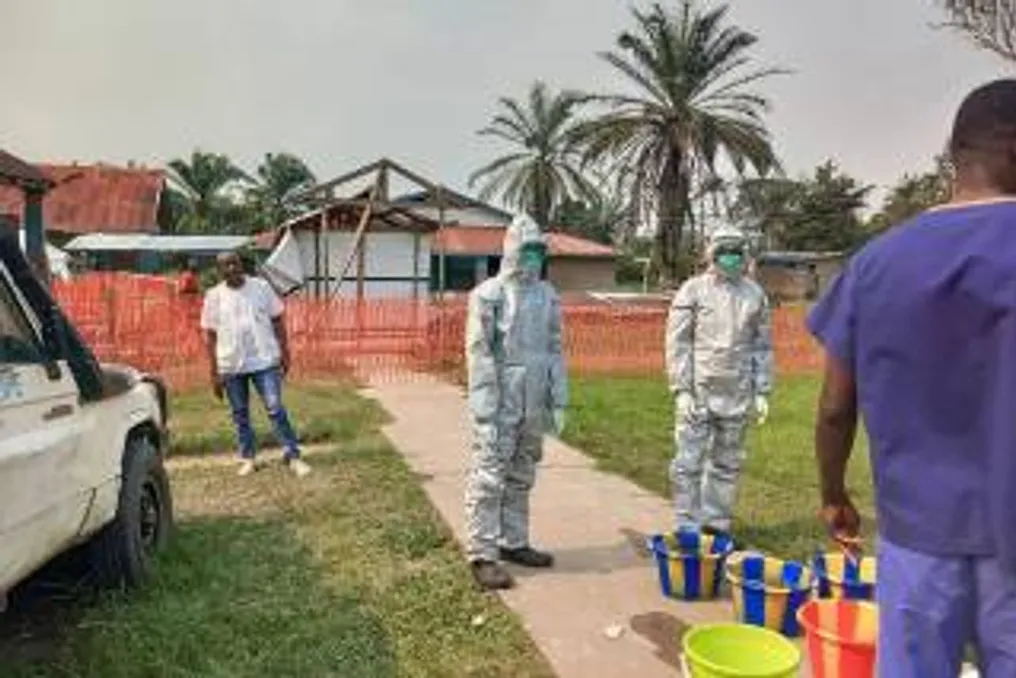
According to the latest bulletin released by the INSP of the Democratic Republic of Congo, with data compiled up to June 27, the current mortality rate of the epidemic stands at 28.3%. Furthermore, contact tracing has reached 87.1%, while 178 individuals have recovered from the disease, and there are a total of 502 patients under isolation or hospitalization.
Challenges and Geographic Expansion
The INSP signaled ongoing challenges related to early access to healthcare and medical attention. It also warned about the difficulty in identifying new contagion cases without knowing their health origin, which may suggest a geographic expansion requiring more detailed investigation.
Origin and Spread of the Outbreak
The outbreak was formally declared on May 15 in the Ituri province, a border area shared with Uganda and South Sudan, which is the epicenter of the epidemic, responsible for 91.4% of cases and 83.6% of deaths. However, the disease has also spread to the eastern Congolese provinces of North Kivu and South Kivu.
International Cases and Global Classification
The epidemic reached Uganda, where 20 confirmed infections were identified, including 15 cases brought from the Democratic Republic of Congo, resulting in two deaths in that country. Additionally, the French Government confirmed the detection of the first positive case of the Ebola virus, belonging to a doctor returning from a mission in the Democratic Republic of Congo.
Virus Characteristics and WHO Assessment
This outbreak is associated with the Bundibugyo strain, whose lethality rate ranges between 30% and 50%. The World Health Organization (WHO) reported that there is no approved vaccine or specific treatment for this strain. The WHO assesses the risk of the outbreak expanding in Sub-Saharan Africa as 'high' and globally as 'low.'
Epidemic History
The WHO estimated that the virus began circulating in Ituri approximately two months before the official declaration of the outbreak and classified the situation as a 'public health emergency of international concern' on May 17. This is the third worst Ebola virus epidemic recorded to date. It ranks behind the epidemic that affected West Africa between 2014 and 2016, which caused about 11,000 deaths and 28,000 infections, and another occurrence in eastern Democratic Republic of Congo between 2018 and 2020, which resulted in 2,299 deaths and 3,481 cases.
Transmission and Symptoms
The Ebola virus is transmitted through direct contact with the body fluids of infected people or animals and manifests with severe hemorrhagic fever, vomiting, diarrhea, and internal bleeding.