Uzbekistan and Georgia have reached agreements on the electronic exchange of road transport permits and are actively working on creating their own logistics infrastructure in Georgian ports. This was reported by the Minister of Transport, Ilhom Makhkamov.
Development of Transport and Logistics Links
The state visit of President Shavkat Mirziyoyev to Georgia is of great importance for Uzbekistan from both an economic and a transport and logistics perspective. During the visit, electronic interaction regarding all road transport permits was agreed upon, both between the two countries and to third countries. The Minister emphasized that this will increase transparency, save time, and simplify the work of local carriers.
Ilhom Makhkamov specified that over sixty percent of Uzbek road carriers use Georgia for their routes. The parties also discussed rail transport, noting discounts of up to 70% on container transport along the CASCA+ route. Agreement was reached to extend these discounts to other types of wagons to increase the attractiveness of this corridor.
CASCA+ Route and Port Infrastructure
CASCA+ is a joint initiative of the railways of Azerbaijan, Georgia, Kyrgyzstan, Turkmenistan, Turkey, and Uzbekistan. This route covers three zones: Central Asia (Kyrgyzstan, Uzbekistan, Turkmenistan), the South Caucasus (Azerbaijan and Georgia), and Anatolia (Turkey). The symbol '+' indicates readiness to accept new partners, and the ultimate goal of the route is to connect Southeast Asian states, including China, with Europe.
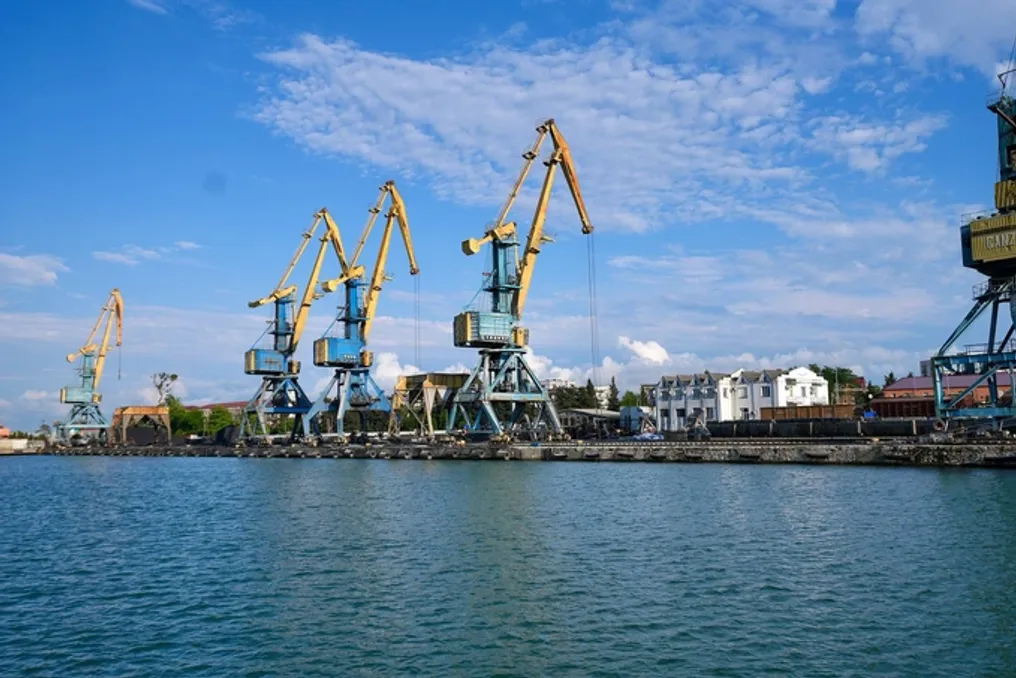
Particular attention was paid to Georgian ports with access to the Black Sea. Minister Makhkamov announced an agreement to build Uzbek infrastructure in these ports. He added that after the visit, locations for placing this infrastructure will be determined, and issues with local and Uzbek exporters, importers, and major forwarding companies will be coordinated. Subsequently, a consortium responsible for the construction and operation of this infrastructure will be formed.
Export of Karakalpakstan Salt to Europe
Akmal Kamolov, First Deputy Minister of Investment, Industry, and Trade of Karakalpakstan, stated that the republic intends to use the Georgian route to export its salt to Europe. He noted that a warehouse is planned to be built in the large port of Poti, where salt will be supplied for subsequent sale across Europe.
Kamolov emphasized the uniqueness of the product, stating that Karakalpakstan salt is natural, and that the problem of the Aral Sea has transformed into an economic opportunity. He also reported that there is demand for this salt in Europe, and it is already being exported to Germany and other European countries. Regarding current supply plans, they involve transit through Kazakhstan and the port of Azerbaijan.
Preceding Steps and Investment Projects
Previously, the Ministry of Investment, Industry, and Trade visited the Georgian ports of Anaklia, Poti, and Batumi, as well as the Poti industrial zone. The main topic of the meetings was expanding Uzbekistan's trade with Georgia. In Anaklia, the possibility of Uzbek firms participating in the construction of Georgia's deep-sea port, which will become part of international routes, including the future China-Kyrgyzstan-Uzbekistan railway, was considered. In Poti and Batumi, the possibility of creating warehouses and terminals for Uzbek cargo was discussed.
As a result of the last trip, the parties agreed to prepare agreements and form a consortium involving Uzbek companies. Previously, Laziz Kudratov, head of the Ministry of Investment, Industry, and Trade, reported that following the president's visit, 70 trade and investment projects worth about $1 billion were agreed upon. Logistics was named a key area, as Georgia is considered an important transport hub for exporting Uzbek products to Western markets.
Kudratov also mentioned the creation of a trade and logistics and production center in the Poti free economic zone, where enterprises can complete the production of textiles, food products, and household appliances before export. In addition, projects in agriculture, pharmaceuticals, tourism, and energy were discussed, including expanding olive cultivation in Surkhandarya and creating a feed production hub for livestock.