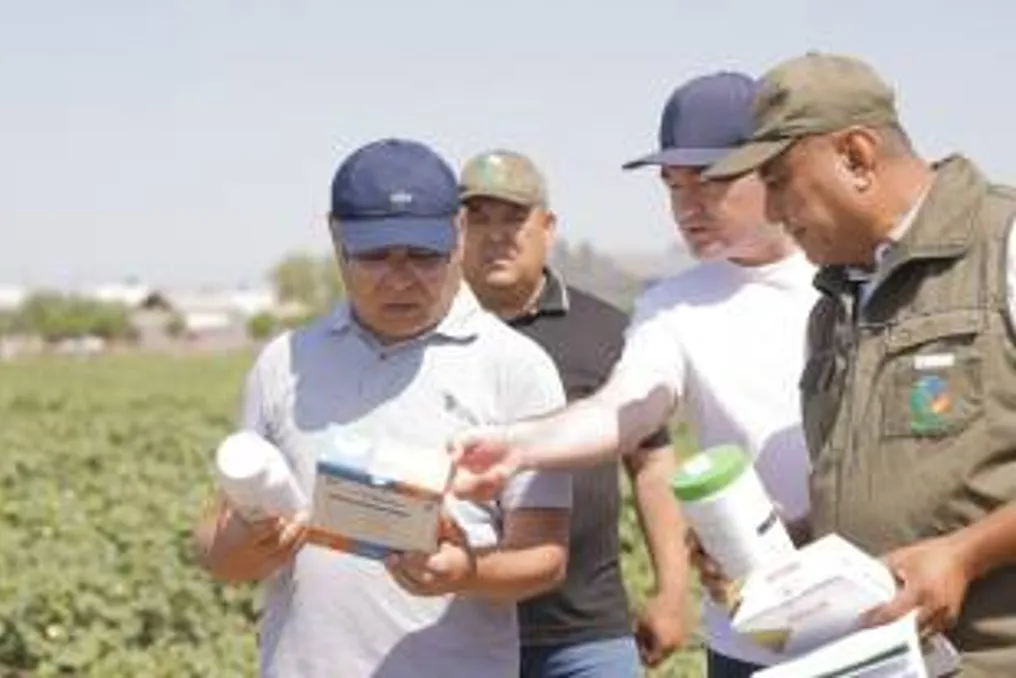
The Minister of Agriculture, Ibrohim Abdurakhmanov, visited the territories of the Tashkent region to familiarize himself with the seasonal work being carried out in cotton fields. The initial site inspected was the 'Zero Maks Agro Biznes' farmstead in the Urta Chirchiq district.
Cotton Experiments
On 30 hectares of this farmstead, 'Shinjian' variety cotton was planted using a dense planting method under plastic film. Irrigation and nutrition processes are carried out using a drip irrigation system. Additionally, special films of different colors—red, green, and blue—are being used on 15 hectares to test their influence on crop development.
Seminars and Condition Assessment
A field session was organized during the visit with the participation of farm enterprise managers. The Minister discussed in detail the differences in the development of cotton grown under colored films versus open fields, as well as the advantages of each method and the possibilities of implementing them in practice. Subsequently, a 10-hectare field at the 'Oktam Ata' farm enterprise in the same district was inspected, and an area of 30 hectares was generally viewed. An assessment of the crop growth condition in the field conditions was conducted, and practical recommendations were given for the agrotechnical measures necessary during the growing season.
Cultivation Requirements
During the observations, the minister emphasized that maintaining a balance between vegetative and generative development to prevent excessive crop growth is a critically important condition for achieving a high yield. It was also noted that the widespread implementation of scientifically based agricultural technologies and decision-making based on the specifics of each field is a current task of modern cotton farming.
Technology Implementation Challenges
In conversations with farmers, the minister noted that despite large-scale information campaigns, field seminars, and training meetings in the region, not all farmers are adopting modern agricultural technologies and scientific recommendations. Therefore, the need to convey the scientific basis of the agrotechnical measures required in cotton farming in a simple and practical way, as well as conducting work based on modern knowledge and best practices, was particularly stressed.
Inspection of Other Areas
In addition, the condition of fields growing low-yield cotton varieties was studied in the Oqqurgon district. The Minister paid particular attention to the timely and quality execution of agrotechnical processes in the fields. He highlighted the importance of conducting cultivation agrotechnical work on a scientific basis, according to a clear plan established by norms and requirements. The Minister also gave advice on the use of chemical and local fertilizers, emphasizing the need for strict planning of their application to preserve soil fertility.