Decades of statistical analysis reveal the complex socio-economic realities of Masebudule village, demonstrating a rigid dependence on grants and resource extraction in South Africa after the apartheid era.
Decades of statistical analysis reveal the complex socio-economic realities of Masebudule village, demonstrating a rigid dependence on grants and resource extraction in South Africa after the apartheid era.
The author, who has monitored demographic and macroeconomic changes in South Africa for over forty years, emphasizes that understanding structural extraction in the post-apartheid landscape requires studying a specific point in the North West province: Masebudule village, located in the Lethurutse district, which is now part of the Ramotsere Molelo local municipality.
The author's connection to Masebudule began during the dissolution of the homeland system. He managed censuses in 1985 and 1991 under the Bophuthatswana administration, and later oversaw the first three post-apartheid censuses in 1996, 2001, and 2011.
Analysis of data over forty years shows that Masebudule is a prime example of how national statistical frameworks obscure local reality. The physical area of the village is 3.42 square kilometers, adjacent to the Nietverdien mining belt and the Rikkertsdam road.
The period from 1985 to 1991 (the Bophuthatswana enclave period) was characterized by a population of about 850 people. Traditional housing, small-scale livestock farming, and high reliance on migrant remittances predominated. Over 85% of household income came from male labor directed to the Witwatersrand gold mines, while the village bore the social costs, and the center accrued the capital.
According to the 2011 census, the population grew to 1232 people across 324 households; 99.8% identified as Black African, and 92.6% spoke Setswana. The youth composition increased significantly, with children aged 0 to 4 making up 13.6% of the population, indicating an expanding dependency base without a corresponding asset base.
Between 2022 and 2026, the population stabilized at approximately 1500 residents. However, livelihoods underwent a radical transformation. The historical model of migrant labor and subsistence farming collapsed, giving way to dual dependence: passive social grants ranging from 350 to 370 rand, and highly unstable, often informal, chrome mining.
In 1985, Masebudule functioned as a classic labor reservoir, whose human energy was used to enrich Gauteng, leaving the village to bear the structural burden. After the advent of democracy, this imbalance was expected to be corrected in macro-economic accounting, but subsequent censuses recorded a more sophisticated form of external resource transfer.
The expansion of chrome production in the Marico region did not lead to the accumulation of local assets. The effect of head office aggregation ensured that while the land was physically depleted in Lethurutse, the financial value was registered at the corporate headquarters in Sandton.
Today, Masebudule finds itself in a 'vivor vortex'. The recent chrome mining boom has sparked debates over mining rights rather than sustainable development. The village has become an unpaid engine of global mineral supply chains, while its local economy remains structurally depleted.
Social grants intended to alleviate this poverty do not offer a permanent solution. Without a localized anchor of assets, these cash injections serve only as liquidity lubricant, passing through residents' hands and immediately leaving the community via external retail monopolies. This process condemns the younger generation to a cycle of unemployment and limited local opportunities—a calculated spatial NEET trap created by accounting oversight.
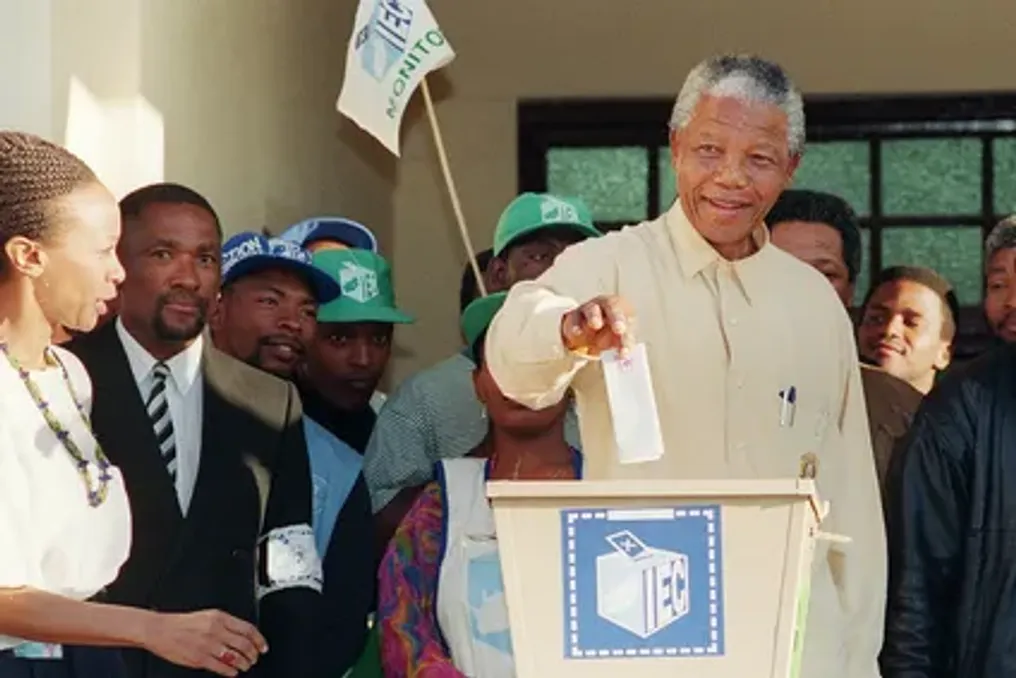
As local elections approach, a fundamental question arises. Masebudule residents have voted under various administrative structures for forty years, but the basic economic system has remained unchanged. Politicians promise basic services, minor road grading, or temporary employment programs, yet census data shows that such superficial measures cannot eliminate structural deficit.
The question for Masebudule and for rural communities in the North West is simple: are they willing to continue accepting the uncorrected path of dependency on grants and resource extraction, or will they demand a structural shift towards retaining local assets?
True local sovereignty requires moving beyond the standard budgeting approach. It needs a strictly codified system where the state directly correlates community assets with sources of production, integrating this with public self-governance.
This would ensure that the wealth derived from the minerals of Lethurutse remains secured for building a sustainable, multi-generational local economy, Lenka la Mochlomi. The data collected over forty years clearly indicates that the future of Masebudule depends on having the structural courage to re-anchor its economic foundation. There is a possibility that it could become part of our country's Mpumalanga, from which 5.3 trillion rand was drawn into the metropolis.
The author argues that in a young nation, the concept of belonging cannot depend on chance or automatic historical processes. The migration crisis in South Africa serves as a stark example of how difficult it is to embody the idea of belonging in human society.
Man is a social being, existing in the context of other people and within a specific territory. The difficulties in feeling a sense of belonging today are exacerbated by the Westphalian state system, which originated in Europe in the 17th century. The modern state behaves egoistically: it claims people as citizens and establishes territorial borders enshrined in the country's constitution, meticulously documenting citizens from birth to death.
Contrary to popular belief, the sense of belonging among South Africans has changed. Jan Smuts felt his belonging to South Africa as Prime Minister in the 1920s, as did Hendrik Verwoerd, who implemented apartheid policy in the 1950s. The African National Congress (ANC), founded in 1912, promoted the idea of South African unity against tribal division. The Freedom Charter of 1955 declared: 'South Africa belongs to all who live in it,' and Nelson Mandela's efforts after 1994 were aimed at creating a 'Rainbow Nation.'
Various groups, including the Coloured population and other communities, voice their opinions on this contentious concept, as reflected in books such as 'Belonging: A History of Indian South Africans.' Political parties use this complex issue for self-definition and determining their target audience. The ANC defines belonging through its theory of four national groups: Africans, Coloureds, Indians, and Whites. The Democratic Alliance seeks to base its politics on mobilizing so-called 'minorities'—Whites, Indians, and Coloureds—as groups whose interests need protection under a 'Black majority government.' Other parties adopt a narrower definition of who truly belongs, sometimes relying on racial or ethnic nationalism. Loud calls for secession are heard in the Western Cape and KwaZulu-Natal, among which uncompromising Pan-Africanists remain, wishing to send white South Africans into the sea.
The question of belonging sparks debate in intellectual circles. The widely accepted indigenous theory holds that Black Africans are the original inhabitants of South Africa and, therefore, the primary claimants to the country's land. However, this theory is challenged by the 'First Peoples' view put forward by some Khoisan intellectuals, who rightly point out that Bantu speakers may be Africans, but they are migrants from Central Africa who settled at the southern tip of the continent, which had been occupied for millennia by Khoi and San communities. During the colonial era and even in the 1960s, settler scientists propagated the false theory of 'empty land,' according to which parts of South Africa occupied by European settlers were 'empty' and thus belonged to no one. A related argument suggested that Bantu migrants from Central Africa arrived around the same time as European settlers landed at the Cape in the 16th century. Today, neither of these theses is accepted, as research has refuted their premises.
Within this South African discussion of belonging, three key issues arise: race, class, and gender. In the colonial social structure, not all Black people (Africans, Coloureds, and Indians) had the right to belong. White women were also not fully included in the group of belonging, only gaining the right to vote in 1930. Regarding the working class, their right to belong could be limited to providing labor to sustain the economy, and furthermore, their claims to belonging were hindered by numerous barriers to entry into this group.
It must be evident that the concept of belonging is linked to rights and entitlements. In the modern state, such rights can be guaranteed by the constitution. A member of the group can enjoy the rights granted to group members and receive corresponding benefits. This is where expectations come into play. A member has the legal right to sue to defend or seek compensation if they are denied the rights and benefits of the belonging group. However, emotions can get out of hand, and neighbors may begin to feud with each other if natural resources or access to public goods are at stake, causing the circle of those who belong to shrink to a minimum.
Now, in the context of high international migration, foreigners face the geographical boundaries of the Westphalian state and the social barriers that determine who truly belongs. These boundaries are influenced by racial, class, and other stereotypes. A foreigner from Europe or the US generally feels better in Africa, where the racial hierarchy established during colonialism already grants them superiority. The wealthy have enough means to shield themselves from surrounding chaos. In contrast, poor African foreigners are in a more vulnerable position, regardless of whether they are on their own continent, in Europe, the US, or anywhere else in the world. Regardless of nationality, skin color largely determines how they are treated in the host country. On their own continent, they have to deal with local residents in the same fishing ground. In Europe and the US, they may be attacked by far-right whites.
The boundaries in this sensitive topic are very narrow and often require arbitration. Is belonging determined by the legal document you hold, or by your place of origin? In the context of South Africa, this sense of belonging can also be dated to the period before or after 1994. Before 1994, race was the key factor. Mandela's Rainbow Nation united people around 'Springbok' and 'Bafana.' In 1996, its government introduced the SA Amnesty, granting permanent residency to undocumented foreigners from neighboring countries. Thabo Mbeki's speech in May 1998 before the South African parliament emphasized that despite achieving political independence from apartheid, the country remained divided into two nations: the First Nation—the white, wealthy, prosperous people with access to developed economy and infrastructure—and the Second Nation—the majority poor Black population with limited opportunities.
Looking at images of anti-immigrant demonstrators on television, we see another meaning—the power to define who belongs. This power manifests in how marchers dominate the streets, in their song that drowns out any dissenting voices. Their raised sticks, like a clenched fist, send an unambiguous message to anyone who dares to challenge their right to define our nationality. In such a situation, belonging is more than just legality, inherent boundaries, or violated territory; it also relates to the broader category of 'us' and 'them.' You belong if you agree; you do not belong if you have a different opinion. As Vladimir Lenin once asked? It is obvious that in such a young nation, belonging cannot be left to chance or automatic forces of historical change. It must be consciously and continuously cultivated—in schools, through religious centers, in the media, and through the statements of our leaders. It is not enough to simply know the anthem by heart. We can sing daily, swearing allegiance to the flag, but that is not enough. Our education system and media must instill the consciousness of our collective belonging in our worldview. Our leaders must also possess the wisdom to hold their ground in difficult times when the water overflows, just as anchors serve the ship in stormy weather.
South Africa's qualification system has long served as a vital tool for socio-economic transformation since the beginning of democracy. For millions of South Africans, these qualifications opened previously closed opportunities, providing access to employment, further education, career growth, and economic participation. They have contributed to industrial development, the strengthening of public institutions, and the creation of prospects for individuals, families, and communities.
Consequently, discussions regarding the phased phasing out of outdated qualifications have naturally caused concern, uncertainty, and anxiety among students, graduates, training providers, and employers. When people hear the term 'phased withdrawal,' the initial fear is that something valuable will be lost.
It is crucial to state and unequivocally emphasize that already issued qualifications remain valid and recognized. A qualification obtained through hard work, sacrifice, and dedication does not lose its value simply because a new qualification has been introduced. It remains recorded in the National Learner Database and continues to be part of that person's educational and career path. This principle is strongly supported by the government, SAQA, and all partners.
This conversation is not about diminishing the value of the past, but about guaranteeing value for the future. The world of work is changing at unprecedented rates. Technology is transforming industries, and artificial intelligence (AI) is altering the nature of jobs. New professions are emerging while others disappear. Employers increasingly demand not only theoretical knowledge from employees but also practical competence and work experience.
Many qualifications developed before 2009 were created for a completely different economic environment. While they served an important function and significantly contributed to workforce development, many were heavily focused on classroom instruction and did not always provide sufficient opportunities for structured on-the-job learning.
Therefore, South Africa is moving towards professional qualifications. These qualifications are developed in close collaboration with industry and employers. They integrate knowledge, practical skills, and work experience. Their goal is to ensure that upon completion of studies, a student not only possesses a paper qualification but is also better prepared for workplace realities.
This is not merely an administrative procedure; it is a fundamental reform aimed at strengthening the link between education, skills development, and employment. In a context where youth unemployment remains one of South Africa's most serious problems, the country cannot afford a qualification system that operates independently of labor market realities. Qualifications must respond to the needs of industry, the economy, and society.
For many young people, obtaining a qualification represents hope—years of study, financial sacrifices, and personal determination. However, hope is not enough. Qualifications must also enhance employability and create pathways to meaningful economic participation. This is why modernizing qualifications is important.
Nevertheless, the transition must be managed responsibly. SAQA recognizes that behind every qualification code lies a human story—the story of a student striving for a better future, a parent investing in their child's education, an employee achieving promotion, or a training provider supporting learners and communities. These realities demand an orderly, fair, and transparent transition.
The recent statement by the Minister of Higher Education and Training, Buti Mnamalela, reflects the government's commitment to achieving precisely this. Instead of adopting a universal approach, qualifications were assessed individually, and transitional mechanisms were introduced where necessary to protect learners and minimize disruptions. This demonstrates a balanced approach that acknowledges both the urgency of reforms and the need for stability.
Furthermore, this process highlighted the importance of collaboration. The progress achieved was made possible by the collective efforts of SAQA, the Department of Higher Education and Training, the Sector Education and Training Authorities (SETAs), colleges, training providers, employers, and industry stakeholders. A transformation of this magnitude cannot be achieved by any single organization alone; it requires a shared commitment to building a qualification system that serves both learners and the economy.
SAQA views this moment as an opportunity to strengthen public trust in the National Qualifications Framework (NQF). Their responsibility extends beyond merely registering qualifications; they are the custodians of a system designed to ensure quality, credibility, transparency, and lifelong learning opportunities for all South Africans. The shift from outdated to professional qualifications is part of a broader vision: creating a future-oriented, internationally comparable, and responsive system that meets changing economic conditions. This ensures employer confidence in qualifications, equips learners with relevant skills, develops South Africa's human potential for competition in a complex global economy, and, most importantly, guarantees that no learner is left behind.
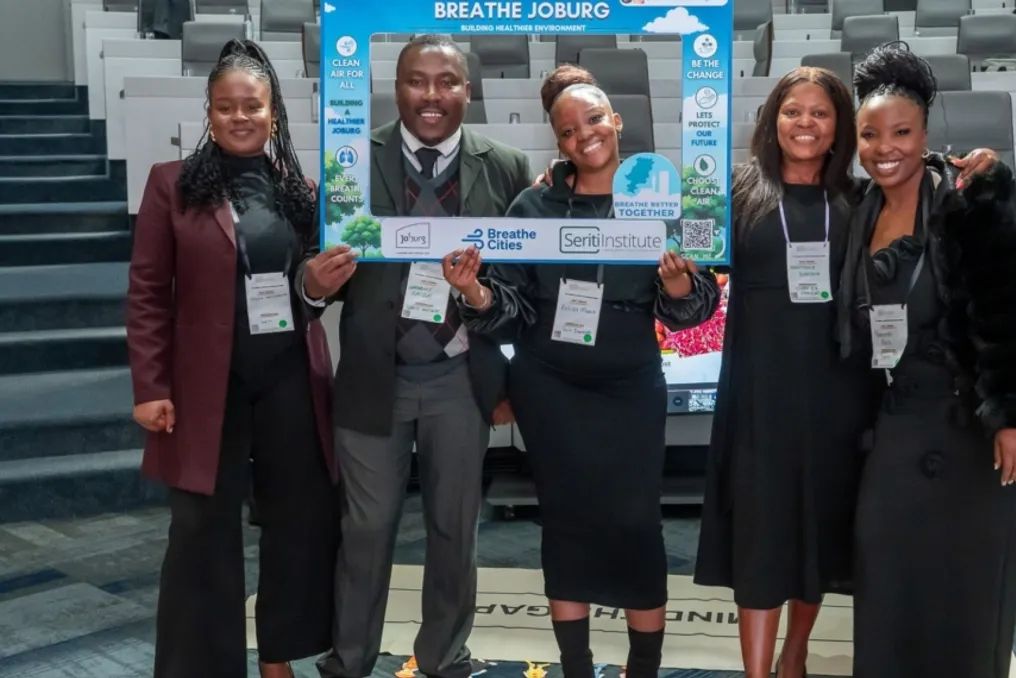
At the fourth annual networking event of the Seriti Institute, leaders and stakeholders gathered to address South Africa's development challenges. The main focus was placed on the necessity of transitioning from short-term government employment programs to long-term pathways toward a dignified life and agricultural growth.
It was emphasized that South Africa's development issues cannot be solved by the efforts of a single sector—be it government, business, civil society, or local communities. Creating sustainable sources of income requires strengthening partnerships, improving interconnected systems, and a shared commitment to creating opportunities that last longer than the duration of individual programs.
The central theme of the fourth annual Seriti Institute partnership event, titled 'Journeys to Possibility: Connecting learning, skills and livelihoods,' was exploring how to create opportunities that continue to exist after a program concludes. The event took place in Johannesburg on July 1, 2026, bringing together representatives from government, the private sector, philanthropy, civil society, researchers, NGOs, and program participants.
Discussions throughout the day showed that while government employment programs (PEPs) provide an important foundation through work experience, skills development, and financial support, the sustainability of livelihoods depends on subsequent steps. Participants discussed the need to strengthen pathways to employment, entrepreneurship, business development, and continuous learning supported by closer cross-sectoral collaboration.
One key moment was the interactive session 'Mind the Gap,' where participants analyzed perceived gaps between government, business, civil society, and communities. They then jointly explored the potential unlocked by deliberately closing these divides. This exercise reinforced the idea that South Africa's development challenges require trust, collaboration, and shared responsibility, rather than isolated interventions.
Discussions on areas such as agriculture, early childhood development (ECD), and GreenWorks revealed several common themes. Participants noted the importance of co-designing programs with community involvement, improving post-program transitions, aligning skills development with labor market needs, investing in mentorship and enterprise support, and building partnerships that extend beyond short-term projects.
The CEO of Seriti Institute, Juanita Pardesi, shared her vision, stating that people live not within programs, but through opportunities, dignity, confidence, and the ability to build a better future. She stressed that achieving long-term change requires moving away from thinking in terms of programs and starting to think about pathways, which demands that everyone—government, business, civil society, and communities—works differently and together.
Stories of participants were also presented during the event, demonstrating how government employment can serve as a springboard to confidence, leadership, skills development, entrepreneurship, and a sustainable lifestyle, provided it is supported by targeted partnerships and continuous opportunities.
Seriti Institute extends its gratitude to its partner Standard Bank for supporting the 2026 Partnership Networking Event. This partnership created an important platform for honest dialogue, knowledge exchange, and strengthening collaboration across sectors, including lived experience.
As South Africa continues to explore new approaches to inclusive growth, the discussions at the 'Journeys to Possibility' event confirmed a simple yet powerful idea: long-term change is built on partnership. Seriti Institute remains committed to working with communities and partners to connect learning, skills, and livelihoods, creating practical pathways to opportunities that endure long after individual programs end.