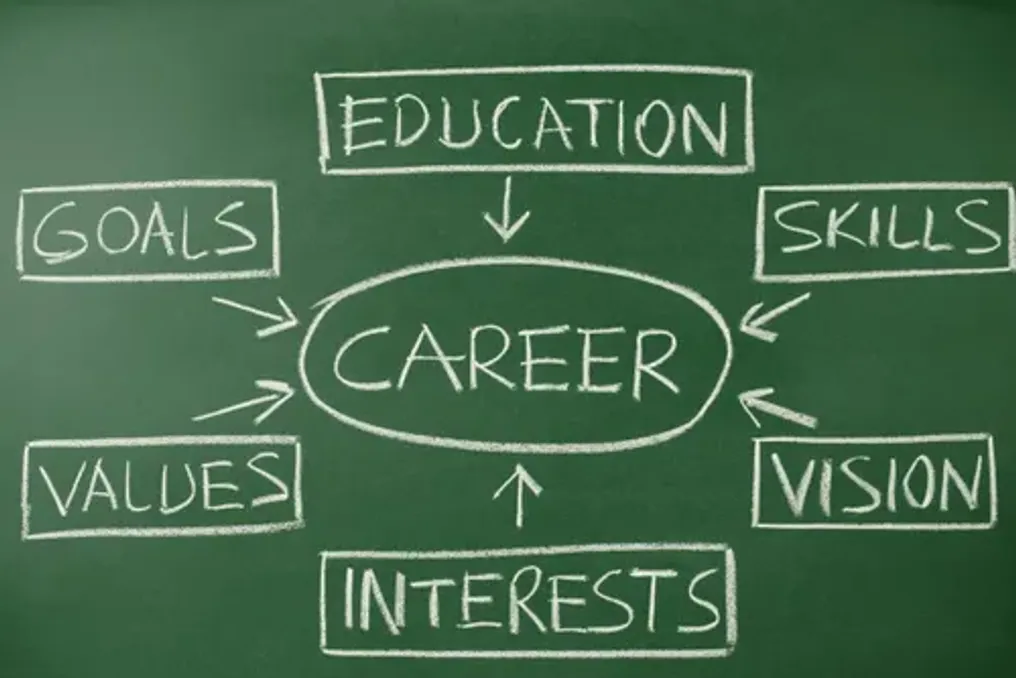
A half-year career analysis helps you understand whether you are moving forward, stagnating, or simply maintaining the current level, which helps focus on significant progress in the coming months.
Distinction Between Employment and Progress
It is important to distinguish between a state of constant busyness and actual advancement. One can spend days in continuous meetings without achieving any substantial movement. Real progress is related to skill development, building confidence, networking, and improving reputation, as well as gaining new opportunities and stepping outside the current role.
However, most people do not pause long enough to honestly answer themselves which of these processes is occurring. Mid-year is an ideal time to take a break and objectively assess your current position and desired goals.
Three States of Career Development
A career is usually in one of three states: active skill development (progress), reactive movement (drift), or stagnation and fatigue (standing still). Recognizing your current state helps choose the appropriate solution.
A growth state signals an upward trajectory. This means purposefully acquiring competencies, taking on new tasks, and aligning work with a long-term vision. If a person is just performing their duties, they are maintaining the status quo; if they are growing, they are expanding their possibilities.
Drift is often the most deceptive state because it does not create a sense of urgency. The person is busy, reliable, and meets expectations, but agrees to what is available instead of choosing what aligns with their goals. The role is shaped around the person, rather than by them intentionally. There is no clear next step, while colleagues move forward, and the person themselves does not understand why.
The standing still state is characterized by a loss of energy. The person is detached, has reached a plateau, and may feel aversion to daily routines. New skills are not acquired, new challenges are not accepted, and there is no clear idea of career direction.
How to Start Career Changes
Career success is achieved through conscious habits, not endless activity. The goal of a half-year audit is not to conduct a complete reorganization of everything, but to gain a clear understanding of the current situation: what is helpful and what is not. This is a structured way to step back to evaluate your position and its alignment with your desires. It is an opportunity to objectively look at what has been achieved and ask a simple but important question: is my current activity leading me in the right direction?
To start, it is recommended to ask yourself four questions: what skills have been acquired in the last six months and are they relevant; what energizes you at work and what drains you; do working relationships with colleagues, managers, and mentors help you grow or hold you back; does the current role bring you closer to or further away from your desired position. It is important to approach this process with honesty, not judgment, striving for clarity—a picture of professional life that indicates where to go next.
Overcoming Obstacles to Growth
Not everything that requires change is within your control. It is necessary to distinguish between what can be influenced and what cannot. Some barriers are external: market changes, limited growth opportunities, weak leadership, or office politics. Others are closer to the individual: their skills, work results, confidence, habits, and postponed decisions. An effective assessment must consider both aspects.
Three obstacles consistently hinder professionals. The first is gaps in skills and experience. Skills that helped achieve the current position may not be those that will lead to future success. One should study in-demand competencies in their field, identify gaps, and understand what is needed to close them, whether it be a short course or obtaining the relevant qualification.
The second obstacle is something many professionals are reluctant to admit: self-doubt and fear of failure. This is often masked by hesitation, excessive preparation, and refusing opportunities before anyone else can refuse. It is necessary to assess one's strengths, set measurable goals, and accept that growth can be uncomfortable; overcoming this discomfort often builds confidence.
The third obstacle is the environment and leadership. Sometimes the problem is not with the person but with where they are located. An unsupportive manager, a dysfunctional work environment, or a company without a clear development plan can limit growth. It is worth creating a support system outside the immediate environment by interacting with mentors and people in one's network. It is also necessary to consider whether the current environment hinders progress; if so, the next stage of growth may require a job change.
Strategy for Achieving Goals
After conducting the audit and determining necessary changes, there is a temptation to create a long list of problems. One should resist this. Trying to solve many tasks simultaneously disperses attention, exhausts willpower, and often leads to giving up on everything. Instead, one should ask one question: what is the most significant action I can take in the next 90 days?
Answering this question requires a system. In the book 'Atomic Habits', James Clear draws an important distinction between goals and systems. Goals define the direction, showing where you want to arrive. Systems are the habits, routines, and processes that get you there. A goal is the desired outcome, and a system is the action you repeat to make that outcome more likely.
Applied to a career, this means setting a clear goal for the next three months and defining what will be done differently each week to support it. For example, visibility at work might mean contributing one interesting idea in every team meeting. Closing a skill gap might require two focused learning sessions per week. If the goal is to expand the network, the system could be joining an industry group and regularly attending networking events outside the immediate circle.
The key to successfully completing the year is simple: define the right priority, build a system around it, and repeat this process.