Researchers have discovered a new plant species in the remote forests of northeastern India. This species is distinguished by a four-horned fruit and bright, fluffy reddish-brown hairs.
Researchers have discovered a new plant species in the remote forests of northeastern India. This species is distinguished by a four-horned fruit and bright, fluffy reddish-brown hairs.
This region, situated at the junction of the biodiverse zones of the Himalayas and Indochina, is a valuable source for scientists. This finding has increased the total number of begonia species in the state to fifty. The discovery was made during routine flora documentation work in Senki View, located on the eastern edge of the Itanagar Wildlife Sanctuary.
During a trek through the moist soil near forest streams, researchers Rohan Maiti, Umeshkumar L. Tiwari, and Sudhansu Sekhar Dash encountered a unique population of plants with straight stems and delicate white-pink flowers. After morphological study and comparison with existing data, the team confirmed that the plant is new to science.
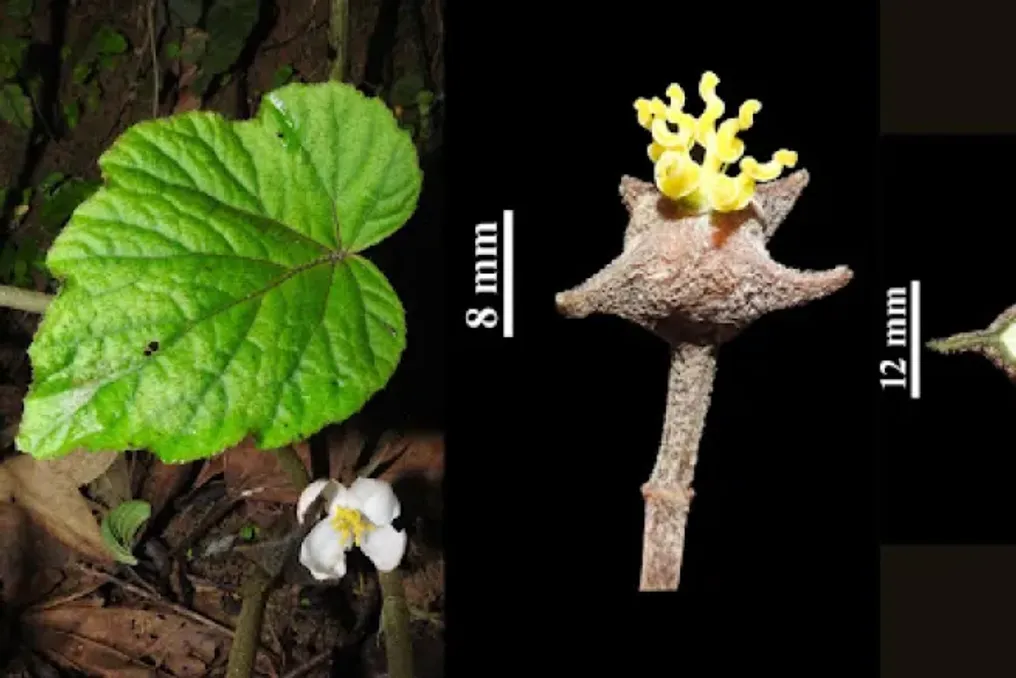
Begonia quadricornualata stands out among its closest relatives due to its distinctly rugged appearance. The female plants are covered in dense, long, reddish-brown hairs, which give the leaves a felted texture. Furthermore, they possess exceptionally long petioles, reaching up to 50 centimeters, almost twice as long as those of close relatives such as Begonia handelii and Begonia tessaricarpa. Unlike relatives that often flower in clusters, the female form of this new species produces only one flower at a time.
The name of the new species literally describes its most unusual physical feature. It derives from the Latin words quattuor (four), cornu (horn), and alatus (winged), referring to how four horns on the ovary turn into four fully formed wings as the fruit matures. This unique fruit structure, densely covered with reddish-brown felt, helps distinguish it from other species in the region that lack horns or ridges.
Despite the joy of the discovery, the future of this four-horned begonia looks uncertain. During monitoring from 2019 to 2025, researchers found only two small subpopulations, each consisting of about 11 adult individuals. The local habitat is currently under pressure from human activities, including road expansion, livestock grazing, and the spread of invasive weeds. Currently, the species is classified as 'Data Deficient,' as scientists hope to find more populations hidden deeper in the subtropical forests of the Eastern Himalayas.
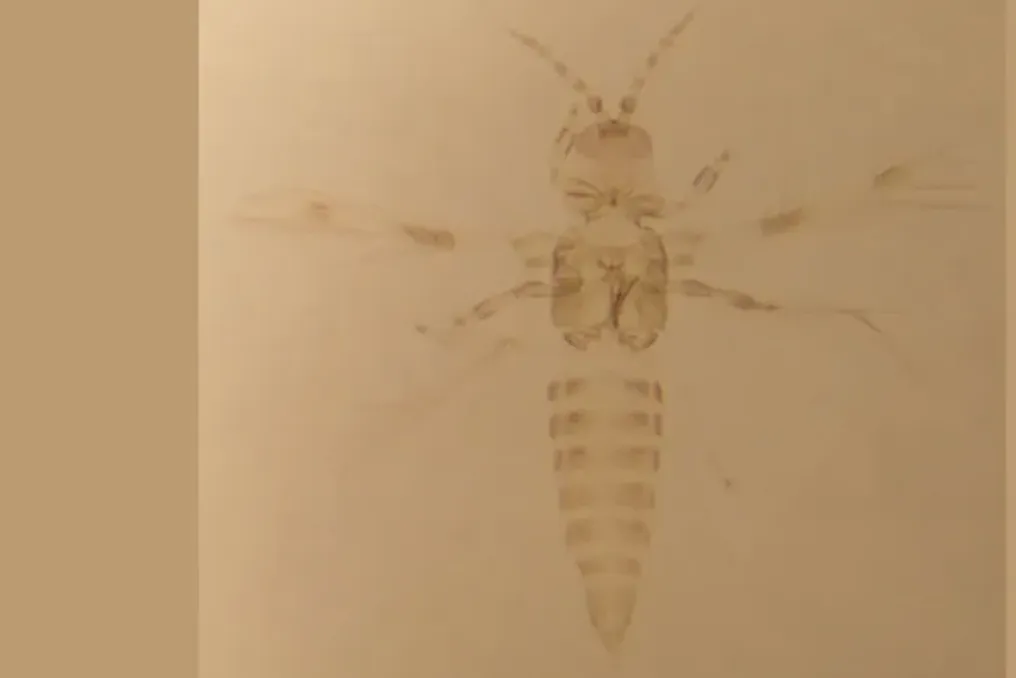
Researchers have discovered a new species of insect belonging to the thrips family inside the flowers of a tropical plant. This finding was made during an exploratory expedition in the Western Ghats, a region in Karnataka known for its high biodiversity.
The new species, officially named Trachynotothrips vyaghravahini, was identified by scientists while studying the local flora. The discovery was made jointly by the Keladi Shivappa Nayaka University of Agricultural and Horticultural Sciences and the National Bureau of Agricultural Pests. The team collected these tiny insects from the flowers of the Lagerstroemia tree while researching the Pilikula Nisargadama reserve in Dakshina Kannada.
When choosing a name for their microscopic discovery, the scientists referred to the rich local history of the region. They selected the name vyaghravahini, which originates from the ancient Sanskrit words 'vyaghra' (tiger) and 'vahini' (flowing river). This name is a direct reference to the location where the insect was found—Pilikula, which is historically known as a river frequented by wild tigers.
Since thrips are typically only one or two millimeters long, the team preserved the collected samples, placed them on glass slides, and examined them under powerful microscopes. Detailed observation showed that the new insect possesses unique physical characteristics that clearly distinguish it from its closest known relatives in the family Trachynotothrips. Unlike similar species, the newly discovered Trachynotothrips vyaghravahini has a uniformly pale midsection without brown stripes and completely pale hind legs. Furthermore, it lacks the characteristic spiny hairs along the sides of the abdomen and differs in the structure of microscopic bristles on the underside of the body compared to other members of its genus.
This finding highlights the incredible yet often underestimated biodiversity of the Western Ghats, which is recognized globally as one of the eight most biodiverse hotspots. Although most people may not notice these tiny insects, the discovery of new species, such as the 'tiger river' thrips, helps scientists better understand the complex biological relationships between insects and plants in fragile ecosystems. In addition to this new species, the research group documented the first sighting in India of another species of thrips previously known only from Japan and China, thereby proving that the dense forests of the Western Ghats still hold many natural secrets waiting to be revealed.