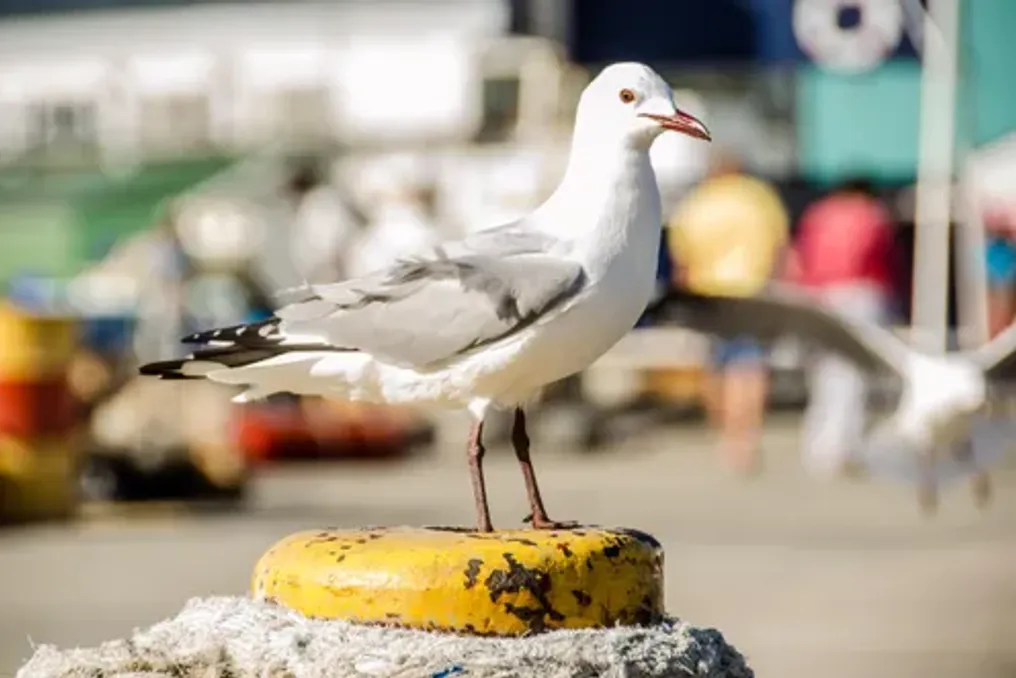
Fransin Hayam, a member of the City of Town's mayoral committee on public services and health, issued a statement regarding the 'confusion and misinformation' surrounding a notice issued by the city's Environmental Health Practitioners (EHP) to a resident in Durbanville concerning feeding birds in the backyard.
The essence of the initial notice
The alleged violation of the by-law first became known after GOOD secretary general and mayoral candidate Brett Herron spoke out against the city's 'Orwellian over-regulation'. The notice instructed the resident to cease 'feeding any wild animals not kept in captivity, as prohibited by Section 28(2) of the Animal Keeping By-law.'
The document stated: 'Inspection of the aforementioned premises on June 1, 2026, showed that birds were being fed directly from the ground, which is a breach of Section 28 (2) of the above-mentioned By-law. As the responsible party, directly or indirectly, for the aforementioned condition, or as the owner or tenant of the above-mentioned property, I hereby call upon you to remedy this condition within twenty-one (21) days from the date of this document....' The letter further stated: 'Failure to comply with these requirements makes you guilty of an offence and subject to a fine. We appreciate your cooperation.'
Reaction from politicians
Commenting on the notice, Herron stated that it meant that 'an official decided that your backyard does not belong to you. That sparrows at a feeder are a compliance issue. That the discretion of the environmental inspector now extends to your private space, nullifying your right to enjoy your home as you see fit.'
He emphasized that the issue was not about birds, but about a city that constantly finds new aspects of citizens' lives to regulate and new justifications for doing so.
Herron cited examples of other restrictions, mentioning that Cape Town residents were previously told they could not paint the Palestinian flag on their wall, and also mentioned a time test where more than six minutes of dog barking within an hour is considered a public nuisance. He concluded that the current situation with feeders is just minor, almost ridiculous violations that demonstrate a pattern of 'creeping authoritarianism', where rules are set for everything happening inside one's own home.
He added that a healthy ecosystem includes birdsong, and a healthy democracy implies the freedom of citizens to feed them. Herron stated that Cape Town residents do not need permission to live in their homes, and they will continue to insist on this until officials stop interfering.
Clarifications from authorities
Hayam noted that significant confusion and misinformation had arisen. She stated that the notice, which began circulating on social media, 'became fodder for politicians seeking to incite false anger'. She clearly clarified: 'The city has not banned bird feeders, and this resident was not issued a notice simply for having them.'
According to her, the reason was that a neighbour complained about an excessive number of animals and dirt in the yard, which attracted rodents. The inspection found that the conditions were unsanitary, and there were many birds, cats, rabbits, and other animals in the house and outside. Furthermore, structures like 'Wendy houses' were used to keep birds, which lacked approved plans. Hayam explained that the scattering of seeds and general uncleanliness could attract rodents, which is why the notice was issued. Generally, feeding birds is not prohibited unless it becomes a hygiene and rodent problem and causes neighbour complaints, as in this case.
She also specified that Environmental Health Practitioners usually monitor public areas, whereas issues in private spaces most often arise from complaints. Hayam added that in the nearly five years since this by-law came into effect, only four such notices have been issued, again, due to the risk of exacerbating existing health/public order problems. She expressed regret that legitimate and necessary actions by officials attempting to protect and promote public safety have turned into a cheap attempt to gain political points.