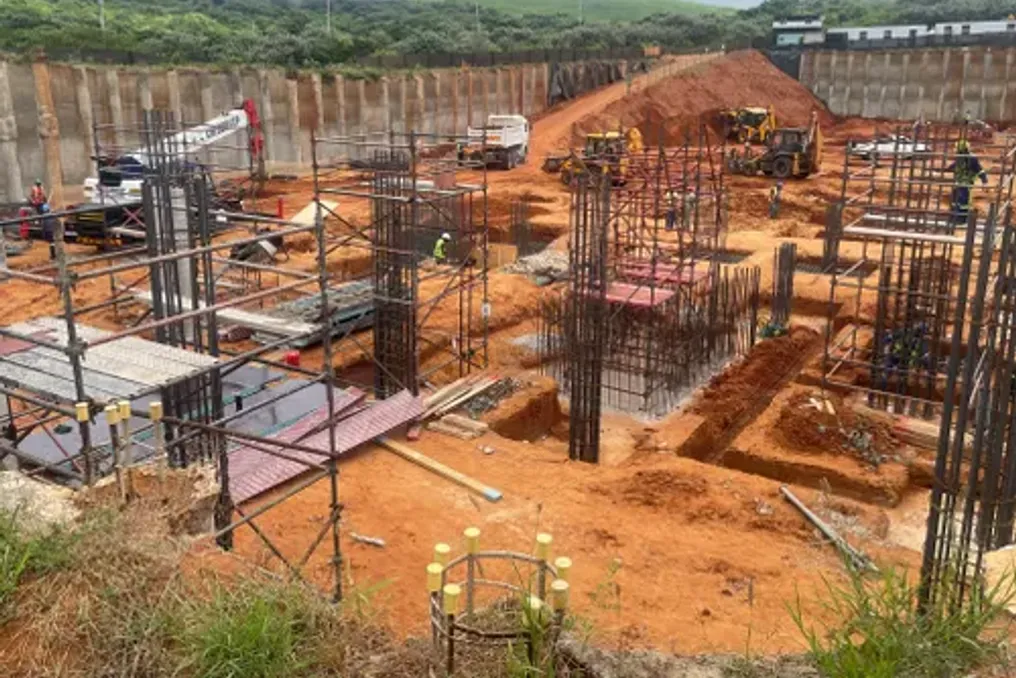
The construction industry is facing shrinking volume, narrow margins, complex projects, rising costs, shortage of skilled personnel, safety risks, and increased administrative requirements. According to H&l Construction, in such conditions, higher quality information, accelerated decision-making, and improved overall efficiency are critically important.
Popular
The Potential of AI in Construction Business
The company asserts that with proper implementation, artificial intelligence can benefit the entire construction business cycle: from assessment and procurement to project execution, quality control, safety assurance, finance, payroll, human resources management, and top management decision-making. AI allows for the automation of routine tasks and improved data accessibility, freeing up employees to solve complex problems, manage projects, and deliver value to clients.
H&l Construction views AI as a practical working tool, emphasizing that the goal is not to replace people or chase the latest technologies. Instead, the company aims to equip its teams with tools that enhance efficiency, support better decision-making, and allow time to focus on their strengths—successful project delivery. The company insists that the experience, judgment, and knowledge of personnel on site, technical teams, and support staff remain its main asset.
Human Factor and Innovation
The company believes that AI assists in content organization, but true value is created by human intelligence, which provides understanding, industry knowledge, and practical experience. Thus, AI does not replace people but expands their capabilities. In the opinion of H&l Construction, innovations are most effective when they augment humans, as it is people, not technology, who create outstanding projects.
Industry Challenges in South Africa
According to the statistical agency Statistics South Africa (Stats SA), the construction industry in South Africa has long faced numerous difficulties. South Africa's infrastructure points to slow economic growth, low investment, load shedding, labor shortages, the Covid-19 pandemic, and criminal activity as key factors. The report 'Construction Industry 2024' provides a detailed overview of various indicators, including financial data, employment, services, procurement, and ICT usage, based on a survey of VAT-registered businesses.
According to GDP data, the contribution of construction to national economic activity peaked at 4.2% of added value (at current prices) in 2008. However, since then, this contribution has gradually decreased to 2.4% in 2024 and 2.3% in 2025. The size of the industry itself has also shrunk: in 2016, it was estimated at R156.0 billion (in constant prices), later decreasing to R103.6 billion in 2024 and R99.1 billion in 2025.
Inflation and Risk Management
Marcello Raman, founder of Zeus Black, warns that in the current situation in South African construction, the most dangerous thing is relying on last month's data. He notes that recent construction material price indices from Stats SA show a sharp deterioration in the situation: in one month, material inflation sharply accelerated from 4.5% to 8.4% year-on-year. Within micro-categories, the situation is even worse: civil engineering materials rose by 9.1%, diesel fuel for road works by 21.9%, and electrical components by 14.6%.
Raman also warns that when working on fixed-price contracts, a three-month delay in office data represents a structural vulnerability. He emphasizes that net profit evaporates before the team can prepare the monthly claims package. He cautions against the misconception that ground movement equals profit, pointing out that it is actually equivalent to issuing a personal check to finance the client's assets, and urges stopping the management of a multi-million dollar enterprise while looking in the rearview mirror, and instead strengthening control.